How to Pick a Metallic Epoxy Floor Color
Published October 9, 2026 · 7 min read · By 360 Surfaces
Most people pick a metallic epoxy color the same way they pick paint: they look at a small chip, like it, and say yes. Then the floor goes down, the garage door opens on a gray October morning, and it looks nothing like the chip. Not worse, just different.
Metallic floors move. The pigment is suspended in clear epoxy and pushed around by hand while it is wet, so the color shifts with the angle of the light, where you are standing, and what is around it. That is the whole appeal, and it is also why choosing a color takes a little more thought than picking a flake blend. Here is how we walk customers through it at the estimate.
Start With the Room, Not the Color Chip
Before talking colors, figure out what the room is for and how it is lit. A garage with a big south-facing door, a basement rec room with recessed LEDs, and a shop with fluorescent tubes will make the same metallic look like three different floors.
- Garages get daylight through the door and windows. Metallics look brightest and most three-dimensional here, and they show tire marks and grit the most.
- Basements live under artificial light. Warm bulbs push metallics toward gold and bronze. Cool white LEDs make silvers and blues pop and can make browns look flat.
- Showrooms, studios and man caves usually have the best lighting control, which is where bolder colors and multi-color designs pay off.
If you can, look at sample boards in the actual room at the time of day you use it most. We bring physical boards to every estimate for exactly this reason.
Dark Metallics: Graphite, Charcoal, Black and Deep Blue
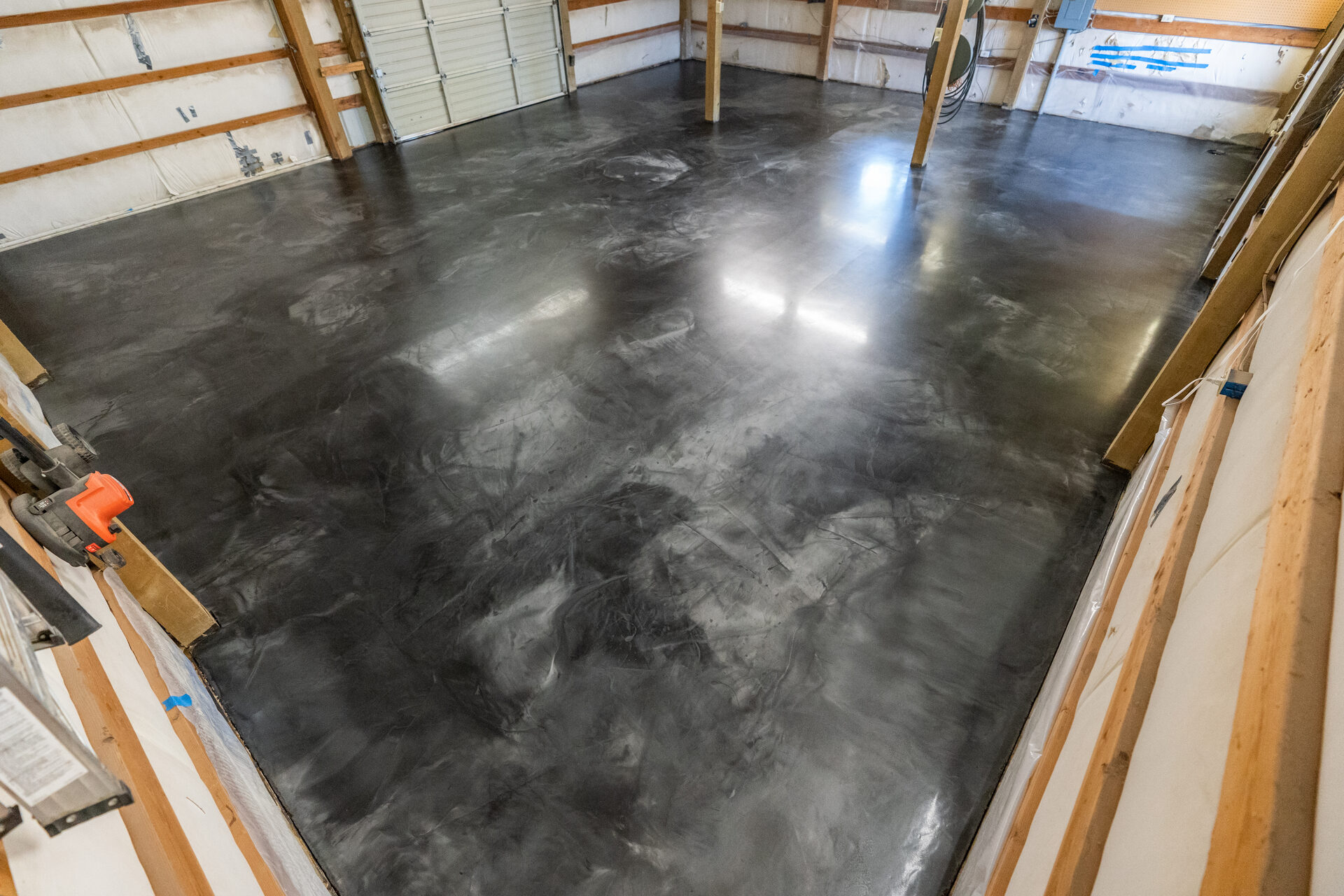
Dark metallics are the most dramatic. They give that deep, liquid-stone look and make silver or pearl veining stand out hard. They are a favorite for garages that double as a car showroom and for basement theaters.
The tradeoff is honest: a dark, glossy floor shows dust, footprints and pet hair more than anything else. That does not mean it looks dirty, but you will see when it needs a dust mop. If you want dark but lower maintenance, ask for a dark base with heavier lighter veining, which breaks up the surface and hides more.
Light Metallics: Pearl, Silver, Champagne and White
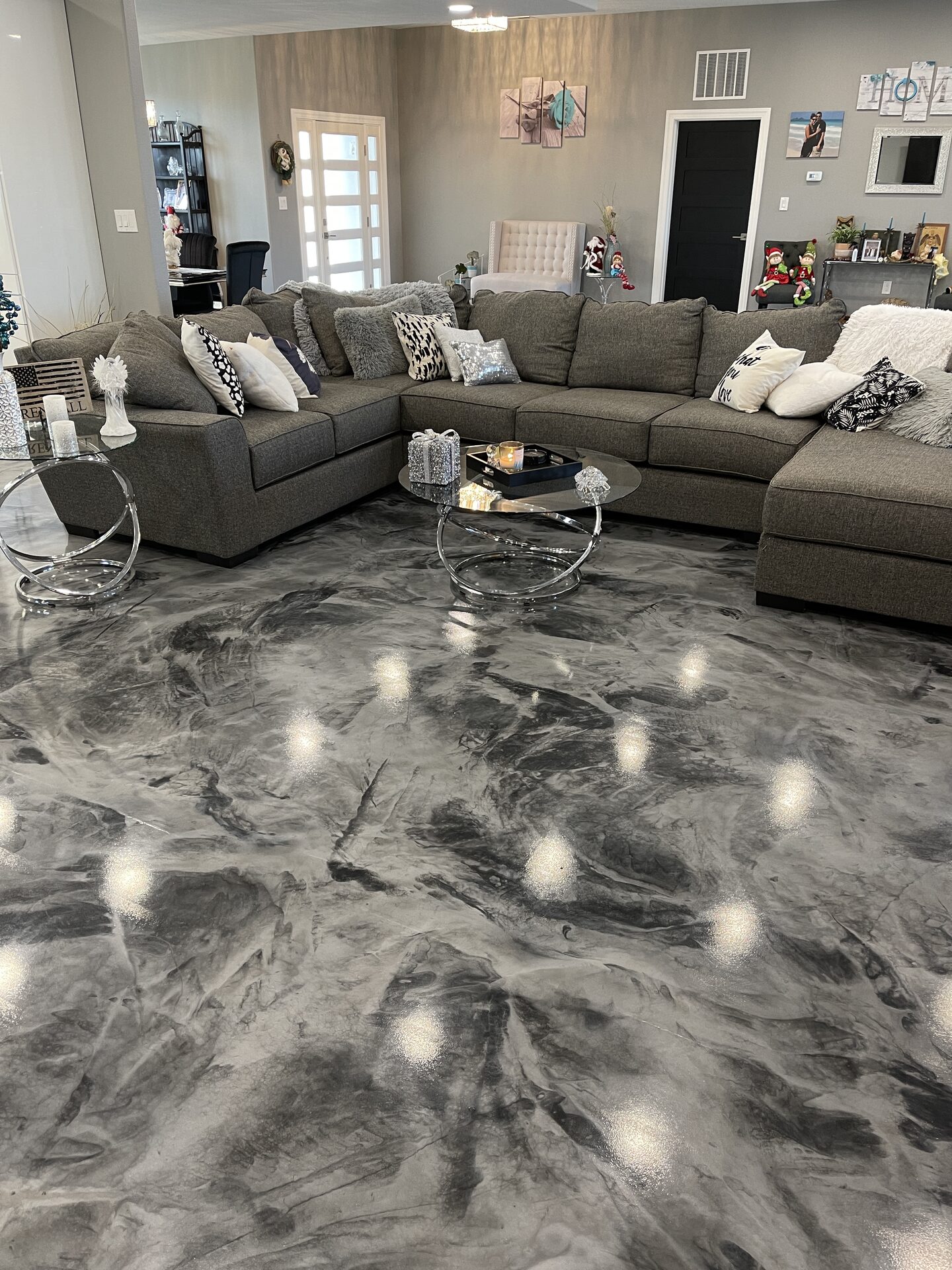
Light metallics brighten a room more than any other floor we install. In a basement with small windows, a pearl or champagne metallic can make the space feel noticeably bigger and less like a basement.
They hide dust well. Where they show wear is dark marks: tire scuffs in a garage, rubber-soled shoes, and spills that sit too long. For a basement rec room or a home gym, light metallics are easy to live with. For a garage that sees a lot of muddy tires in a Northwest winter, think about a mid-tone instead.
Mid Tones: Pewter, Bronze, Copper and Smoke
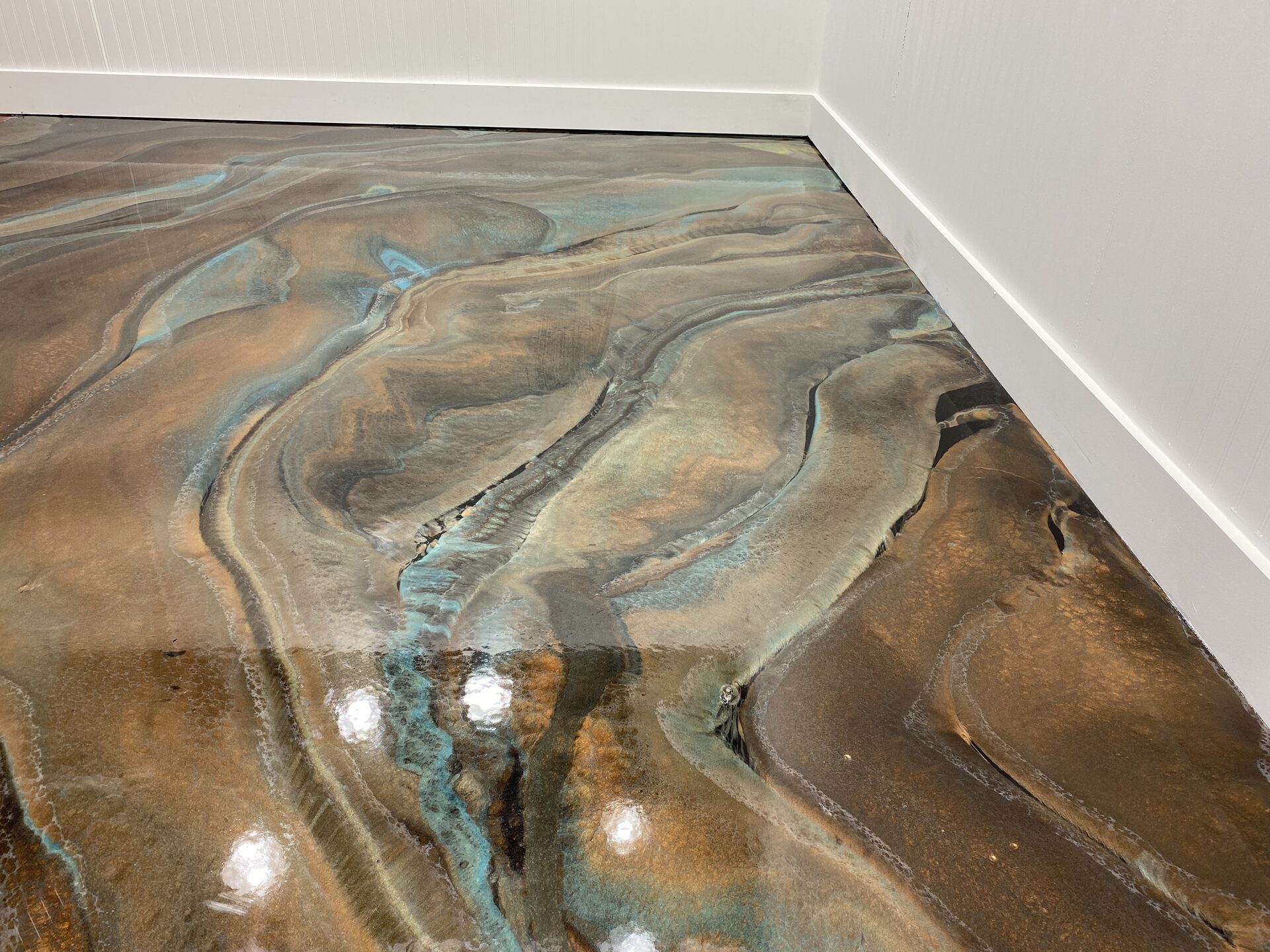
If you are torn, the middle of the range is the most forgiving. Pewter, smoky gray, bronze and copper hide both dust and scuffs better than the extremes, and they still give you the movement and depth that make metallic worth doing.
Copper and bronze are the warm choice. They go well with wood cabinets, cedar walls and warm lighting. Pewter and smoke are the cool choice, and they match gray cabinets, black hardware and modern finishes.
One Color, Two Colors or Three
A single-color metallic still has a lot of movement because of how the pigment settles. Most of the "wow" floors you see online are two or three colors: a base color plus one or two accent colors worked into it as veins, swirls or lava-style flow.
- One color reads calm and clean. Good for large open basements and commercial spaces.
- Two colors is where most residential floors land. Graphite with silver, bronze with gold, and white with gray are common pairs.
- Three colors gives the most depth and drama, and it takes more hand work to get right.
Match the Floor to the House
The floor should look like it belongs to the rest of the house. A few quick rules we use:
- Pull one color from something that is already there: cabinets, countertops, the paint on the walls, or the trim.
- Warm house, warm metallic. Cool house, cool metallic. Mixing works, but it is harder to pull off.
- In a garage, think about the cars. A silver metallic under a silver truck can make both disappear. Contrast looks better.
Every Metallic Floor Is One of a Kind
This is the part people need to hear before they commit: no two metallic floors come out the same, and your floor will not be an exact copy of a sample board or a photo. The colors and the general look will match. The exact pattern will not, because it is made by hand on your slab.
That is the point of metallic. If you want an exact, repeatable look, a flake floor is the better choice. If you want something nobody else has, metallic is it.
What Metallic Costs and Why the Slab Matters
Metallic epoxy runs about $9 to $16 per square foot installed, compared with about $4 to $9 for a flake floor. Color itself rarely moves the price. What moves it is the condition of the slab and how complex the design is.
Metallic also needs a flatter slab than flake, because the glossy surface shows every low spot and patch. We diamond-grind every floor and fill cracks and divots before the metallic goes down. The full system runs 40 to 60 mils thick, takes 2 to 3 days to install, and needs 3 to 5 days to cure before heavy use. It is topped with a UV-stable polyaspartic coat and carries a 15-year warranty.
Quick Answers
What metallic color hides dirt best?
Mid tones like pewter, smoke, bronze and copper. They hide both dust and dark scuffs better than very dark or very light colors.
Is a black metallic floor a bad idea?
No, it looks incredible. It shows dust and footprints more, so it suits people who don't mind a quick dust mop, or rooms with less traffic.
Can I see my exact floor before it is installed?
You can see the colors and the style on physical sample boards, but the exact pattern is made by hand on your floor. That is what makes every metallic floor one of a kind.
Does metallic epoxy work in a garage?
Yes. With a polyaspartic topcoat it handles hot tires and won't yellow. Mid tones are the easiest to live with in a busy garage.