
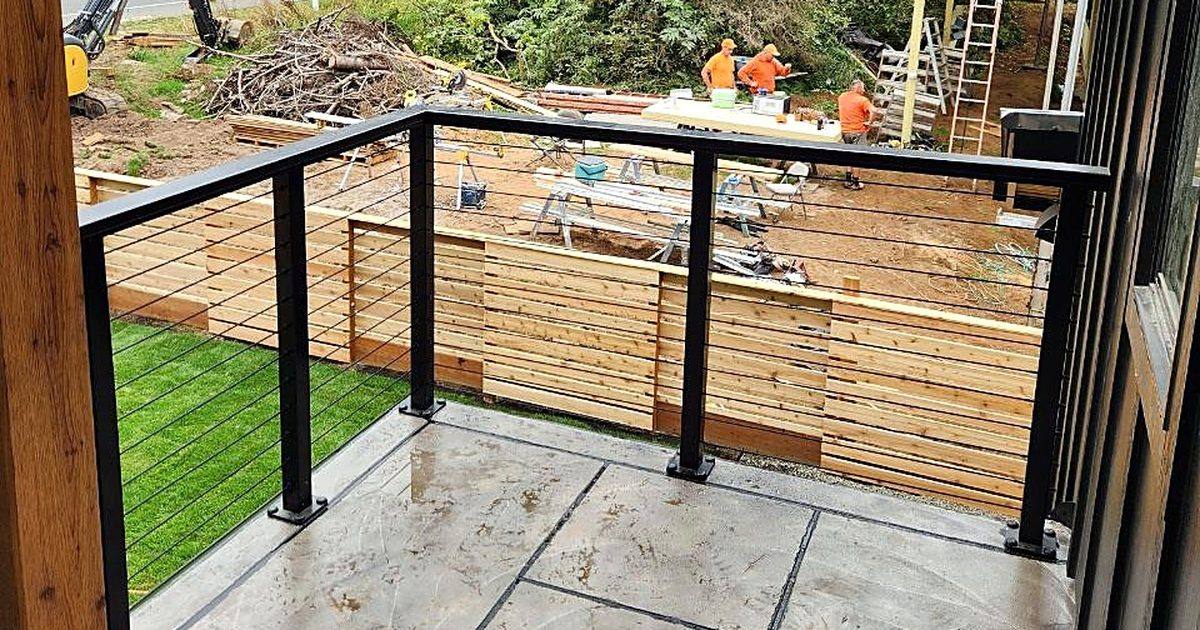
Ask people why they picked cable railing and nearly all of them say the same thing: they did not want to look at the railing. They wanted to look past it, at the yard, the trees, the river or the neighborhood lights. Thin horizontal cables between slim posts let the eye slide straight through, and that is hard to get with any other railing at a similar weight on the eye.
This guide is about cable railing on two kinds of spaces we work on all the time around Vancouver and Clark County: open decks and covered patios. It covers why cable railing is popular for open views, where it fits well and where another style might suit you better, how it works alongside a coated deck surface, and how to keep it looking good through a long, wet Northwest rainy season. If you are still choosing between railing types, our earlier guide compares cable, glass and aluminum railing side by side. This one goes deeper on cable.
Why People Pick Cable Railing for Open Views
A railing sits right at eye level when you are sitting down, which is exactly where you want to see out. Picket railing puts a vertical bar every few inches across that view. Solid or framed panels block it more. Cable railing replaces most of that material with thin cables, so what you see is mostly the view with a few fine lines across it.
A few other reasons come up again and again when homeowners tell us why they chose cable:
- It keeps a space feeling bigger. On a narrow deck or a small balcony, a heavy railing can make the space feel boxed in. Cable keeps the edge light, so the deck seems to run out into the yard.
- It lets light through. This matters a lot on a covered patio, which already loses light to the roof above it. Cable does not add another layer of shade at the edges.
- It suits a lot of house styles. Black posts with stainless cables look at home on modern houses, but they also look clean next to wood siding, cedar fencing and traditional trim.
- It pairs well with a coated deck. A smooth, even deck surface in a stone, tile or concrete look and a slim cable railing make a clean, simple combination. Neither one fights the other for attention.
The cover photo on this post is a good example. It is a covered patio on one of our jobs: black posts, cables running between them, and a grey stone-pattern deck surface underneath. From the patio, you see the lawn and the yard, not a wall of pickets.
Cable Railing on a Covered Patio vs. an Open Deck
Cable railing works on both, but the two spaces live a little differently, and that changes what you will notice day to day.
Covered patios
A roof over the patio keeps most direct rain off the walking surface and much of the railing. That usually means less grime splashing up onto the lower cables and fittings. The tradeoff is that covered areas dry more slowly, and the parts of the railing closest to the open edge still get wind-driven rain. Dust and pollen can settle on cables under a roof because rain is not rinsing them as often, so an occasional wipe-down does more good than you might expect.
The biggest reason people choose cable on a covered patio is light. With a roof overhead, the open sides are where the daylight comes in, and cable keeps those sides as open as possible.
Open decks
An open deck gets the full weather: rain, sun, fir needles, leaves and whatever the wind blows in. The cables get rinsed by rain constantly, but rain also leaves dirt and mineral spots behind as it dries. Debris tends to collect where posts meet the deck surface, and that is the spot to keep an eye on. On an open deck with a view, cable is usually the whole point of the railing, because there is something worth seeing past it.
Cable Railing Tradeoffs at a Glance
No railing is perfect for every home. Here is an honest look at what cable does well and what it asks of you.
| Topic | What cable railing gives you | What to plan for |
|---|---|---|
| View | Very open; the eye looks through thin cables | You still see the cables and posts; glass is the option if you want almost nothing in the way |
| Light | Lets daylight into covered patios and shaded decks | Nothing in particular; this is one of cable's strengths |
| Look | Clean, slim lines that pair well with a coated deck | Post color and spacing set the style, so pick them with the deck finish in mind |
| Cleaning | No large panels to keep spotless; a rinse and gentle wash goes a long way | Many small surfaces (cables, fittings, post bases) to wipe instead of a few big ones |
| Hardware | Few parts to wear out when installed well | Cables can loosen over time and should be checked; adjustments use the system's own fittings |
| Household fit | Popular with adults who want a view | Some families prefer vertical pickets or glass; local rules on railings vary, so ask your permit office |
How Cable Railing Pairs With a Coated Deck
Most of the cable railing we install goes in alongside a deck or balcony project, although we also install railing on its own. When the deck has a waterproof coating, such as the Westcoat ALX or ALX Pro systems we install, the railing and the deck surface need to be planned together.
Posts are where water tries to get in
Railing posts are one of the places water gets into a deck. Every post needs to be fastened to something solid, and every fastener is a potential path for water if it is not handled correctly. That is why we prefer to plan the railing and the waterproofing as one project. When one crew handles both, the posts and the deck surface are planned together instead of one trade working around the other.
Top mount or side mount
There are two common ways to attach railing posts to a deck:
- On top of the deck. The posts sit on the deck surface on a base plate. This is a clean, familiar look, and on a coated deck the area around each base has to be detailed carefully so water does not get under the coating.
- On the side of the deck. The posts bolt to the deck framing at the edge. This keeps the walking surface free of post bases, which can make the deck feel a little bigger and makes the surface easier to sweep.
Which one makes sense depends on the framing, the edge of the deck, the flashing, and how the deck is built. We look at those details on site and explain the options. If you are not sure how your current posts are attached, that is fine; we can usually tell from photos.
Picking colors that work together
Black posts are the most common choice we see with cable, and they look sharp against grey stone, tile and concrete-look deck finishes. If your house has warm wood tones, black posts with a lighter deck finish keep things from feeling too dark. The easiest way to choose is to look at real finished projects together; we bring examples to the estimate, and you can see deck finishes on our deck coating page.
Order of work
On a deck restoration, the deck itself comes first: failing surface off, framing and plywood repaired, then the layered waterproof system. Railing is planned with the deck from the start so post locations and the waterproofing details line up. To see how a full deck system is built, read our comparison of Westcoat ALX vs. ALX Pro.
Caring for Cable Railing in the Rainy Northwest
Stainless cable railing is low maintenance, not no maintenance. Stainless steel resists corrosion because of a thin protective layer on its surface. That layer is tough, but dirt, salts and the wrong cleaning products can break it down and leave light brown discoloration, often called tea staining. Railing manufacturers' care guides agree on a few simple habits that keep it looking good.
Routine cleaning
- Rinse with fresh water. Work from the top down so loosened dirt does not settle on parts you already cleaned. Pay attention to fittings, post bases and the undersides of top rails.
- Wash gently. For dirt and film, use warm water with a mild soap and a soft cloth or non-abrasive brush.
- Rinse again and dry where you can. Do not let soap dry on the cables, and wipe off water that collects around fittings.
- Treat light staining early. If you see brown spots, a cleaner made for stainless steel usually takes care of light tea staining. Follow the product directions and rinse afterward.
What to keep away from your cables
- Steel wool, wire brushes and scouring pads. Ordinary steel can leave tiny iron particles on stainless, and those particles rust and leave orange marks.
- Tools that have been used on regular steel. Same problem: they carry iron particles to the stainless.
- Bleach and chloride cleaners. They attack the protective layer on stainless steel. If bleach splashes on a cable, rinse it off right away with plenty of fresh water.
- Muriatic acid and strong acids. These are sometimes used to clean concrete, tile or masonry. Keep them well away from the railing, and rinse the railing if anything splashes.
- Scouring powders and hard scrapers. They scratch the finish and give dirt a place to hold on.
Cleaning the deck without hurting the railing
When you clean a coated deck, the railing gets splashed too. For a Westcoat deck, the routine is simple: sweep, rinse with water and a broom, and for grease or heavier dirt use a degreaser diluted with water and a soft-bristle brush, then rinse well. After you clean the deck, give the cables and post bases a fresh-water rinse as well so no cleaner is left drying on the stainless.
Check the tension and the post bases
Cables can loosen over time. If a cable looks slack or a run has visible sag, it may need to be retensioned. That should be done with the railing system's own fittings and tools, without over-tightening, and tightening one cable can change the ones next to it. If you are not comfortable doing it, call the installer.
While you are looking, check where the posts meet the deck. Clear fir needles, leaves and moss from around the bases so water can drain away instead of sitting against the post. If you see a gap, cracked sealant or a post that moves, have it looked at. A small fix there protects both the railing and the deck coating.
A Seasonal Care Plan for Cable Railing
Here is a simple schedule built around the way the seasons actually go in Southwest Washington. Adjust it for your house: a deck under big trees needs more attention in fall, and a sunny open deck needs less.
| Season | Cable railing | Coated deck surface and post bases |
|---|---|---|
| Fall | Rinse off pollen and summer dust before the rains settle in; look for early tea staining | Clear leaves and fir needles, especially around post bases and drains |
| Winter | Quick rinse when spots build up; avoid harsh cleaners even if the deck gets slick or mossy | Keep debris off so water drains; sweep and rinse moss or algae early before it spreads |
| Spring | Full gentle wash with mild soap; check for slack cables after the wet months | Wash the deck, check sealant at post bases, look for any post movement |
| Summer | Wipe off dust and pollen; dry the cables after washing so spots do not form | Good time for repairs or a reseal if it is due; Westcoat recommends resealing every 3 to 5 years |
Codes, Permits and Safety
Railings are a safety item, and building codes cover things like railing height, how far apart the infill can be and how much load a railing has to handle. Cable railing has its own considerations, because the cables have to stay tight enough to work as intended. These rules depend on where you live and what kind of structure the railing is on, and they can change. Before you plan a new railing, confirm the current requirements with your local permit office, such as the City of Vancouver or Clark County. We will talk through the details on your project at the estimate.
Warranty on the Deck Underneath
360 Surfaces is a Westcoat Qualified Contractor Applicator. Decks we coat with Westcoat ALX or ALX PRO get a 10-year workmanship warranty from 360 Surfaces, plus up to a 20-year Westcoat manufacturer warranty on ALX PRO. We put the exact terms in writing with your estimate. For more detail, see our guide to deck coating warranties.
Is Cable Railing Right for Your Deck or Patio?
Cable railing is usually a great fit when:
- You have a view, a yard or a garden you want to see from your seat.
- Your patio is covered and you want to keep as much daylight as possible.
- You like a clean, modern line next to a coated deck in a stone, tile or concrete look.
- You are fine with an occasional rinse, a gentle wash a few times a year and a quick check of the cables.
If you want the view with nothing at all in front of it, glass may suit you better. If you prefer a classic look or vertical infill, aluminum pickets are a good choice. Our railing page shows the cable, glass and aluminum railing we install.
Frequently Asked Questions
Why do people choose cable railing for a deck or covered patio?
Mostly for the view and the light. Thin cables between slim posts let you see through the railing, and on a covered patio they keep the open sides bright instead of adding more shade.
Can cable railing go on a deck with a waterproof coating?
Yes. The posts can mount on top of the deck or on the side of the deck framing. Either way, the railing and the waterproofing should be planned together, because railing posts are one of the places water can get into a deck.
How do I clean stainless cable railing?
Rinse with fresh water, wash with warm water and a mild soap using a soft cloth or non-abrasive brush, then rinse and dry. Treat light brown tea staining early with a cleaner made for stainless steel.
What should I never use on cable railing?
Avoid steel wool, wire brushes, tools used on ordinary steel, bleach and chloride cleaners, muriatic acid and scouring powders. They can scratch the stainless or leave particles and residue that cause rust spots.
Do cable railings need to be retightened?
Cables can loosen over time. If you see slack or sag, the cable may need retensioning with the railing system's own fittings, without over-tightening. If you are unsure, have the installer do it.
Talk to Us About Cable Railing
We install cable, glass and aluminum railing on decks, balconies, covered patios and stairs across Vancouver and Clark County, on its own or as part of a deck coating project. You can see a railing price in about 90 seconds, get a deck price online, or request an estimate and email info@360surfaces.com. Your final price is confirmed after photos or a quick visit.
360 Surfaces
Published November 19, 2026
Where We Do This Work
Cable, glass and picket railing across Clark County and the Portland metro:
Vancouver, WA · Camas, WA · Battle Ground, WA · Ridgefield, WA · Salmon Creek, WA · Washougal, WA · Brush Prairie, WA · Hazel Dell, WA · La Center, WA · Longview, WA · Portland, OR · Lake Oswego, OR · Beaverton, OR · Happy Valley, OR · West Linn, OR · Hillsboro, OR · Tigard, OR · Gresham, OR