
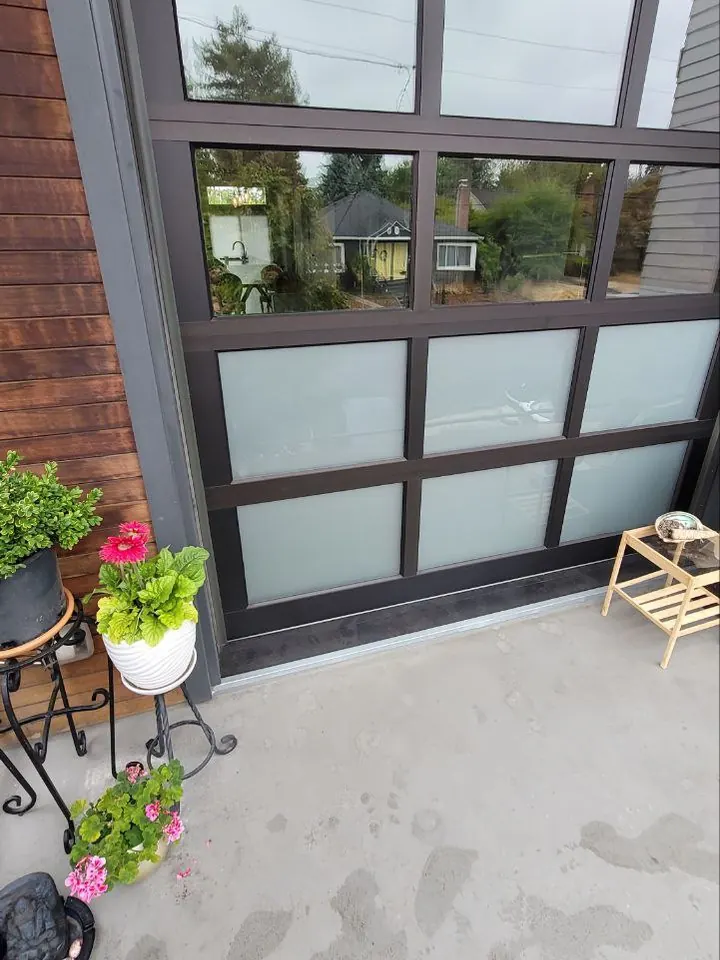
Dry rot is one of the most common reasons Vancouver homeowners call us about a deck or balcony. It usually starts long before anyone notices a soft spot. Water gets through a worn surface or a failed edge, the plywood and framing below stay damp through the long wet season, and decay spreads quietly underneath a surface that still looks acceptable from above.
This guide explains how we handle deck dry rot repair in Vancouver, WA. We find the damage, remove and replace the rotted wood, and then install a complete waterproof deck system so the same problem does not return. At 360 Surfaces, rot repair is always the first stage of a waterproof deck restoration rather than a separate patch job.
If you are comparing coating options, start with our overview of the Westcoat ALX Pro deck coating system. If the surface is already peeling, leaking or soft underfoot, also read signs your deck is failing.
Why Decks in Vancouver Develop Dry Rot
Despite its name, dry rot is a fungal decay that needs moisture to grow. Clark County's climate supplies plenty of it. According to NOAA's 1991–2020 climate normals for Vancouver Pearson Field, the area averages about 37.5 inches of rain a year, and November through January bring roughly 45 percent of it. Rain falls steadily through fall and winter, cloudy days slow drying, and a deck that stays damp for weeks at a time gives decay the conditions it needs.
On the decks and balconies we inspect, water most often gets in through one of these paths:
- A worn or cracked walking surface. Once a coating is breached, water travels underneath it and spreads.
- Open plywood seams. Seams move with the seasons and are a common entry point when they are not reinforced.
- Failed flashing. The joint where the deck meets the wall, and the outside edge of the deck, are where many failures begin.
- Too little slope. Water that sits on a flat deck has more time to find a way in. Westcoat specifies a minimum slope of 1/4 inch per foot under its ALX Pro system.
Elevated decks and balconies over living space or a garage are especially important to catch early. On those structures, the walking surface is also the roof for whatever is underneath. A soft spot on top can mean a stain on a ceiling below long before anyone connects the two.
Step 1: Find the Damage
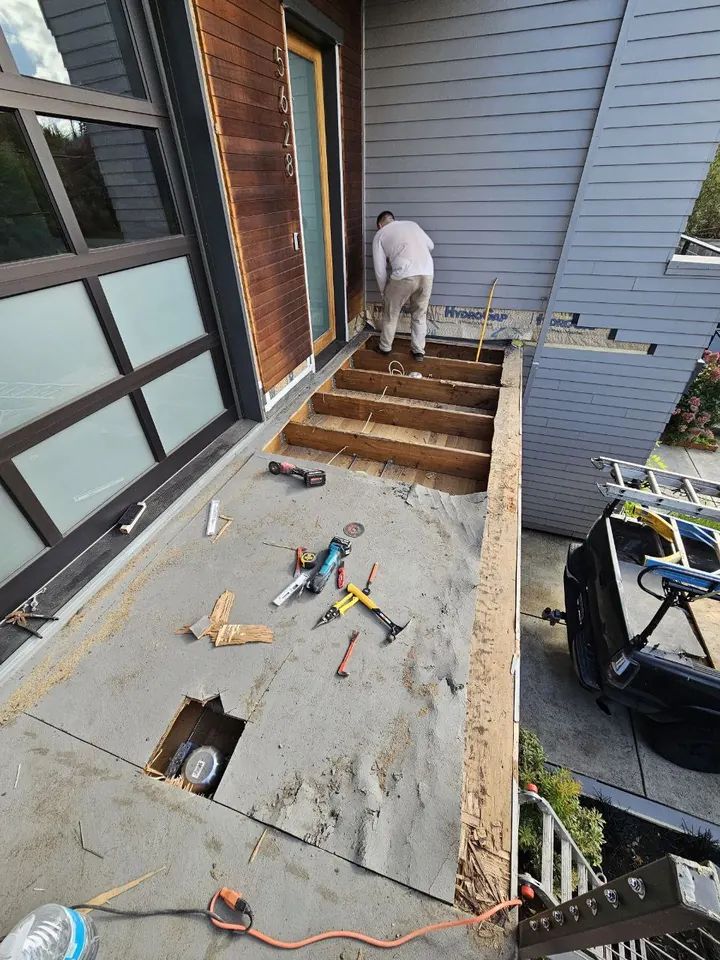
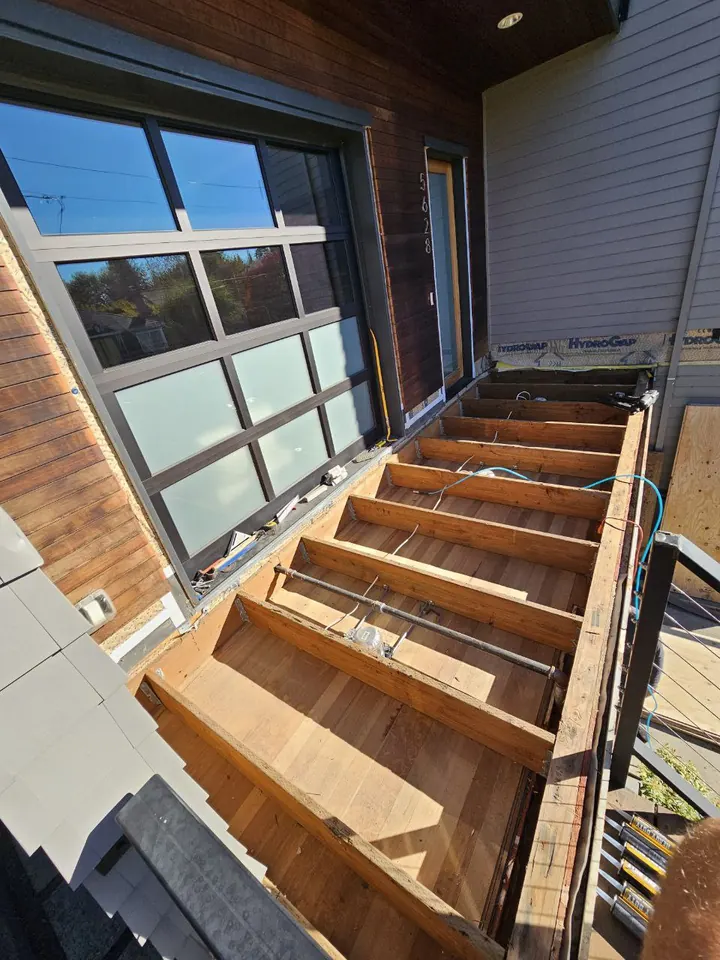
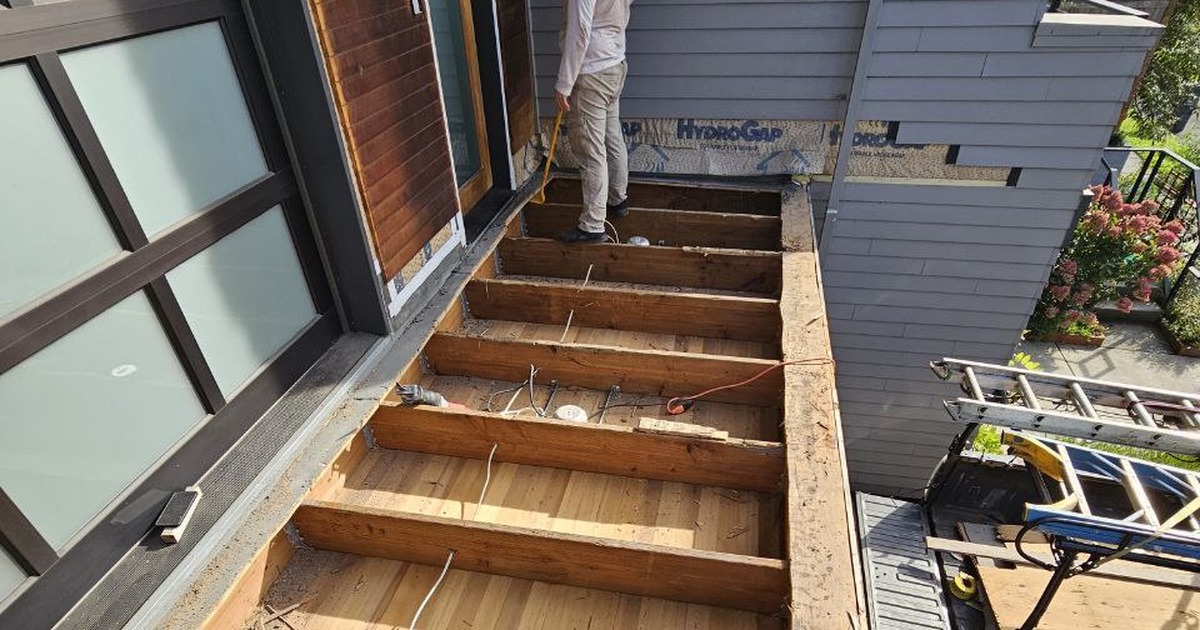
An inspection starts from the top and from below. We walk the surface for soft or flexing areas, check the edges, the flashing and the wall connection, and look at any ceiling or soffit beneath the deck for stains. Those signs tell us where to look. The full extent of rot, however, is only visible once the surface over the affected area is opened.
That is why our estimates explain what we expect to repair and what we will do if we find more. If the damage turns out to be larger than expected, we show you what we found and explain the options before going further. Guessing from a photo of a clean corner is not enough when the plywood under a coating has been wet for years.
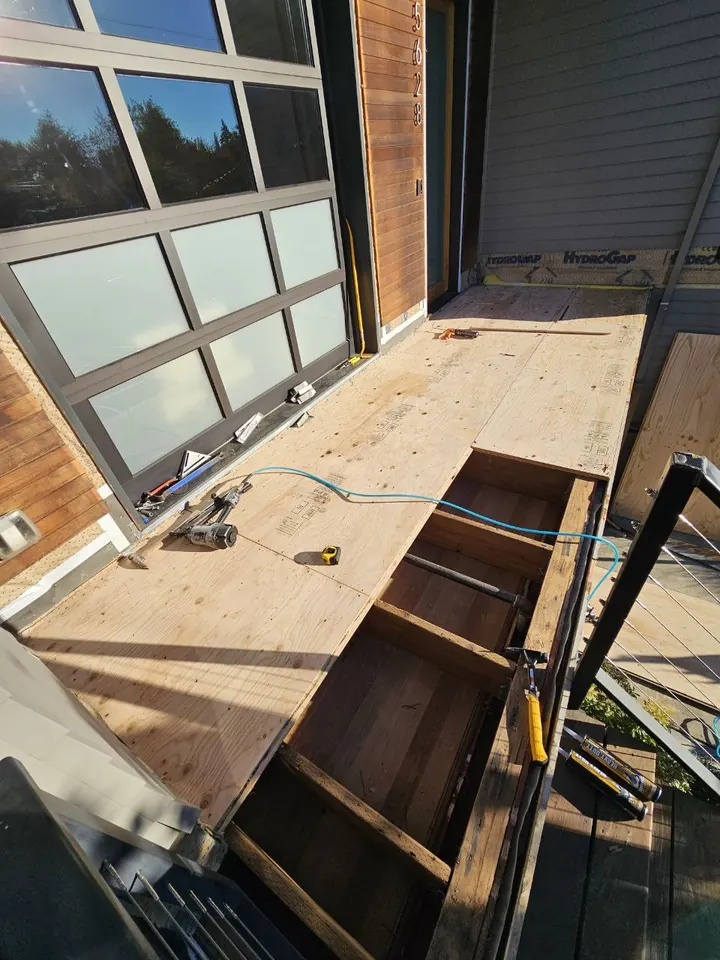
Step 2: Remove and Replace the Rotted Wood
Decayed plywood and framing are cut out and replaced with sound material. We do not coat over soft wood, because no coating can make a failing substrate sound. Covering rot with a new surface only hides it until it fails again.
The replacement sheathing follows Westcoat's specification for the ALX Pro system. That means exterior-grade or CDX plywood at least 5/8 inch thick (3/4 inch preferred), joists spaced no more than 16 inches apart, and no OSB, which Westcoat does not allow under this system. The plywood must also be dry before the system is installed. Repairing the wood is only half the job; the new sheathing has to be ready for a full waterproof build.
| Item | What sound looks like | Why it matters |
|---|---|---|
| Plywood | Exterior-grade or CDX, dry, at least 5/8″ (3/4″ preferred) | Soft or wet sheathing will fail under a new system |
| Joist spacing | No more than 16 inches on center | Westcoat's ALX Pro specification requires it |
| Slope | At least 1/4 inch per foot | Standing water finds seams and edges |
| Seams | Sheet membrane on every plywood seam | Seams move with the seasons and leak if left open |
| Edges and wall | Metal flashing and drip edge in place | Most water entry starts at the perimeter |
| OSB | Not used under ALX Pro | Westcoat does not allow OSB under this system |
Step 3: Waterproof the Deck So the Rot Does Not Return
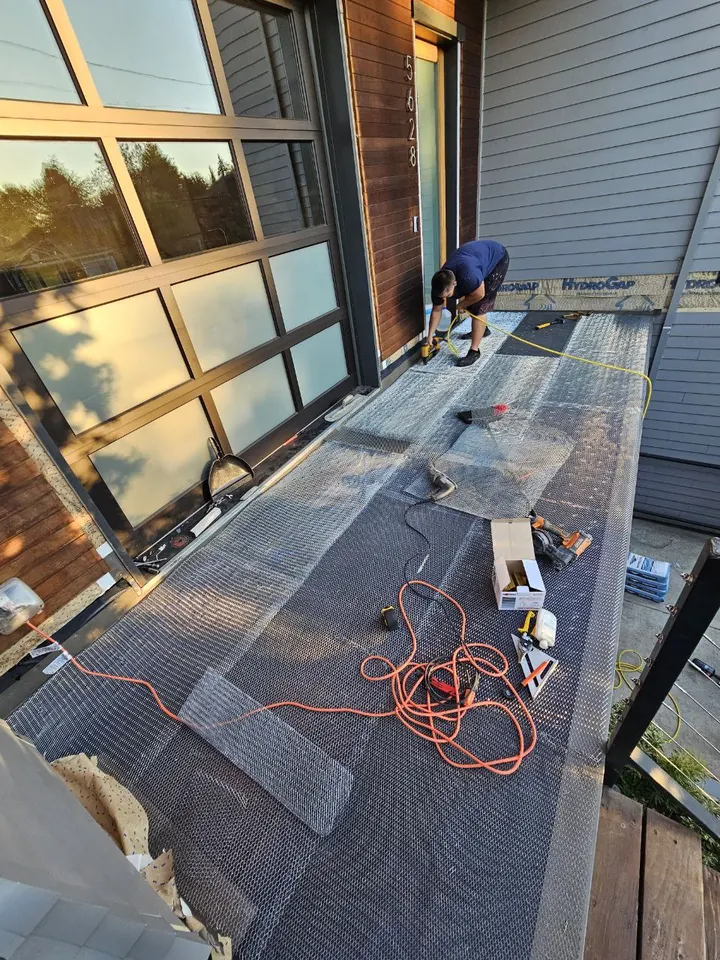
Repairing the wood treats the result. Waterproofing treats the cause. Once the substrate is sound, we install the Westcoat ALX Pro waterproof walking deck system:
- sheet membrane on every plywood seam
- reinforcing lath stapled across the deck
- a base coat troweled into the lath
- a fiberlath-reinforced resin membrane, which forms the waterproof layer
- a slurry coat and a texture coat for a uniform, slip-resistant surface
- an SC-10 acrylic topcoat to seal the system
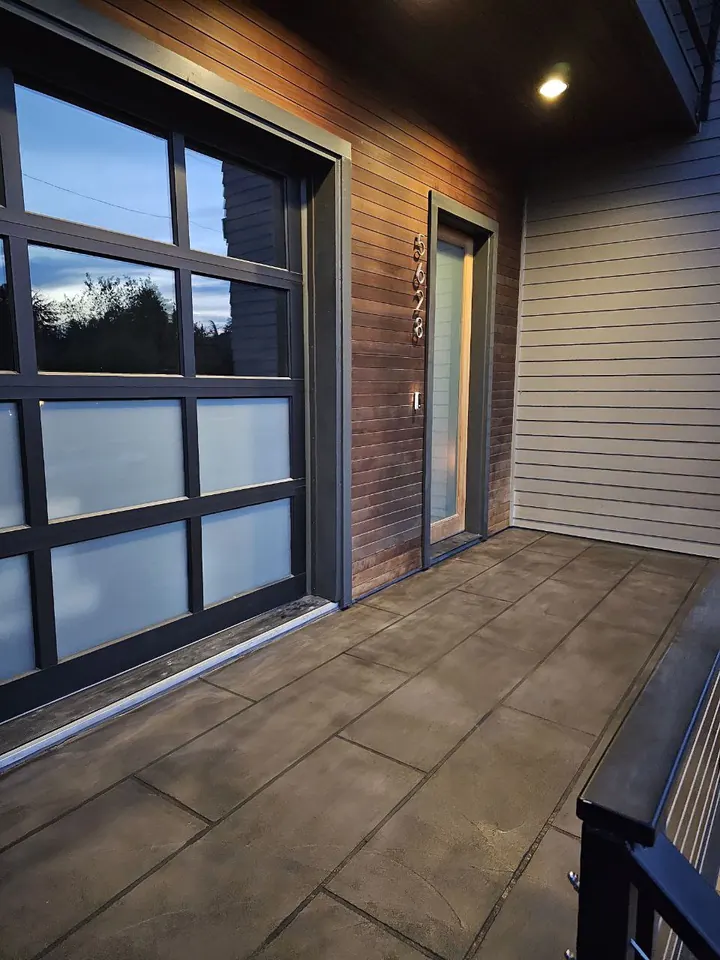
Westcoat's specification also calls for metal flashing at the wall and a drip edge at the outside of the deck, so the perimeter is protected as well as the surface. The result is a bonded, waterproof surface with the look and feel of concrete. Pattern options include stone and stamped looks that read as finished outdoor flooring rather than a thin paint film. For a closer look at each layer, read What Is the Westcoat ALX Pro Deck Coating System?
When Part of the Project Is Concrete
Not every Vancouver outdoor living space is plywood. Many homes combine a wood balcony with concrete entry steps, a covered porch slab or a walkway along the house. Where we coat concrete as part of the same project, preparation still comes first. On open slabs we prepare the concrete by diamond grinding or dustless shot blasting — steel shot fired at the surface and vacuumed back up with the dust — and we never acid etch. Shot blasting suits larger open concrete areas and stripping thin old coatings; grinding handles edges and tight spots. That mechanical profile is what lets a coating bond into the slab the same way sound plywood and a full ALX Pro build protect a repaired wood deck.
Dry Rot Repair During the Rainy Season
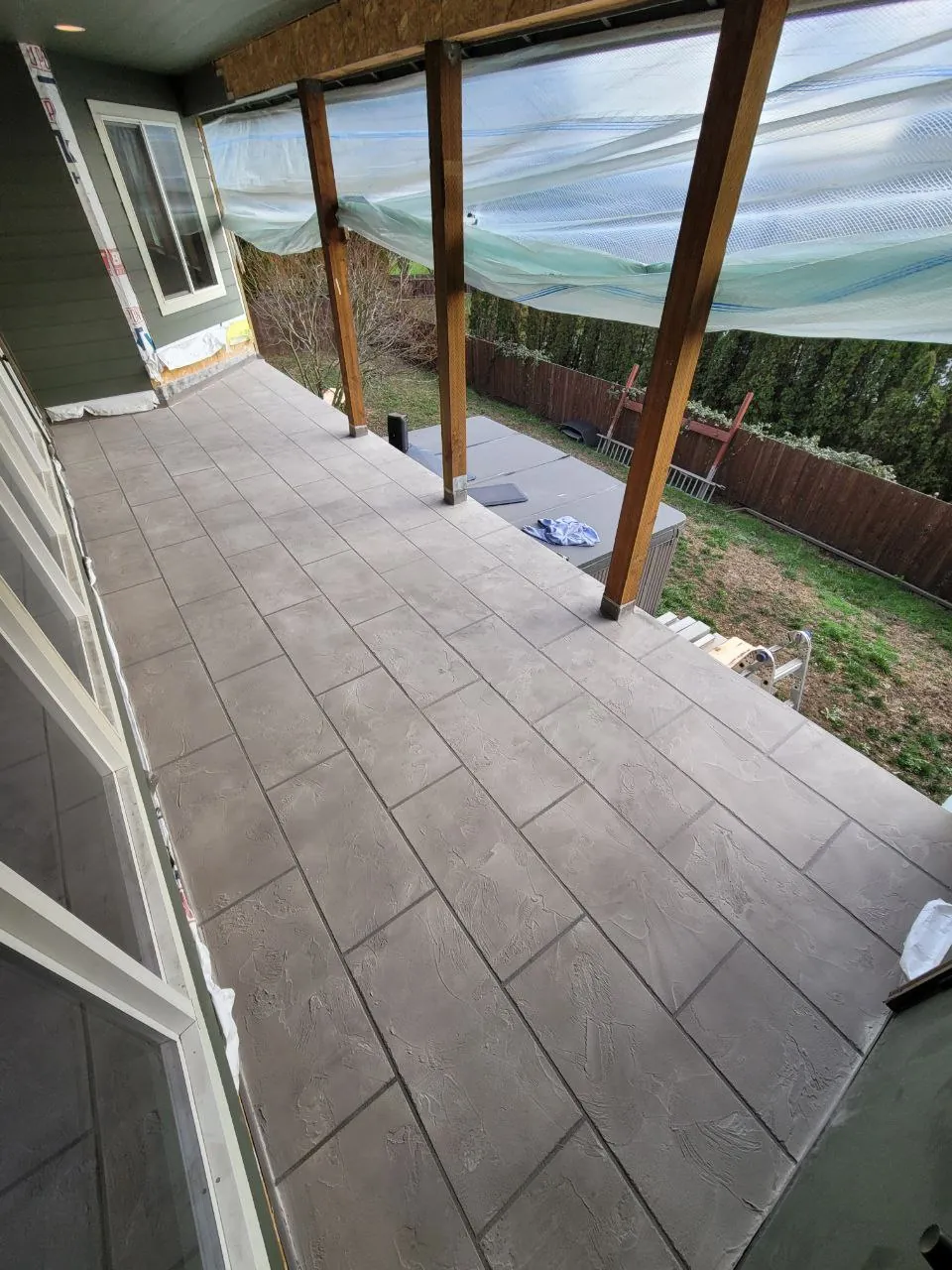
Rot does not pause for summer, and waiting through another wet season gives it more time to spread. We install year-round. In rain, we tent the deck with tarps and schedule each coat around the weather. Work pauses only when temperatures fall below the manufacturer's minimum. Our article on deck coating in Pacific Northwest rain explains how this works in practice.
The plywood still has to be dry before the system goes down. Tenting protects the work area so each stage can proceed without waiting for a perfect forecast. That is often the difference between catching rot this season and watching it grow through another winter.
What Homeowners Usually Notice First
Most calls start with one of a few everyday clues rather than a full structural inspection:
- A soft or bouncy area underfoot that was not there a year ago
- A brown or gray stain on the ceiling or soffit under the deck
- Peeling, cracked or bubbling coating that keeps coming back after touch-ups
- Standing water that sits on the surface after rain
- Rusted, loose or missing flashing at the wall or outer edge
Any of those can mean water has already reached the plywood. Touching up the topcoat without opening the surface does not stop the decay underneath. Related reading: Signs Your Deck Is Failing.
Vancouver Neighborhoods We Serve
We are based in Vancouver and repair and waterproof decks and balconies throughout the city, including Felida, Salmon Creek, Hazel Dell, Orchards, Cascade Park, Fishers Landing, East Vancouver and downtown. We also work in Camas, Washougal, Ridgefield, Battle Ground, Brush Prairie and La Center, and across the Portland metro. The climate pattern is the same across those towns: long wet stretches, short drying windows, and decks that stay damp when the surface or edges have failed.
Warranty Coverage
360 Surfaces is a Westcoat Qualified Contractor Applicator (QCA). ALX Pro installations are eligible for up to a 20-year Westcoat manufacturer warranty depending on the build, and every project includes our 5-year workmanship warranty. For how the two warranties differ, read Deck Coating Warranties: Manufacturer and Workmanship Coverage Explained.
Frequently Asked Questions
Can you repair just the rotted section of my deck?
We repair dry rot as part of a waterproof deck restoration: the damaged area is rebuilt, and then the deck is waterproofed so water cannot reach the new wood. We do not offer standalone board replacement on open wood decks.
How do I know if my deck has dry rot?
Common signs include soft or bouncy spots, stains on the ceiling below, peeling or cracked coating, standing water after rain, and rusted or loose flashing. Those clues point to where water has been getting in; opening the surface confirms how far the decay has spread.
Can ALX Pro go over my existing deck surface?
Often, yes. Westcoat designed ALX Pro so it can be installed through most existing deck systems, provided the plywood and framing below are sound. Where they are not, the damaged material is repaired first.
What shapes the scope of a dry rot repair?
How far the damage extends, the size of the deck, the finish and any railing work all change the job. You receive a written estimate after an on-site inspection, once we can see the substrate rather than guessing from the walking surface alone.
Do you work through the rainy season?
Yes. We tent the deck with tarps when weather threatens and schedule coats around conditions. Work pauses only when temperatures fall below the manufacturer's minimum.
Request a Deck Inspection in Vancouver, WA
If your deck or balcony is soft underfoot, leaking or peeling, the sooner it is inspected the more of the structure can usually be saved. Request an estimate online, or email info@360surfaces.com. To see the system, the warranties and recent projects, visit our waterproof deck coating page.
360 Surfaces
Published November 10, 2026