Somebody painted your garage floor in 2006. Maybe the previous owner, maybe you, with a two-part kit from the hardware store. It looked fine for a year, then the tires pulled it up in patches and now it flakes off every time you sweep. This is the most common floor in Salmon Creek, Klineline, and Pleasant Valley, because the subdivisions went up fast in the 90s and 2000s and the kits went on soon after.
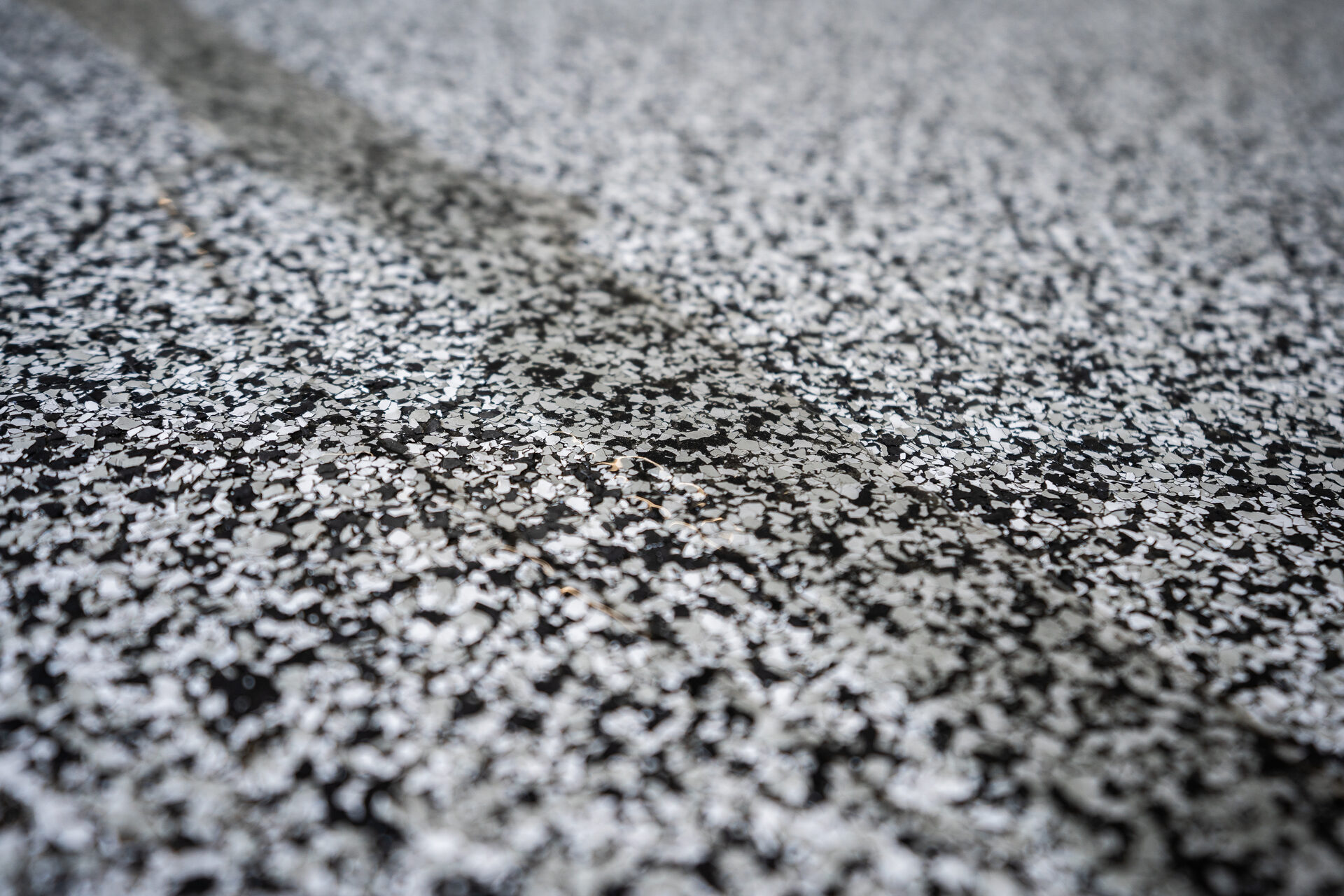
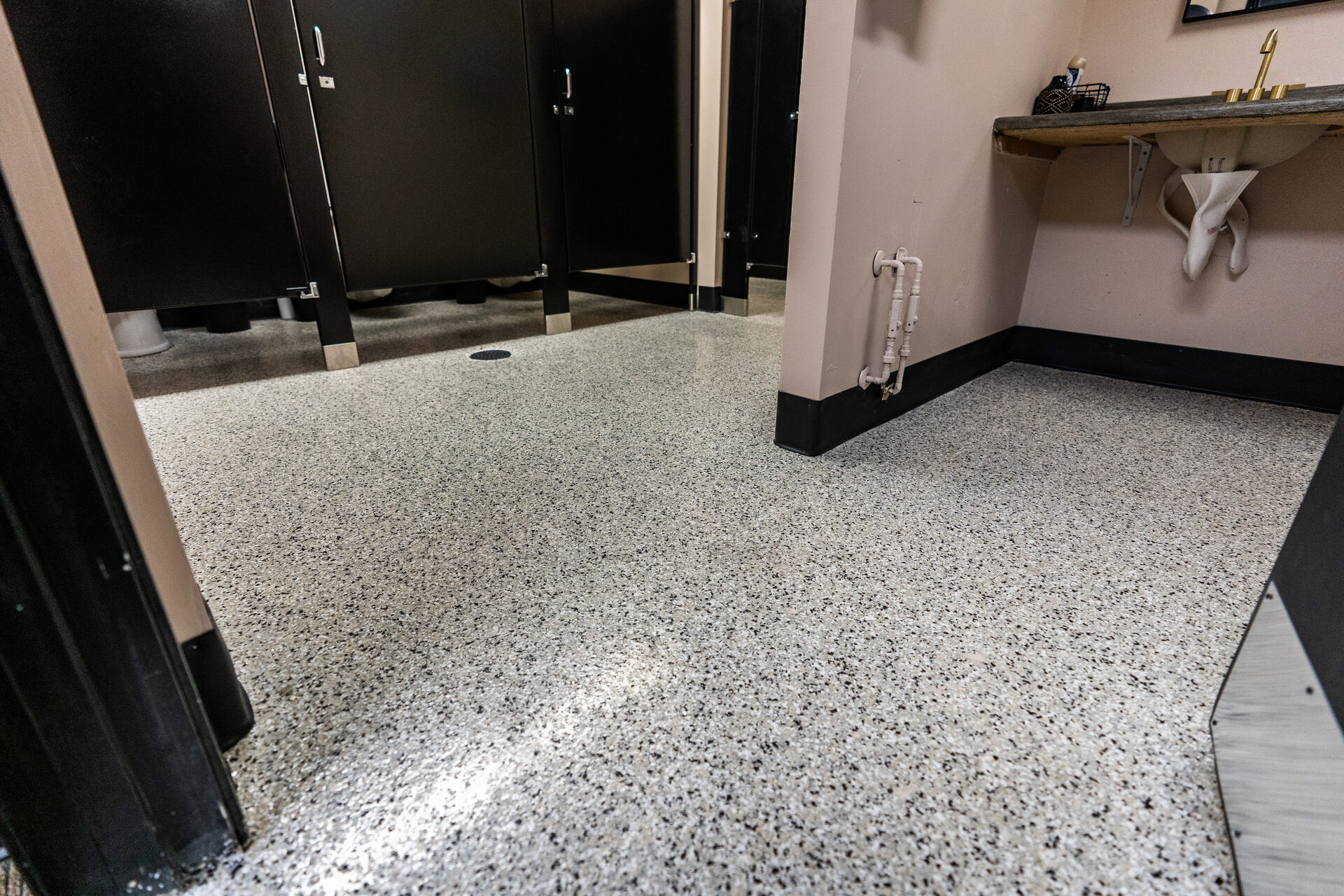
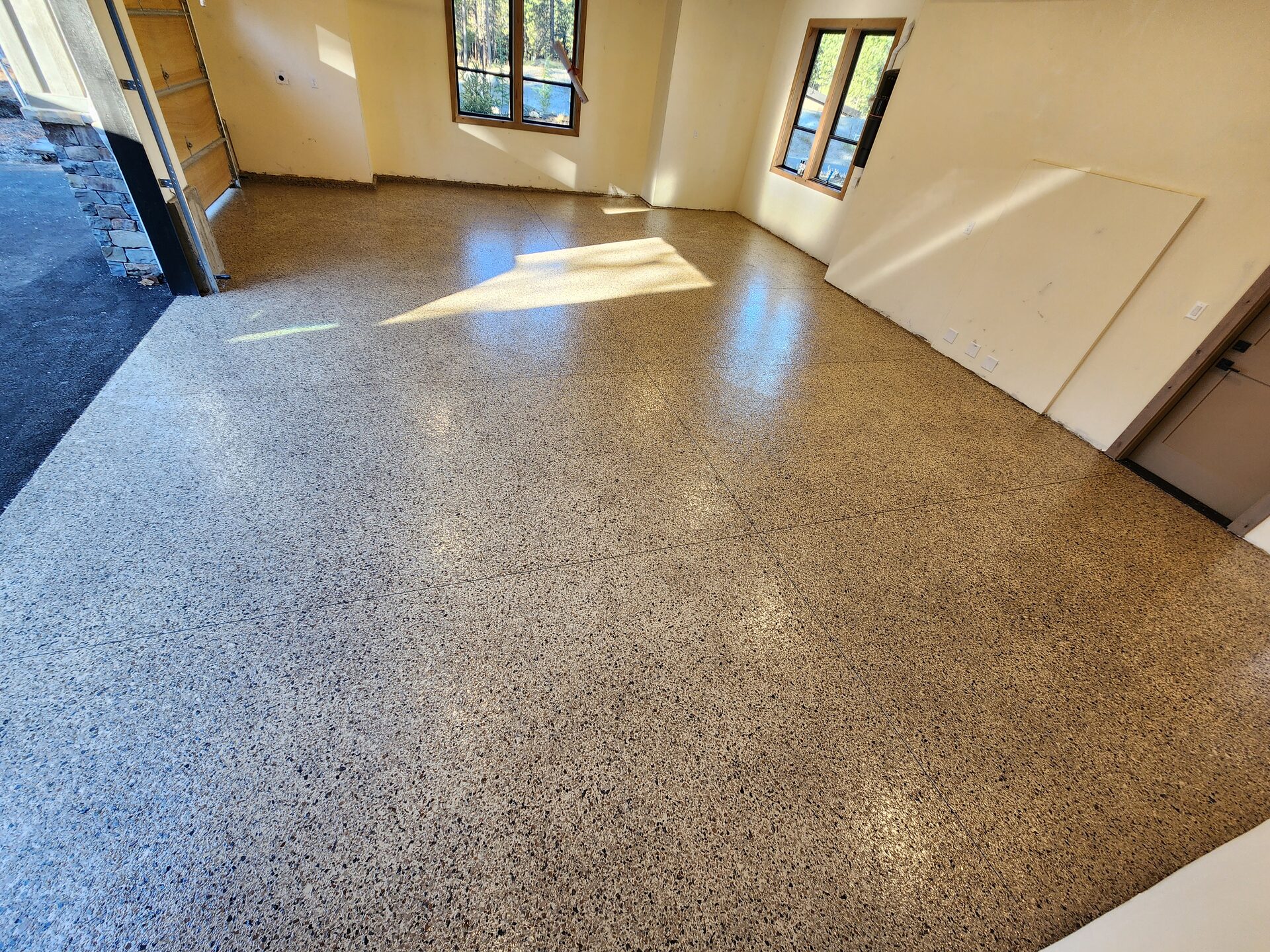
Removing a failed coating is not optional and it is not quick. We take the entire slab down to bare concrete by diamond grinding or dustless shot blasting, picked for the space, which takes off the old paint, the tire marks, and the top skin of the slab in one operation. Then the floor gets a 100% solids epoxy base, a full flake broadcast, and a polyaspartic topcoat. We are fifteen minutes away, so the schedule is flexible.
Control Joints, Tire Marks, and a Coating That Stays Down
The slabs themselves are fine. A 25-year-old builder slab in a Salmon Creek two-story is structurally sound; what it has is cracking along the control joints, staining where the cars park, and whatever was rolled over it last time. Cracks get a polyurea fill and are ground level. Joints are typically left as joints so the slab can still move, but filled and coated so they do not collect dirt.
Why the kit peeled and ours will not: the kit was a thin water-based epoxy over acid-etched concrete, and it let go where hot tires softened it. Our base is solvent-free epoxy at 100% solids over diamond-ground or shot-blasted concrete. It goes on ten times thicker and bonds mechanically into the profile. The polyaspartic on top is what the tires actually touch, and it does not soften at tire temperature.
Our Epoxy Flake Floors System
Materials: 100% solids epoxy base, full flake broadcast, Flake Lock, polyaspartic topcoat
Thickness: 30-40 mils
Install time: 2-3 days
Walk on it: 1-2 days after
Park on it: about a week after
Warranty: 5 years on workmanship
Hot-tire pickup resistant. Chemical and impact rated.