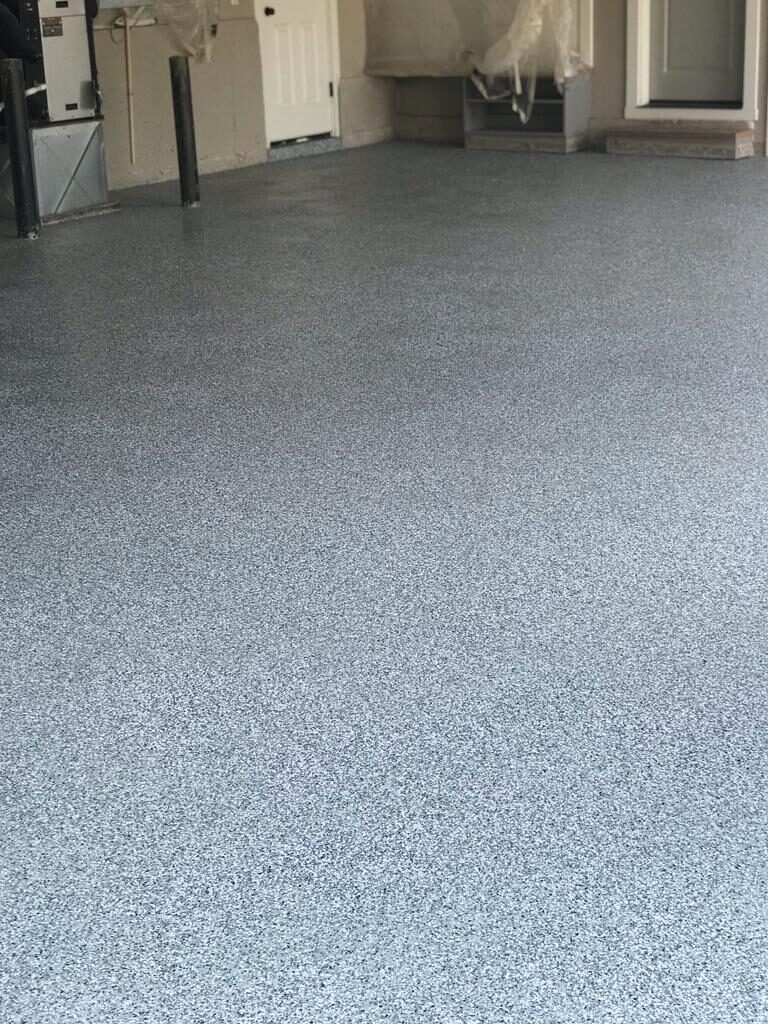
A 1992 two-story on a cul-de-sac in Ibach or Byrom has a 2-car garage slab that has done its job: no heaving, no crumbling, solid all the way through. What it has is the wear of three decades. Tire tracks worn into the surface where the same two cars have parked, cracks along the control joints, and a builder sealer that has gone chalky and patchy. None of that is structural. All of it has to come off before epoxy goes on.
Tualatin is about 40 minutes south on I-5 for us. The town sits on a flat river valley, which means foggy winters and, more to the point, a Tualatin River that raises the water table every spring. Slabs near the river and Brown's Ferry Park can read high on a moisture test in April when they would pass in August. We test at the estimate and again the day before install if the first number was close.
What Thirty-Year-Old Builder Concrete Needs From a Coating
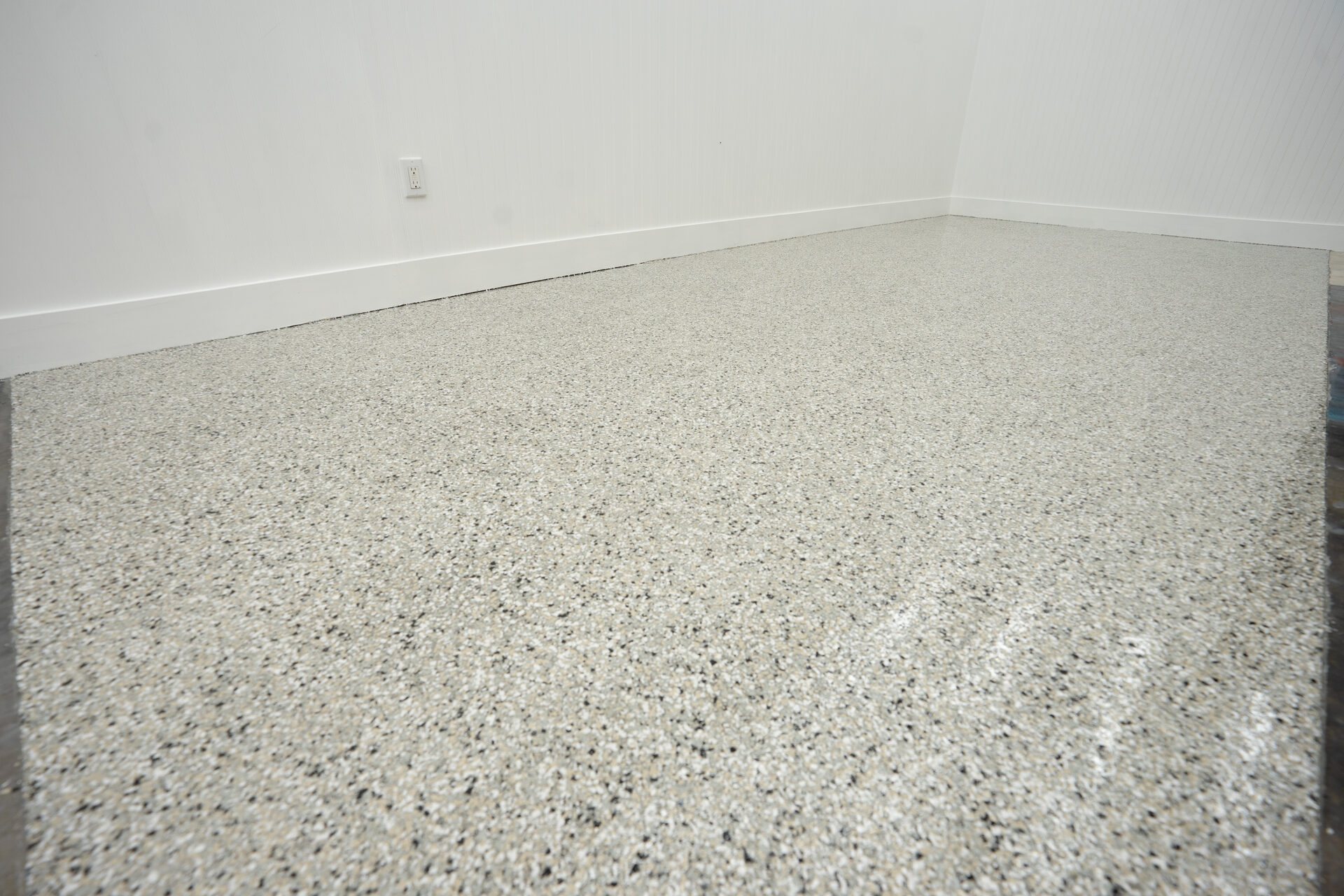
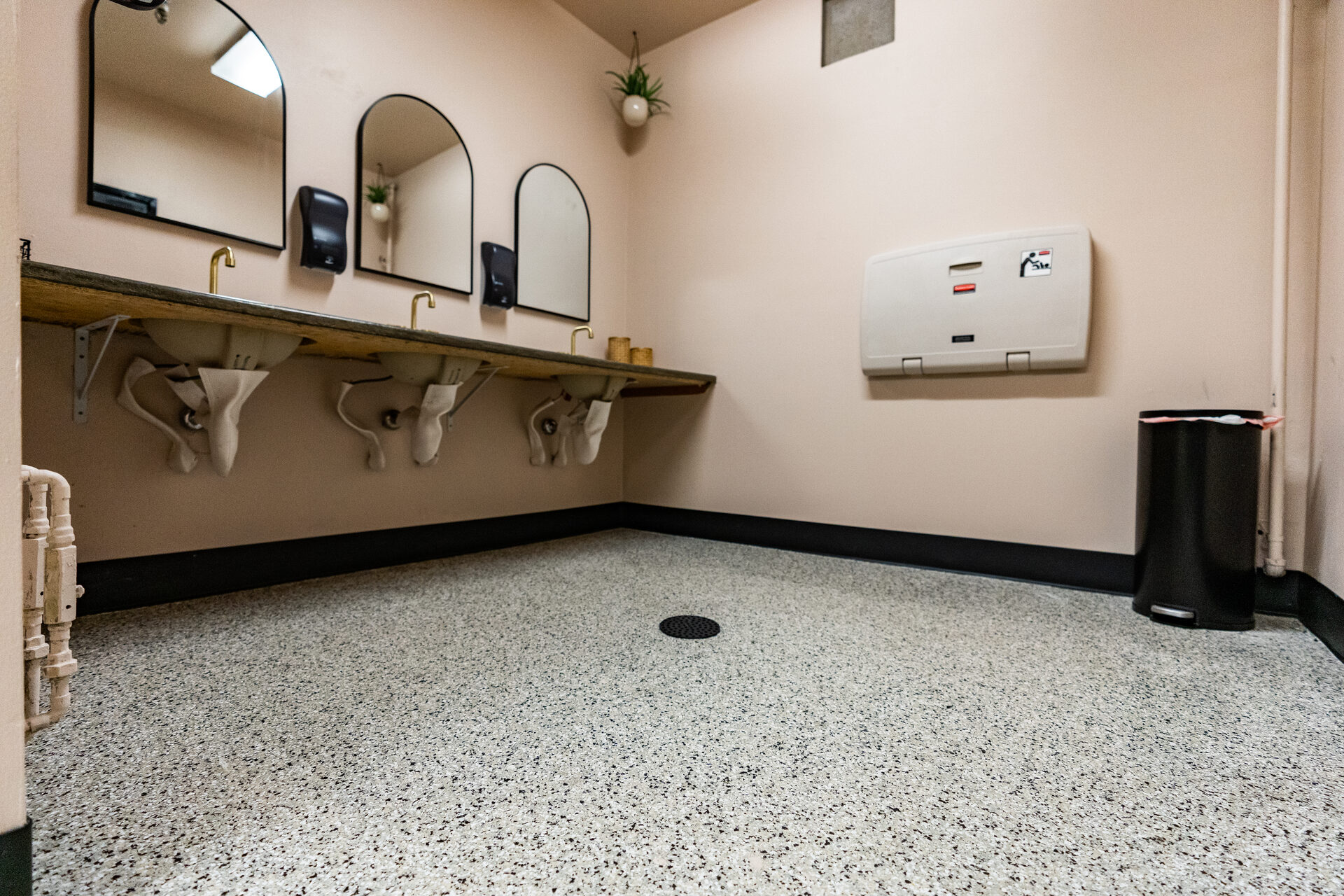
The old sealer is the first thing the grinder takes off. It was never meant to last, it does not bond well, and it blocks epoxy from reaching the concrete. Diamond grinding removes it and the top skin of the slab at once, opening a profile that 100% solids epoxy locks into. Control-joint cracks get polyurea and a flush grind. Then the flake broadcast covers everything to refusal and the polyaspartic topcoat seals it.
That topcoat is what makes the floor last on a Tualatin driveway. Summers here are warm and cars come home hot; a water-based clear would let go under the tires in a season or two. Polyaspartic does not soften at tire temperature, and spilled gas or deicer tracked in off I-5 wipes off it. Thirty to 40 mils, warranted 5 years on workmanship, and a floor that finally looks like the rest of a well-kept house.
Our Epoxy Flake Floors System
Materials: 100% solids epoxy base, full flake broadcast, Flake Lock, polyaspartic topcoat
Thickness: 30-40 mils
Install time: 2-3 days
Walk on it: 1-2 days after
Park on it: about a week after
Warranty: 5 years on workmanship
Hot-tire pickup resistant. Chemical and impact rated.