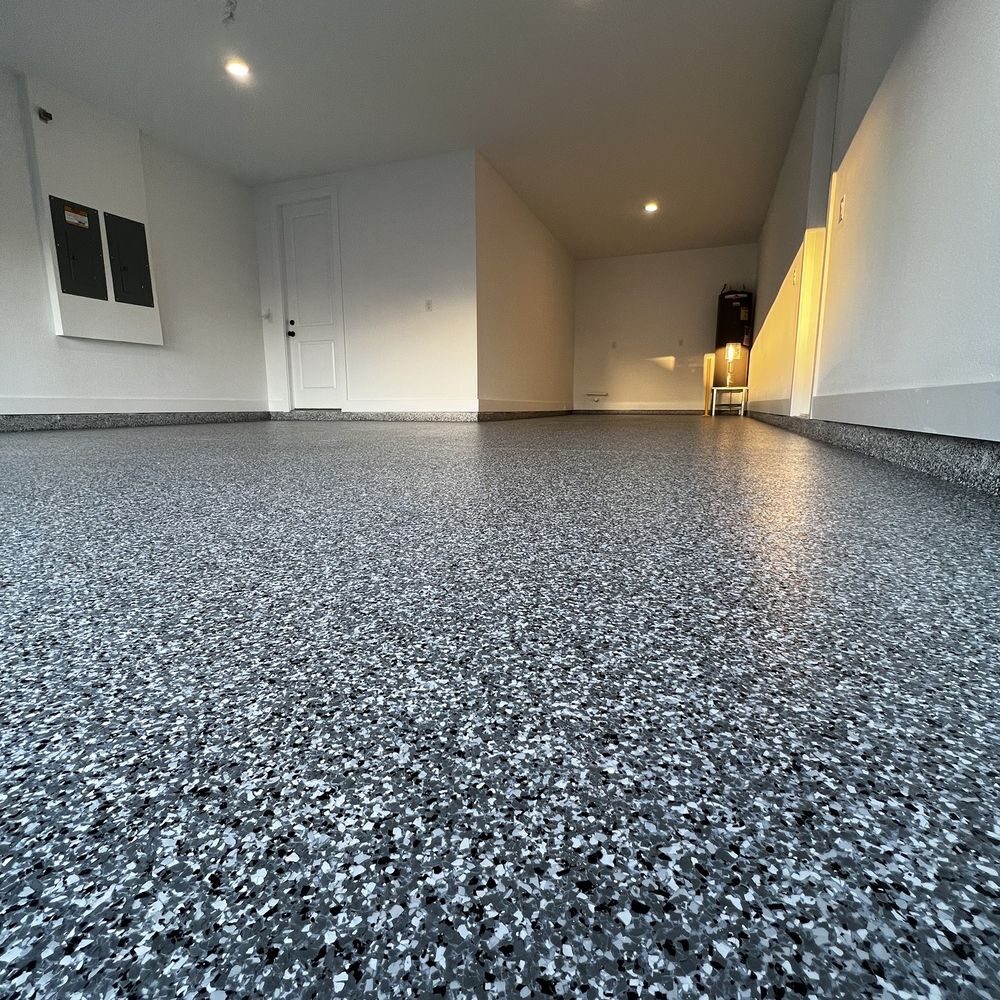
Drive out SR-14 past Camas, about 25 minutes from our shop, and the weather changes. The Gorge wind hits Washougal first, and with it comes the dust and grit that ends up on every garage floor from downtown to Cape Horn. Bare concrete grinds that grit into itself and dusts forever. A flake floor with a polyaspartic topcoat takes the same grit and lets you push it out the door with a broom.
Washougal has three kinds of floors we see over and over. Older 1940s to 1970s slabs near the river and downtown, often patched more than once. Newer hillside garages up toward Lookout Ridge and Mount Norway that see heavy tracked-in grit. And the big broom-finished shop slabs on acreage east of town, where the owner parks a tractor next to the truck. We coat all three, but the prep is different for each.
Built for Grit, Ice Days, and Shop Traffic
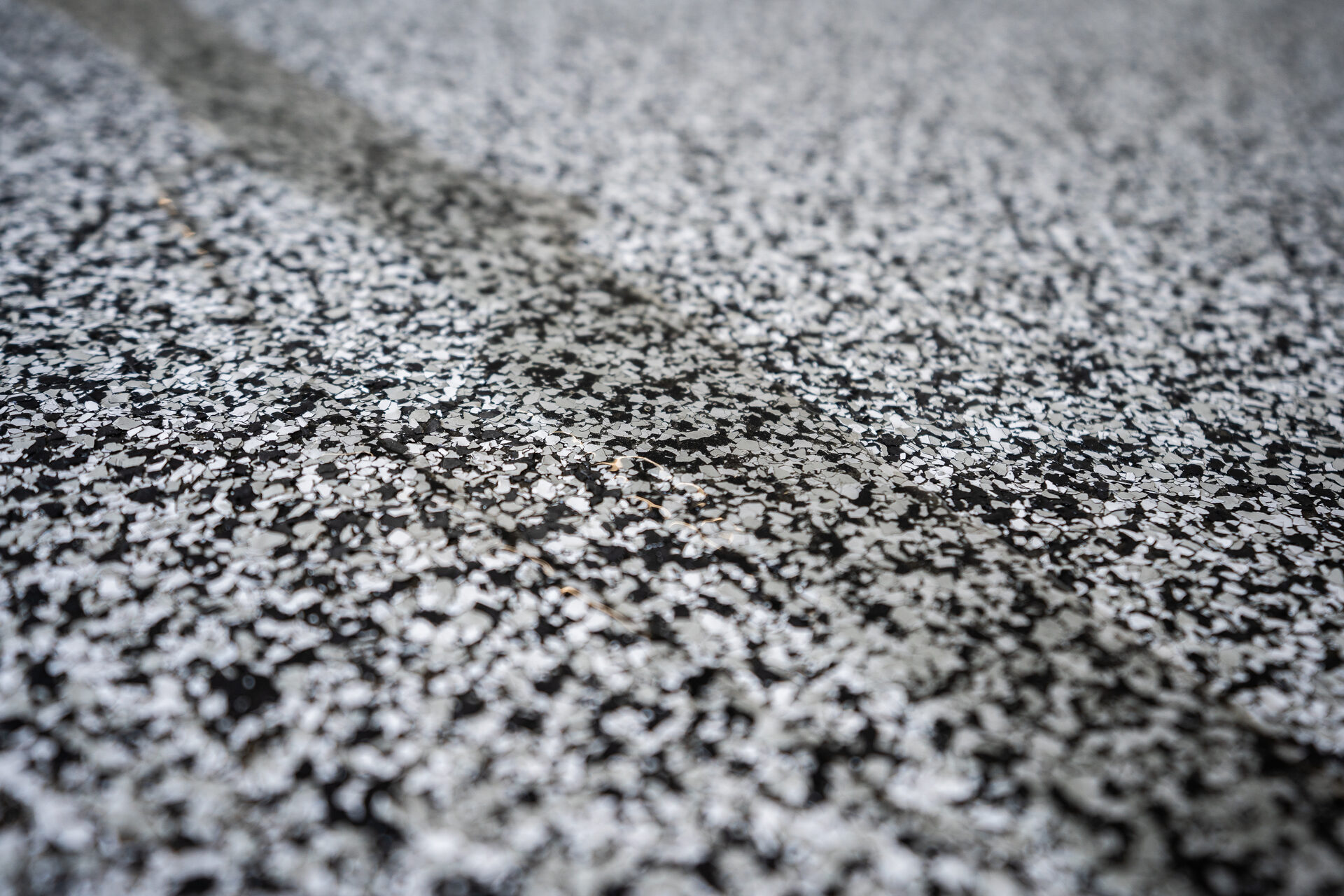
Ice days are more common in Washougal than in Vancouver, and ice days mean deicer on the road and salt on the floor. Salt sitting on bare concrete draws moisture into the slab. Salt sitting on a 100% solids epoxy floor with a full flake broadcast is just dirt to be rinsed off. The polyaspartic topcoat does not react to it, and the gas, oil, and deicer slush that drip off a truck on Washougal River Road wipe straight off.
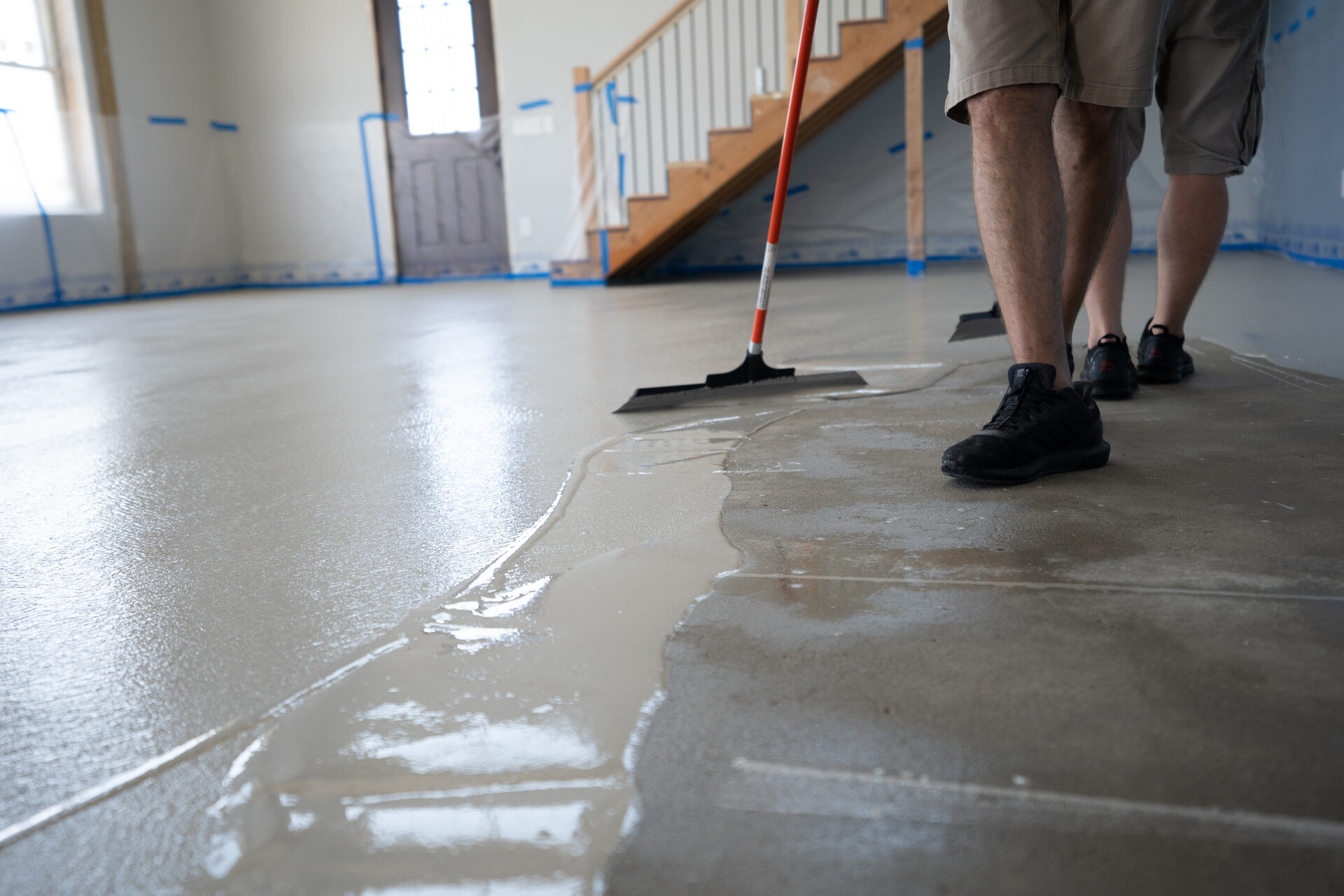
Shop slabs on acreage are usually thick and broom-finished, which is a rougher surface than a house garage. We still diamond grind or shot blast them, because the goal is a consistent profile the epoxy can lock into, not just a clean floor. Then the base coat, a full broadcast of flake to refusal, and the topcoat, 30 to 40 mils total. That build handles a dropped socket wrench or a tractor tire without chipping.
Our Epoxy Flake Floors System
Materials: 100% solids epoxy base, full flake broadcast, Flake Lock, polyaspartic topcoat
Thickness: 30-40 mils
Install time: 2-3 days
Walk on it: 1-2 days after
Park on it: about a week after
Warranty: 5 years on workmanship
Hot-tire pickup resistant. Chemical and impact rated.