
Most people shopping for deck railing already know what they like the look of. The harder part is knowing how that railing will live on their deck: how much of the yard you still see from a chair, how often you will be out there cleaning it, and how it holds up when the rain starts in October and keeps going for months. This guide puts the four railing types we get asked about most side by side, cable, black aluminum picket, glass and wood, and then walks through a simple way to decide between them.
We have written about railing before. Our first guide covers cable, glass and aluminum railing one at a time, and our cable railing guide goes deep on cable for decks and covered patios. This one is a decision guide: one comparison table, the honest tradeoffs of each type in a wet climate, and the questions that usually settle it. It also adds wood, because a lot of the decks we see around Vancouver and Clark County still have wood railing and the owners are deciding whether to keep it or replace it.
The Short Answer
If you only read one section, read this one. These are the patterns we see when homeowners pick a railing and are still happy with it a few rainy seasons later:
- You want the view and do not mind a quick rinse now and then: cable railing.
- You want the least fuss, a classic look, or railing for porches and stairs: black aluminum picket railing.
- You want almost nothing between you and the view: glass railing, as long as you are fine cleaning glass.
- You love the warm look of wood and enjoy keeping it up: wood railing, with a plan for regular sealing and checking.
Everything below explains why, so you can check those patterns against your own deck.
Deck Railing Types Side by Side
Here is how the four types compare on the things people actually care about once the railing is installed. These are general tendencies, not guarantees. The exact product, how it is installed and how much weather your deck gets all make a difference.
| Question | Cable | Aluminum picket | Glass | Wood |
|---|---|---|---|---|
| Look | Clean, modern, light lines | Classic, tidy, works on most houses | Sleek and minimal | Warm, traditional, natural |
| View from a chair | Mostly open, thin lines across it | Vertical bars every few inches | The most open of the four | Often the most blocked; depends on the design |
| Routine cleaning | Rinse and gentle wash a few times a year | Occasional rinse or wipe | Frequent; rain and pollen show on glass | Wash, plus sealing or staining on a schedule |
| Rainy-season wear | Watch for tea staining and cable slack | Holds up well; touch up any scratches | Water spots and film, but glass does not rot | Wood can check, rot and grow moss if water sits |
| Periodic upkeep | Check cable tension and post bases | Check fasteners and post bases | Check panel fittings and post bases | Check for soft spots, loose posts and splinters |
| Best fit | Decks and covered patios with a view | Porches, entry steps, stairs, low-fuss decks | Decks where the view is the whole point | Owners who want wood and like the upkeep |
Notice that the last row is about fit, not "best." There is no single best railing. There is the railing that matches your view, your house and how much time you want to spend on upkeep.
Cable Railing: The View With a Little Upkeep
Cable railing uses thin stainless steel cables strung between posts. The railing we install pairs stainless cables with black aluminum posts. From a seat on the deck, your eye slides between the cables, so the yard, trees or neighborhood stay in the picture. That is why cable is so popular on decks that look out at something.
In the rain: stainless steel is a good choice for a wet climate, but it is not "never touch it." Over a long wet season you may see light brown tea staining, especially where grime and moisture sit on the cable. A rinse with fresh water and a gentle wash with mild soap a few times a year keeps it in check. Avoid steel wool, wire brushes and harsh chloride cleaners, which can scratch the stainless or leave particles behind that cause rust spots.
Over time: cables can loosen and need retensioning with the system's own fittings. It is a quick job, but it is a job. If you want a railing you never have to think about, look at aluminum pickets instead.
Pick cable if: the view matters to you and you are fine with a light cleaning routine and an occasional tension check.
Aluminum Picket Railing: The Low-Fuss Classic
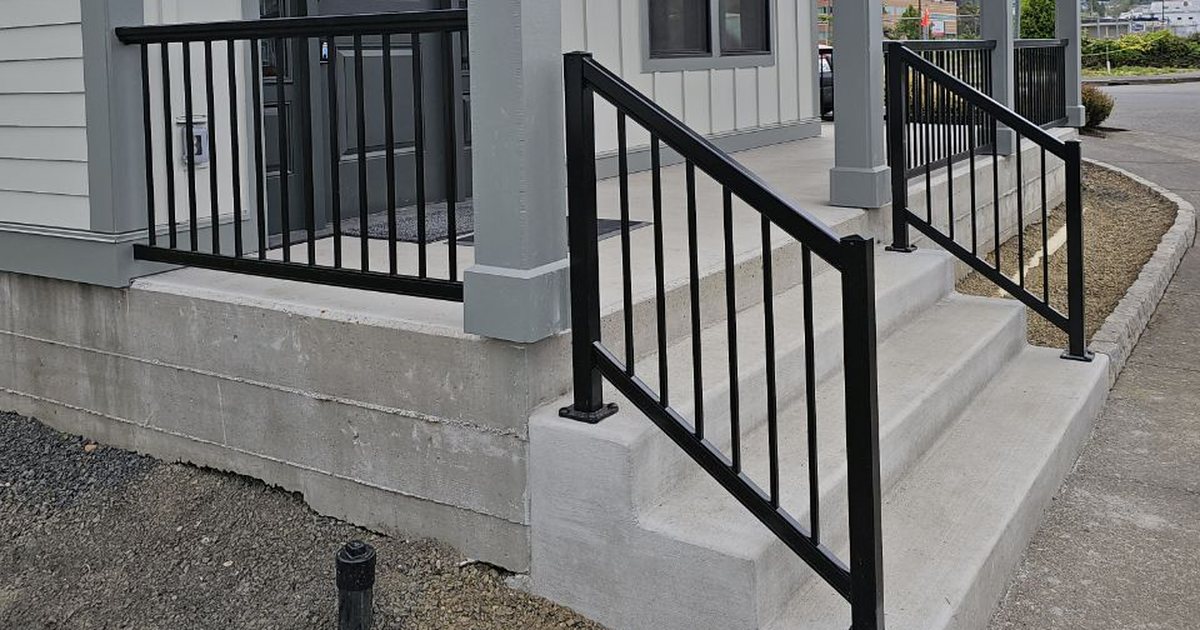
Picket railing is the familiar style: a top rail, a bottom rail and vertical pickets in between. The picket railing we install is black aluminum, which looks clean against most siding colors and pairs well with a light or gray deck coating. The cover photo for this post is one of our picket railing jobs on a covered porch and its entry steps.
In the rain: aluminum does not rot, and there is no wood to seal. In our experience this is the railing type that asks the least of a homeowner through a wet Northwest winter. An occasional rinse to take off dirt, pollen and fir needles is usually all it needs. If the finish gets scratched by furniture or a ladder, touch it up so the scratch does not keep collecting grime.
The tradeoff: the view. Vertical pickets put a bar every few inches across your line of sight. On a porch, entry steps or stairs, that hardly matters, and pickets feel solid under the hand. On a deck that looks out over a yard, some people find the bars busier than they expected once they sit down.
Pick aluminum picket if: you want low maintenance and a classic look, or the railing is for a porch, stairs or a walkway rather than a view.
Glass Railing: The Most Open View
Glass railing uses clear panels between posts or in a frame. From a chair, it is the closest thing to having no railing at all, which is why people choose it for decks where the view is the main event.
In the rain: glass will not rot or rust, but it shows everything. Rain leaves spots as it dries, pollen and dust build a film, and birds and kids leave their marks. Plan on cleaning glass railing more often than any of the other three types if you want it to look clear. Some homeowners love that job; some get tired of it. Be honest with yourself about which one you are.
Other things to think about: glass panels are heavier and each one is sized for its spot, so glass is quoted for your space rather than off a simple per-foot list. On a covered patio, glass keeps the open sides bright. On an exposed deck, it also cuts some wind, which some people like.
Pick glass if: the view is the whole point and you do not mind keeping the panels clean.
Wood Railing: Warm Look, Most Upkeep
Many decks in our area were built with wood railing, and it can look great. Wood feels warm, matches a traditional house well and can be painted or stained to suit you. We do not install wood railing, but we see a lot of it when we come out to look at decks, so it belongs in an honest comparison.
In the rain: this is where wood has a hard time in the Pacific Northwest. Wood takes on water. Top rails and the bases of posts stay wet for long stretches, the finish weathers and grays, and the wood can check, split and grow moss or algae. Over enough wet seasons, soft spots and rot can show up, often first at post bases and joints where water collects.
Upkeep: plan on regular washing and a fresh stain or sealer on a schedule that depends on the product and how exposed the deck is. Check every season for loose posts, wobbly rails, soft wood and splinters on the top rail where hands slide along it.
Pick wood if: you really want the look of wood and you enjoy, or are willing to pay for, keeping it up. If your current wood railing is getting soft or loose, that is a good time to look at a metal or glass railing instead of repairing the same problem again.
How to Decide: Five Questions
When homeowners are stuck between two types, these questions usually settle it.
1. What do you look at from your favorite seat?
Sit where you actually sit, at eye level, and look out. If you see a yard, trees or lights you love, cable or glass will protect that view. If you see a fence or the neighbor's wall, the view argument goes away and pickets are often the easier choice.
2. How much cleaning will you really do?
Glass needs the most cleaning to look its best, cable needs a light routine, aluminum pickets need very little, and wood needs washing plus sealing. Pick the railing that matches the effort you will actually put in, not the effort you plan to put in.
3. Is the space covered or open?
Under a roof, rain hits the railing less, but light matters more, so cable and glass are popular for keeping the space bright. On an open deck, the railing takes the full rainy season, which favors materials that shrug off water.
4. Is it a deck, a porch or stairs?
For entry steps, porches and stairs, people mostly want a solid, simple rail to hold, and black aluminum pickets do that well. Decks with a view are where cable and glass earn their place. You can also mix them: cable or glass along the view side of a deck, and pickets on the stairs.
5. What does your house look like?
Modern houses with clean lines tend to suit cable and glass. Craftsman and traditional houses often look right with pickets or wood. Black aluminum is the most flexible and fits most siding colors.
Railing and the Deck Surface Underneath
A railing is attached to the deck, so the two should be planned together. Railing posts mount either on top of the walking surface or on the side of the deck framing. On a waterproof coated deck, a post that goes through the surface is a place where water can try to get in, so the order of work and the detailing around each post matter. If you are coating the deck and replacing the railing, plan both at once so the posts and the waterproofing are done in the right order.
On concrete porches and patios, the same thinking applies to post anchors. When we coat concrete, we prepare it first by diamond grinding or dustless shot blasting, chosen for each space, so the coating has a clean, open surface to bond to. Any railing posts are worked into that plan rather than added as an afterthought.
Color is part of planning too. Black railing reads crisp against a light or gray coated deck. If you are choosing a deck finish at the same time, look at the railing color and the deck color together before you decide.
Codes, Permits and Safety
Deck railing is a safety item, and building codes set requirements for things like railing height, the spacing of the infill and how much load the railing has to hold. Those requirements depend on where you live, the kind of structure and the type of railing, and they can change. We are not going to quote code numbers here. Before you plan a new railing, confirm the current requirements with your local permit office, such as the City of Vancouver or Clark County, and we will go over the details for your project during the estimate.
Warranty on the Deck Underneath
360 Surfaces is a Westcoat Qualified Contractor Applicator. Decks we coat with Westcoat ALX or ALX PRO get a 10-year workmanship warranty from 360 Surfaces, plus up to a 20-year Westcoat manufacturer warranty on ALX PRO. We put the exact terms in writing with your estimate. For details, see our guide to deck coating warranties and our comparison of Westcoat ALX vs. ALX Pro.
Frequently Asked Questions
Which deck railing type keeps the most view?
Glass keeps the most open view, with cable a close second. Aluminum pickets and most wood railing put more material in your line of sight, which matters most on decks that look out over a yard or trees.
Which deck railing needs the least maintenance in a rainy climate?
In our experience, black aluminum picket railing asks the least of a homeowner. It does not rot or need sealing, and an occasional rinse is usually enough. Cable needs a light cleaning routine and tension checks, glass needs frequent cleaning, and wood needs washing plus regular sealing.
Is wood railing a bad choice in the Pacific Northwest?
Not if you want the look and keep up with it. Wood takes on water, so in a wet climate it needs regular washing, sealing and checks for soft spots and loose posts. Owners who do not want that upkeep usually do better with aluminum, cable or glass.
Can I mix railing types on one deck?
Yes. A common combination is cable or glass along the side with the view and black aluminum pickets on the stairs or the sides that face a fence or wall.
Should I replace my railing when I coat my deck?
If the railing is due for replacement, doing both at the same time is usually best, because railing posts and the waterproof surface need to be detailed together. If your railing is in good shape, it can often stay, and we plan the coating around it.
Talk to Us About Your Railing
We install cable, glass and black aluminum picket railing on decks, balconies, covered porches and stairs, on its own or as part of a deck coating project. Serving Vancouver, WA and surrounding communities. You can see a railing price in about 90 seconds, get a deck price online, or request an estimate and email info@360surfaces.com. Your final price is confirmed after photos or a quick visit.
360 Surfaces
Published November 23, 2026
Where We Do This Work
Cable, glass and picket railing across Clark County and the Portland metro:
Vancouver, WA · Camas, WA · Battle Ground, WA · Ridgefield, WA · Salmon Creek, WA · Washougal, WA · Brush Prairie, WA · Hazel Dell, WA · La Center, WA · Longview, WA · Portland, OR · Lake Oswego, OR · Beaverton, OR · Happy Valley, OR · West Linn, OR · Hillsboro, OR · Tigard, OR · Gresham, OR