Basement Floors in Old Portland Houses: What It Takes
Published October 9, 2026 · 6 min read · By 360 Surfaces
Portland has more real basements than anywhere else we work. Most of the older houses in neighborhoods like Irvington, Laurelhurst, Eastmoreland, Alameda and Sellwood were built with a full basement under the house, often almost as big as the main floor. Newer homes on the Washington side mostly sit on crawlspaces or slabs, so if you have a real basement around here, there is a good chance it is under an older Portland house.
Those basements have a lot of potential: a family room, a guest room, a gym, a place for the kids. They also come with old concrete that has been down there for 70 to 100 years. Here is what it takes to put a floor down that lasts.
Why Old Portland Basements Are Different
- Old, thirsty concrete. Slabs poured before modern vapor barriers let ground moisture move up through the floor.
- Patches and cracks. Decades of settling, old repairs, and spots where furnaces, oil tanks or laundry tubs used to sit.
- Old floor tile. Many basements still have 9-inch square tile or old glue on the slab.
- That basement smell. Usually a sign of moisture, and the reason carpet down there rarely holds up.
We Test Before We Quote
Concrete is not waterproof, and old basement slabs move more moisture than most. Under carpet you never see it. Under a coating, too much vapor can push up and make the floor bubble or peel. So we test the slab for moisture before we give you a price, and if the number is high, we use a moisture-blocking primer under the color coats.
If water is actually coming in, like puddles after a storm or a wet wall, we stop and tell you to fix that first. No floor coating fixes a leak.
Old Tile: Check First
Old 9-inch by 9-inch tile and the black glue under it can contain asbestos. We do not grind or pull suspected asbestos tile. It gets tested first, and if it is positive, a licensed abatement company removes it before we start. We will tell you after we see it.
What the Prep Looks Like
Every slab gets diamond ground. That opens up the old, smooth surface so the epoxy grabs on, and it takes down high spots and old paint. Cracks and holes are filled and ground flat. Old patches where equipment used to sit get evened out. This is the part that decides whether the floor lasts, so we do not skip it.
Flake or Metallic Down There?
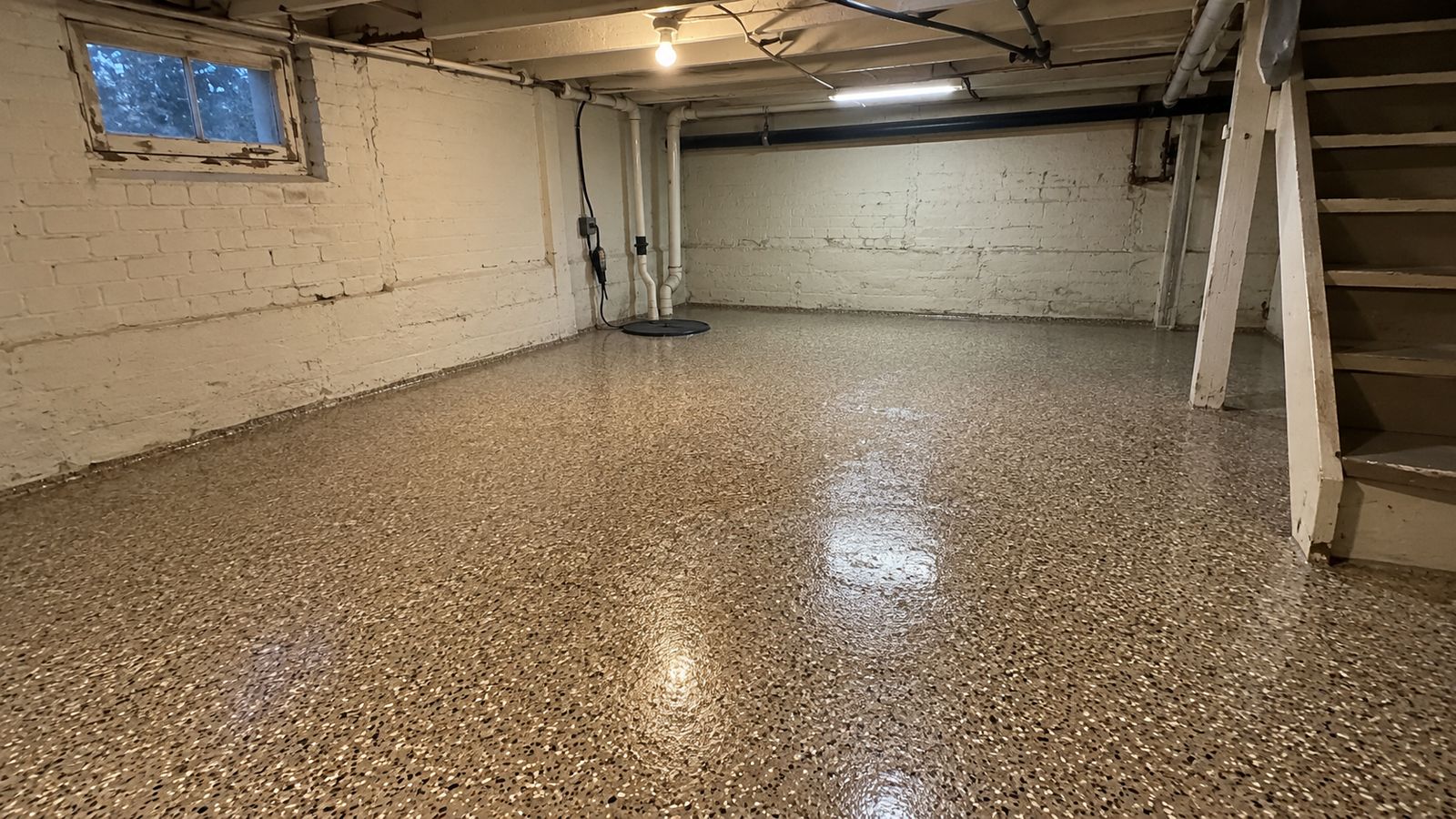
- Flake is the tough, forgiving option. It hides an uneven old slab well and is great for storage, laundry, workshops and gyms.
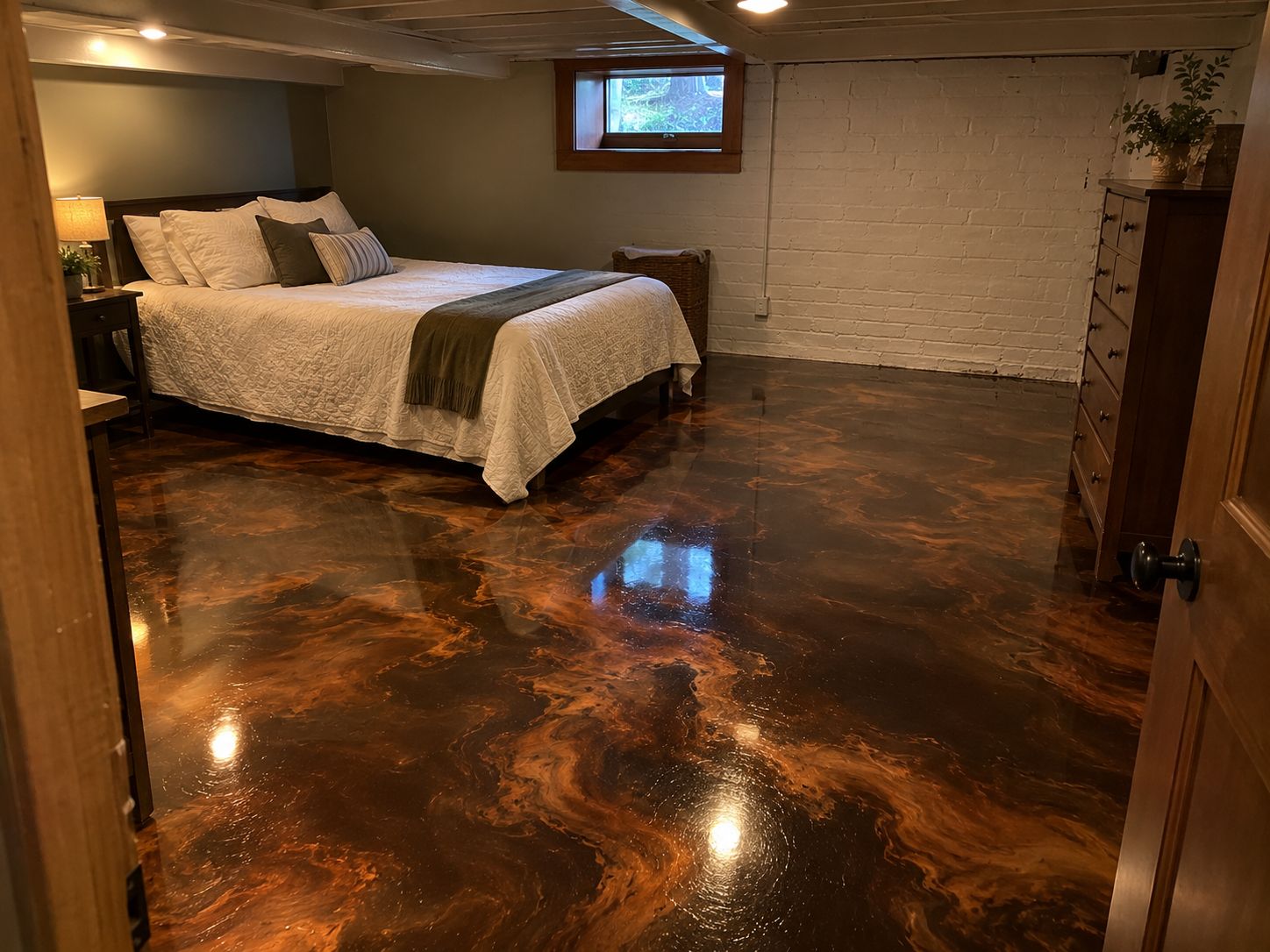
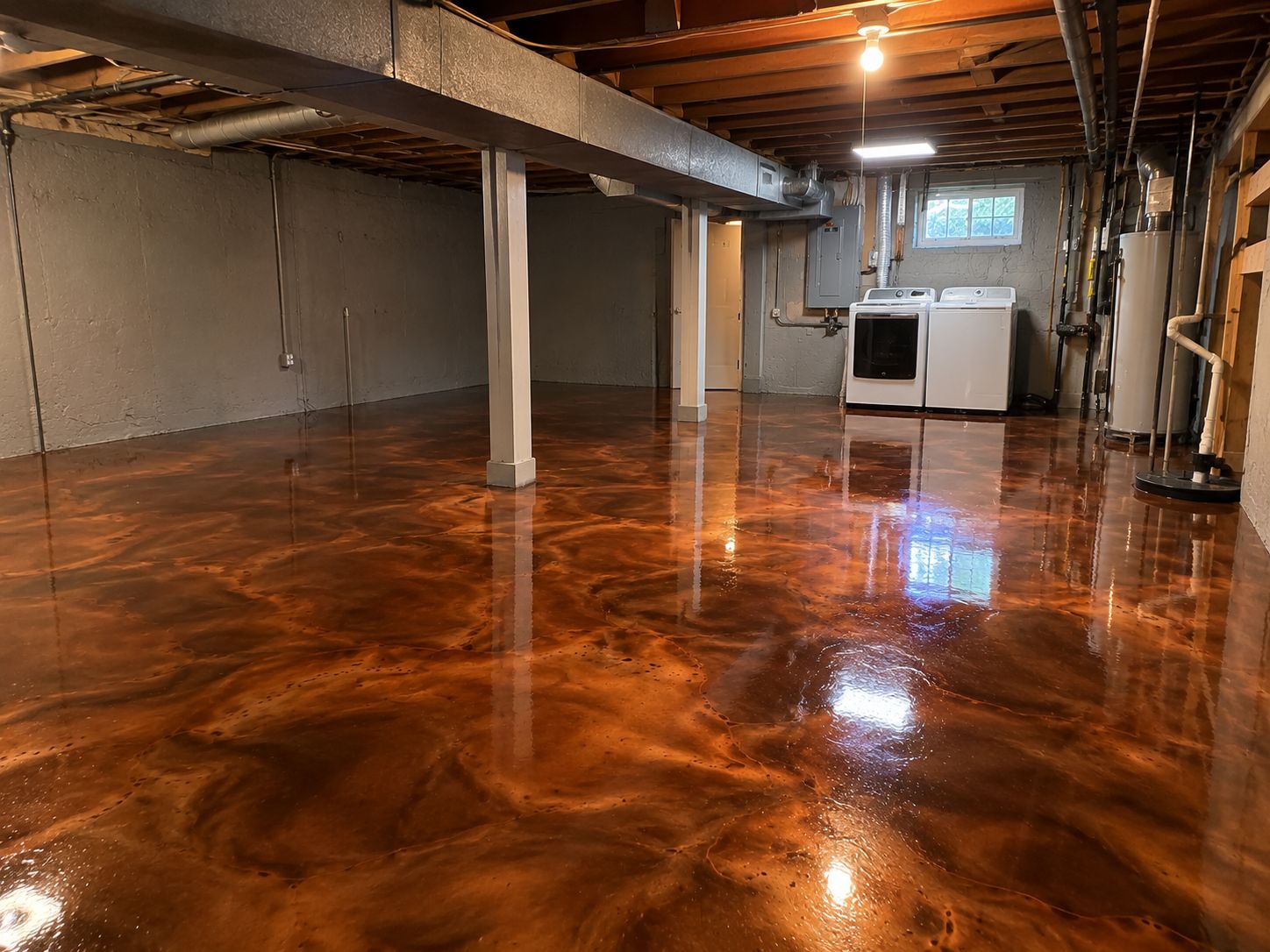
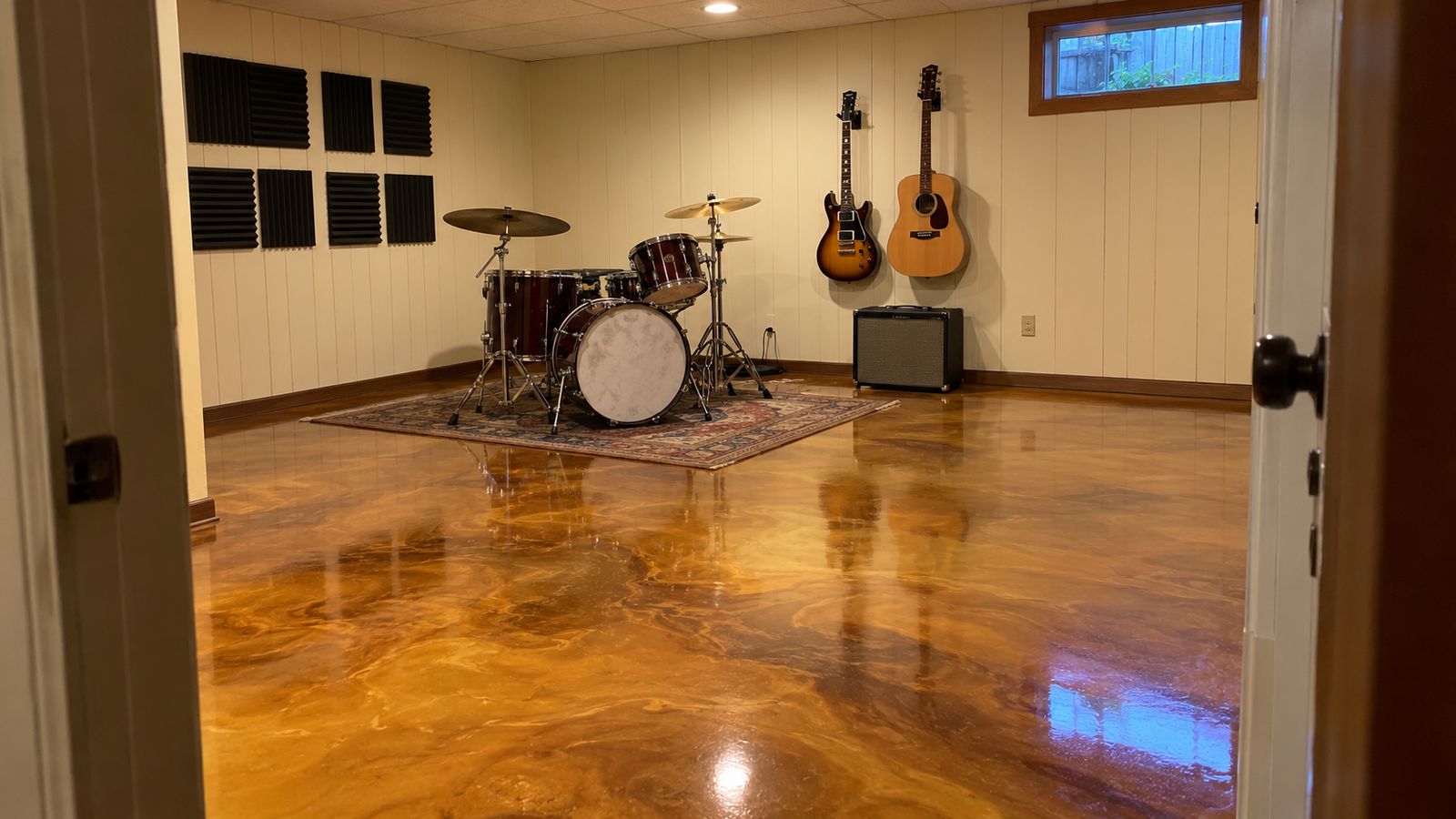
- Metallic is for a room you will actually hang out in: a family room, guest room or music room. It is glossy and one of a kind, but it shows more of the slab, so it needs more leveling first.
We bring real sample boards of both so you can see them in your own basement light, which matters a lot in a room with small windows.
What It Costs
A flake basement floor runs about $5 to $10 per square foot. Metallic runs about $9 to $16 per square foot. For a 600 square foot basement, that is roughly $3,000 to $6,000 for flake or $5,400 to $9,600 for metallic. Where you land depends mostly on the slab: how much crack repair and leveling it needs, and whether it needs a moisture primer.
How Long It Takes
Flake usually takes 1 to 2 days, and metallic 2 to 3 days. Then give it a few days before heavy furniture goes back in. The room needs to be empty while we work, so plan where the boxes and the treadmill will go for the week.
See more on our basement floors page, or check the pages for Portland and Milwaukie.
Quick Answers
Can you coat a basement floor in a 100-year-old Portland house?
Yes. Old slabs just need more prep: a moisture test, diamond grinding, crack repair and sometimes a moisture-blocking primer before the color coats.
Will it work if my basement gets damp in winter?
Normal dampness coming up through the slab is handled with a moisture-blocking primer. If water is actually coming in, that has to be fixed first.
Do I have to empty the whole basement?
Yes, the floor has to be clear so we can grind and coat it in one go. Most people move things into the garage or a spare room for the week.
What if my basement has old tile on the floor?
Old 9-inch tile and black glue can contain asbestos, so it gets tested first. If it is positive, a licensed company removes it before we start.
How much does a basement floor cost in Portland?
About $5 to $10 per square foot for flake and $9 to $16 for metallic. A 600 square foot basement is roughly $3,000 to $9,600 depending on the floor and the slab.