Deck waterproofing that is built in layers, not brushed on. We install the Westcoat ALX Pro walking deck system on decks, balconies and landings in Vancouver, from the plywood seams up to the topcoat.
Deck sealers and stains soak into the wood or sit on it as a thin film. They can help for a season or two, but they are not designed to keep water out of a room, garage or patio below. In Vancouver, where the rain settles in for most of fall, winter and spring, a thin film wears and cracks long before the wood stops getting wet.
A walking deck system is built up in layers over plywood and bonded into one continuous surface. It has more in common with a roof than with paint, which is why it is the right choice for any deck with living space under it. See decks over living space for more on those.
Inside the coating
The layers that keep a deck dry
Not paint, not a sealer. A bonded, layered system built over plywood or concrete.
For decks, balconies & concrete
Westcoat ALX Pro deck system
Plywood or concreteFailing surfaces removed, framing repaired and new plywood installed where needed. ALX Pro also goes over concrete.
Sheet membraneApplied over every plywood seam.
Reinforcing lathFastened across the deck to anchor the system.
Base coatPolymer-modified cement troweled into the lath.
Slurry and texture coatsBuild the walking surface and the decorative finish.
Acrylic topcoatTwo coats seal the finished surface. Class A fire rated system.
The ALX Pro system, layer by layer
Each layer has a job. Skip one and the others cannot make up for it.
Sheet membrane over every plywood seam. Plywood moves with temperature and moisture, and the seams are where a surface cracks first. The membrane bridges each seam.
Reinforcing lath. Metal lath is fastened across the whole deck to tie the system to the substrate and give the base coat something to grip.
Polymer-modified cement base coat. Troweled into the lath to form a solid, bonded base.
Fiberlath-reinforced resin membrane. This is the actual waterproof layer, reinforced so it resists cracking.
Slurry and texture coats. These build a uniform, slip-resistant walking surface and carry the finish you choose.
Two coats of SC-10 acrylic topcoat. They seal the system and take the sun and the foot traffic.
Details that keep a deck dry
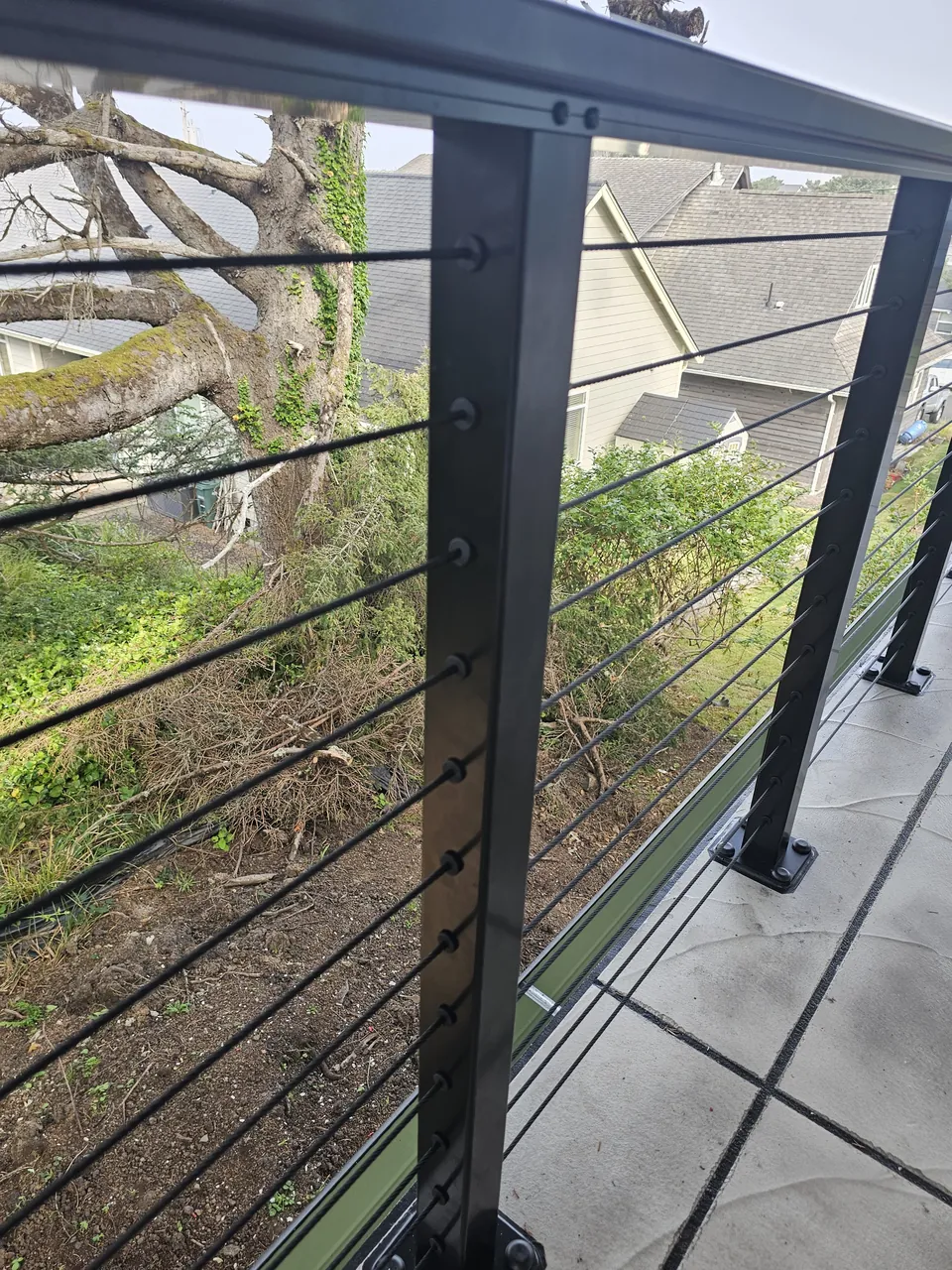
The layers are only half the job. The other half is the transitions: where the deck meets the house wall, the door threshold, the outer drip edge, the stairs, and every railing post. Most leaks we trace on older Vancouver decks start at one of those transitions, not out in the middle of the deck.
We look at slope and drainage too. Water should run away from the house and off the edge, not pond against the siding. If a deck has a low spot or pitches the wrong way, it gets corrected while the deck is open.
Built for a Vancouver winter
Our weather is hard on decks in two ways. The long rainy stretch from fall into spring keeps surfaces wet for weeks at a time, and the cold east wind out of the Columbia River Gorge drives rain sideways into the walls and doors of homes on the east side, from Cascade Park to the Evergreen Highway. Then summer turns around and bakes south- and west-facing decks in the afternoon sun.
ALX Pro handles all of it: a bonded membrane with no top seams for wind-driven rain, and a UV-resistant topcoat for the sun. We install year-round, tenting the deck with tarps in rain and moving the heat-sensitive coats to early morning or evening in summer. We pause only when it drops below the manufacturer's minimum temperature.
Once it is in, the routine upkeep is simple: Westcoat calls for resealing the topcoat every 3 to 5 years, depending on how much sun and foot traffic the deck sees.
Fire rating and warranty
ALX Pro is a Class A fire-rated system with a one-hour fire-rated assembly. It meets Wildland Urban Interface (WUI) requirements and is listed under IAPMO ER-587, which is worth knowing for homes that back up to a wooded greenbelt. As a Westcoat Qualified Contractor Applicator, we can back it with up to a 20-year manufacturer warranty, depending on the system and surface.
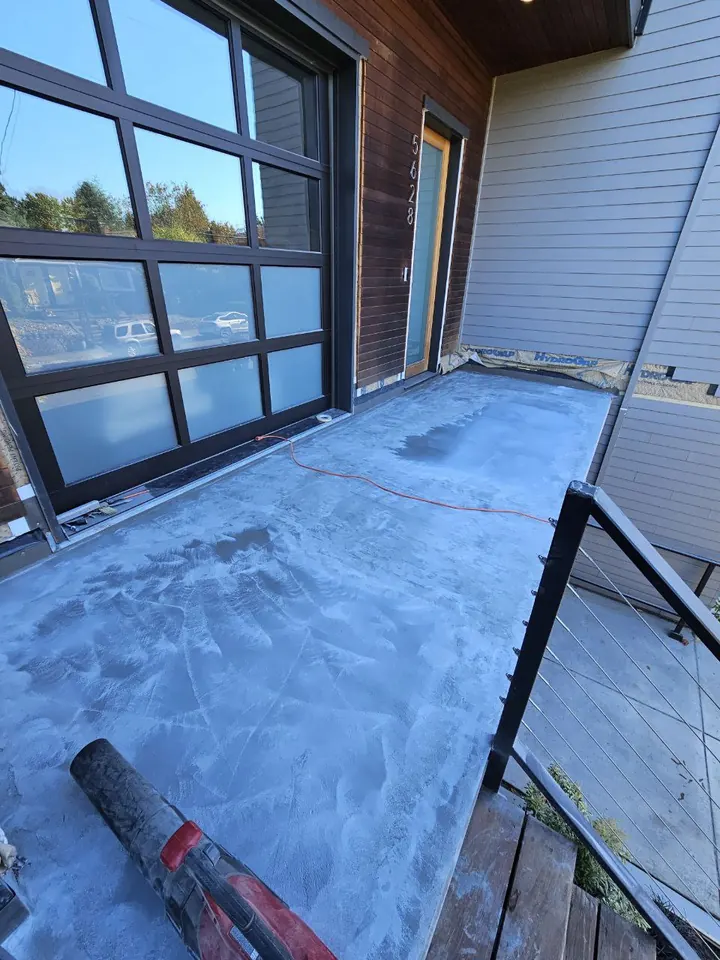
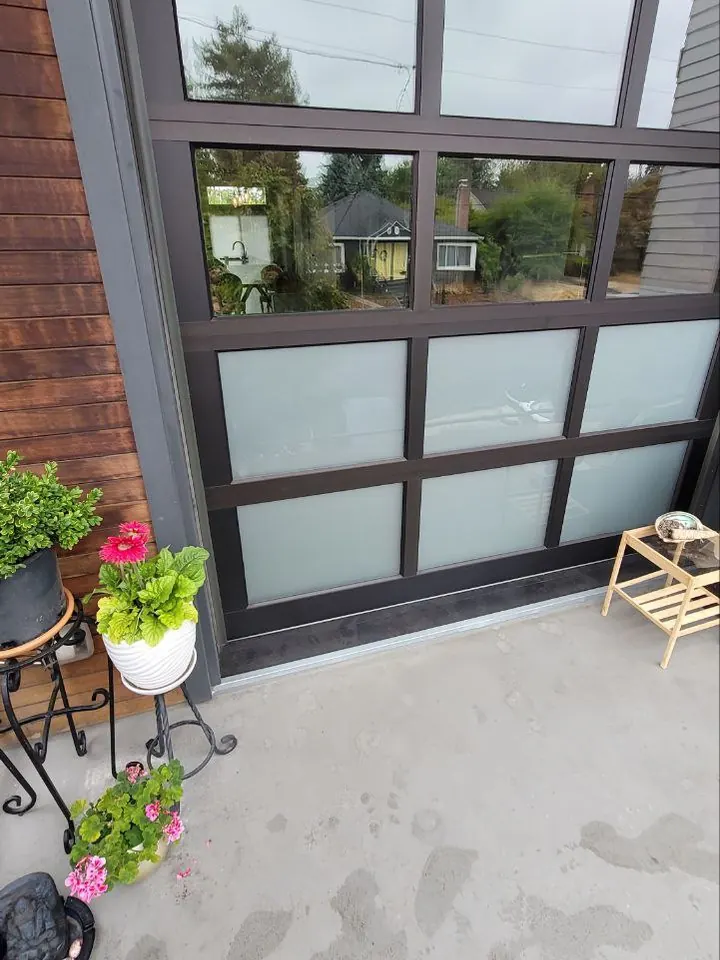
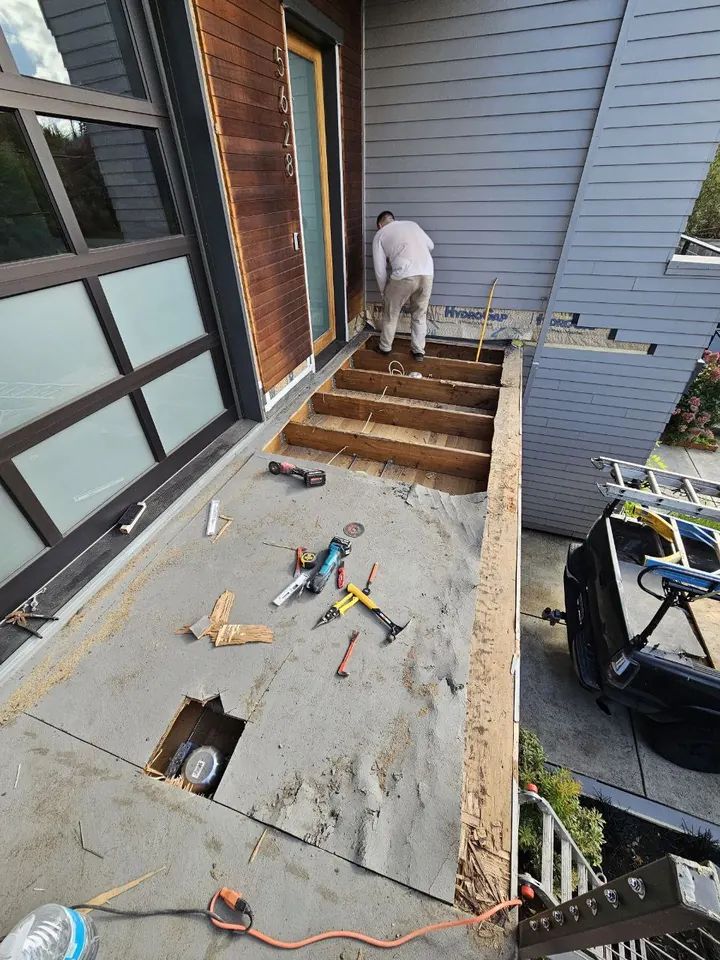
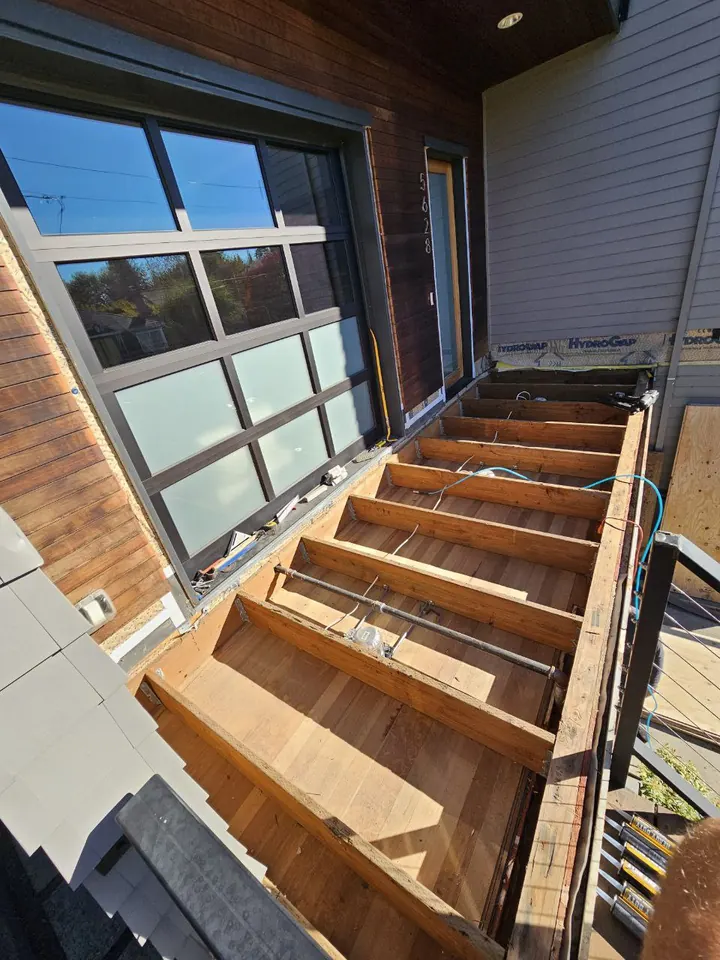
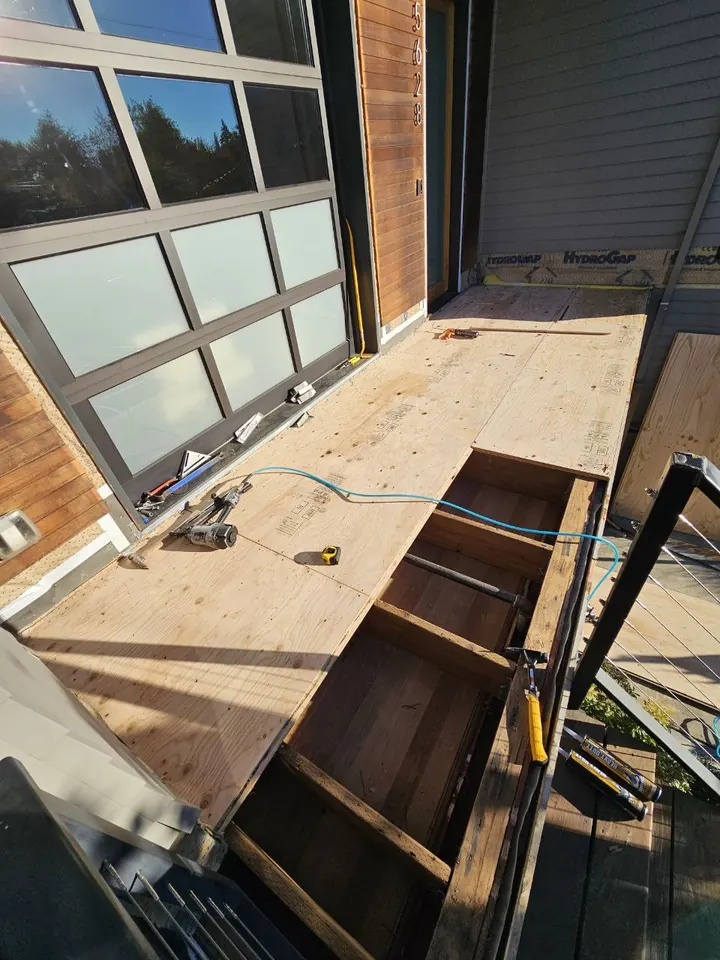
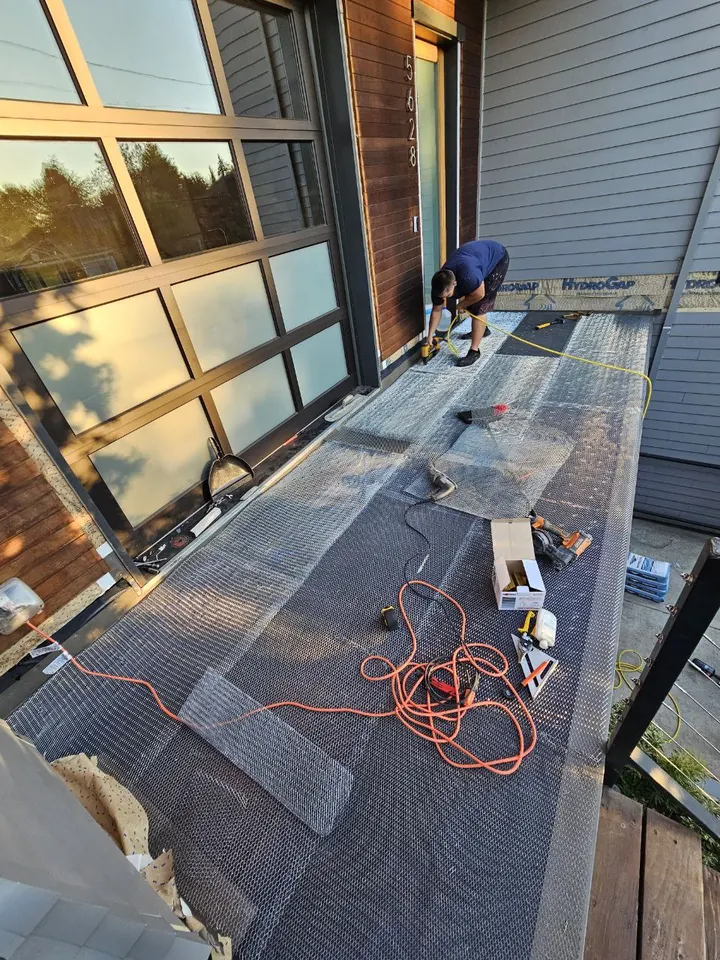
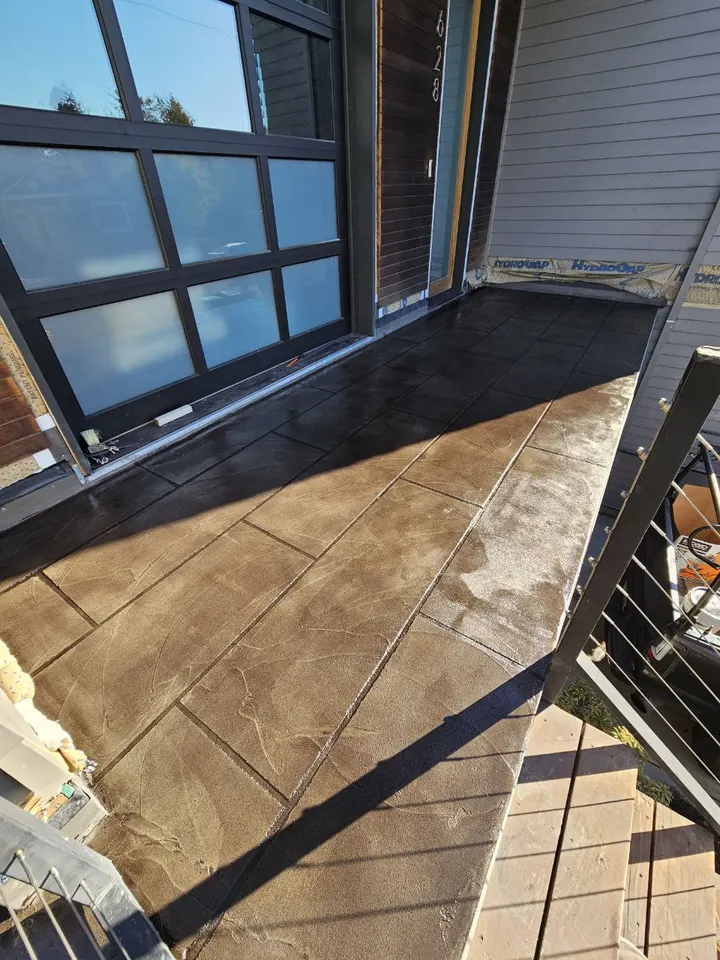
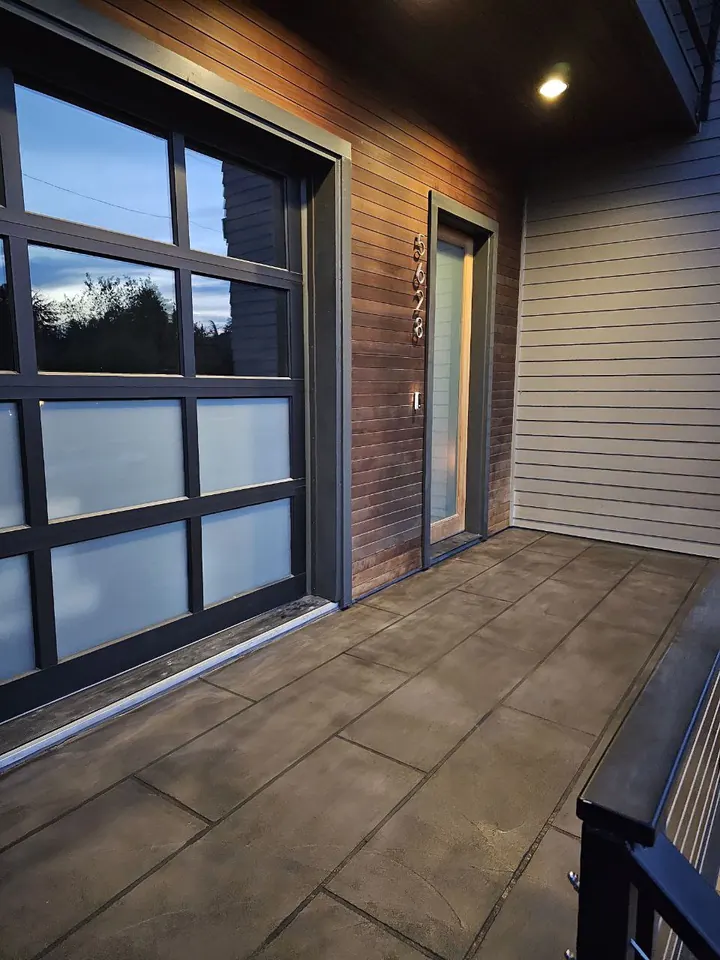
These photos follow one of our own balcony jobs. Steps five through eight are the waterproofing layers described above.
1. Existing deckThe original surface is inspected for cracks, failed seams and leaks.2. PrepThe old surface is removed down to bare plywood.3. StructureAny damaged joists or framing are repaired first.4. SubstrateSoft or rotted plywood is replaced so the system has a sound base.5. Seam membrane and lathSheet membrane bridges each seam, and lath is fastened over the deck.6. Base coat and waterproof membraneCement base troweled into the lath, then the fiberlath-reinforced resin membrane.7. Slurry and textureThe walking surface and the finish are built up.8. SC-10 topcoatTwo coats of acrylic seal the system. Fully waterproof and Class A fire rated.
ALX Pro at a glance
Waterproof walking surface that protects the structure and the rooms below
Class A fire rated, with a one-hour fire-rated assembly
WUI compliant, IAPMO ER-587
Skid-resistant finish under a UV-resistant topcoat
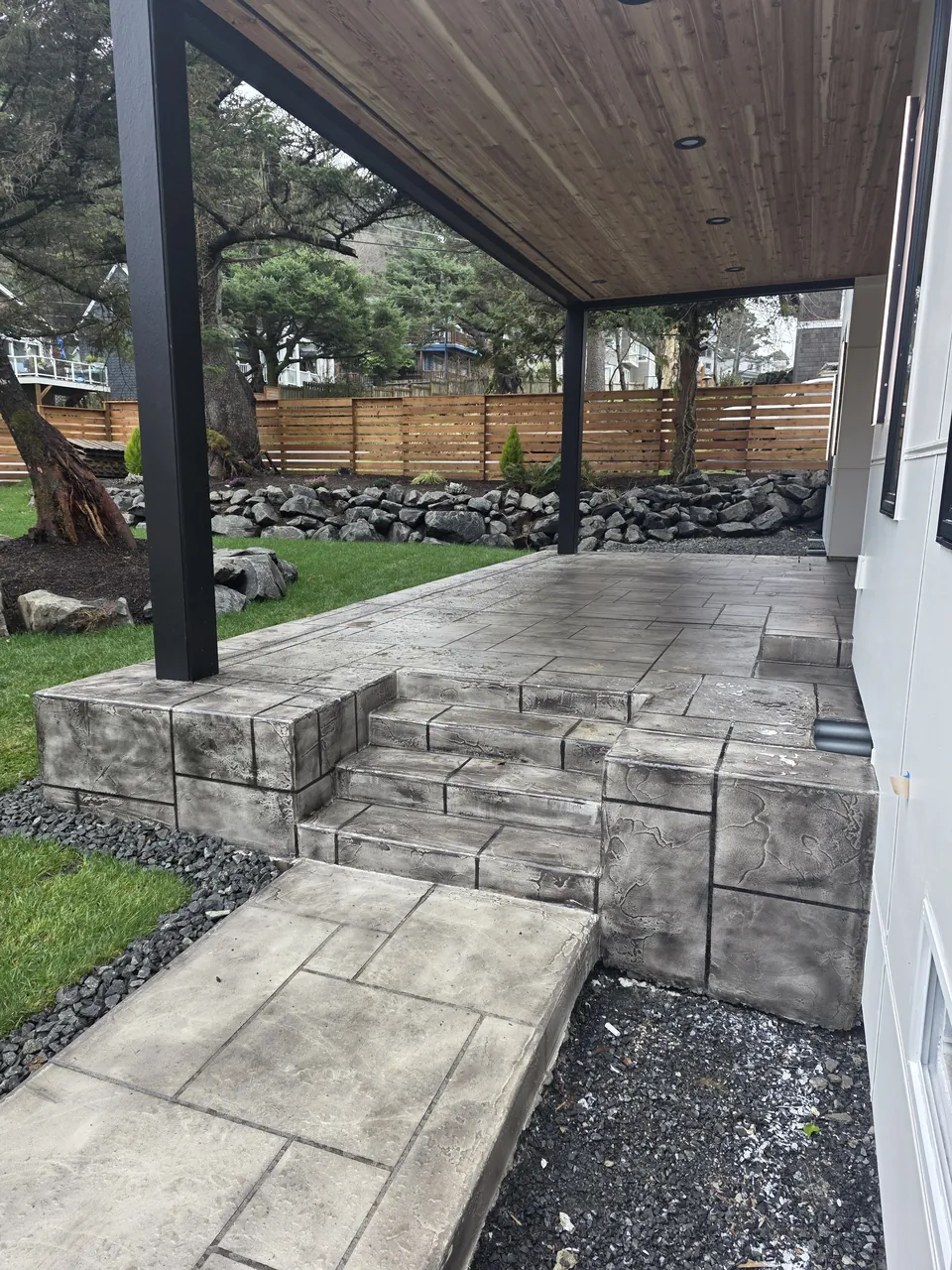
Plywood or concrete: decks, balconies, landings, porches, stairs, entry steps and patios
Reseal every 3 to 5 years, per Westcoat
Up to a 20-year manufacturer warranty, depending on the system and surface
Waterproof, in the look you want
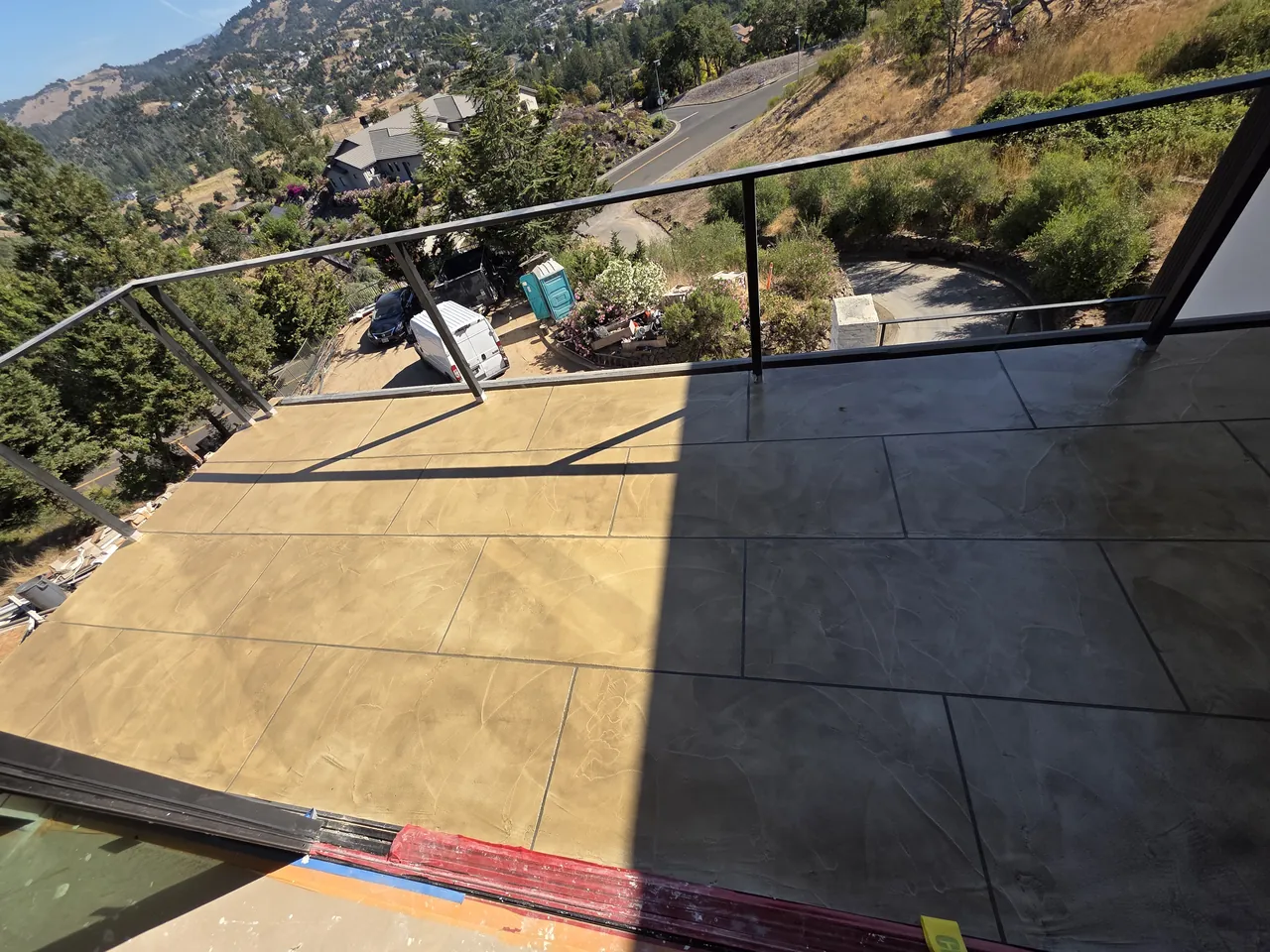
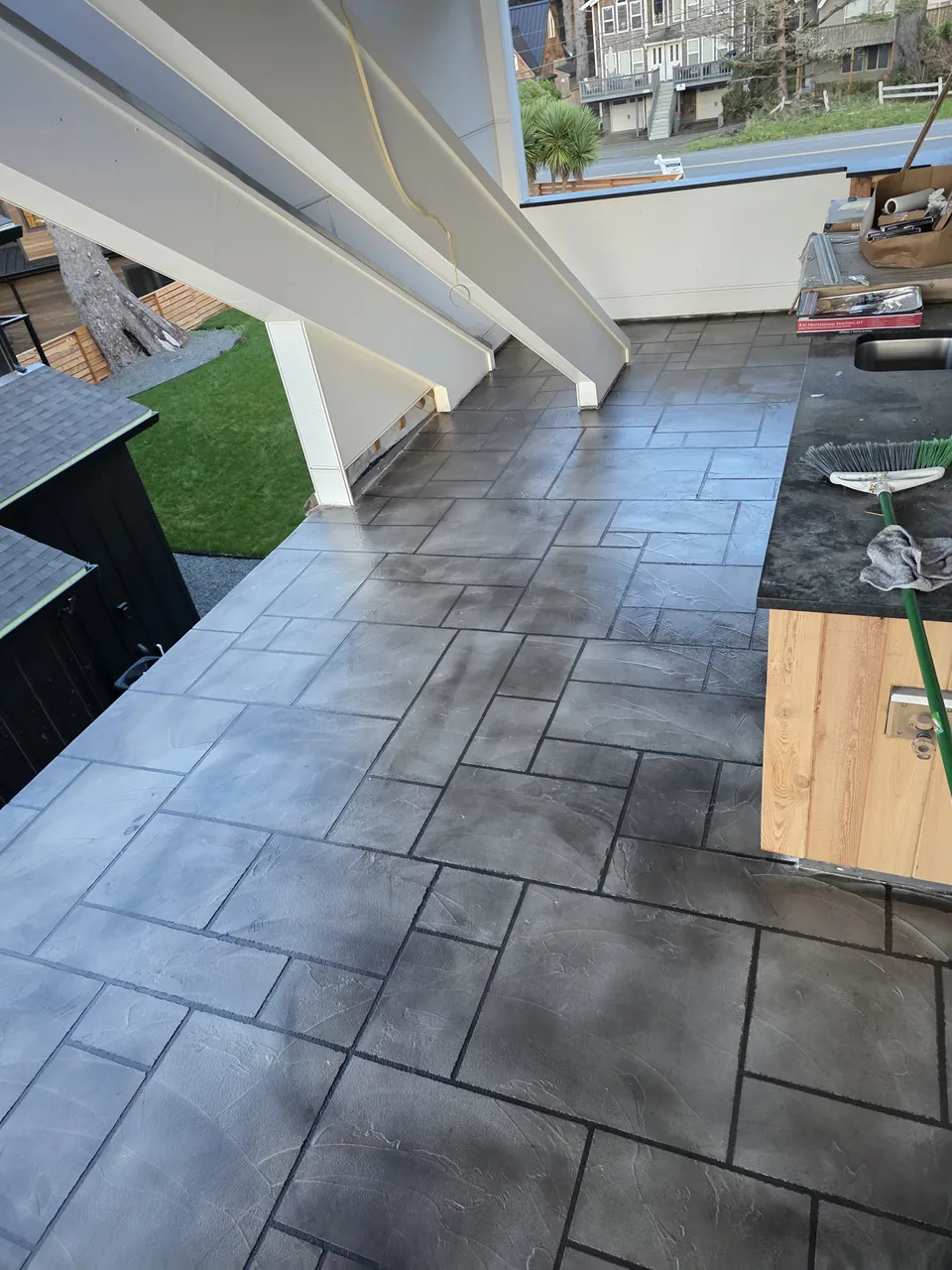
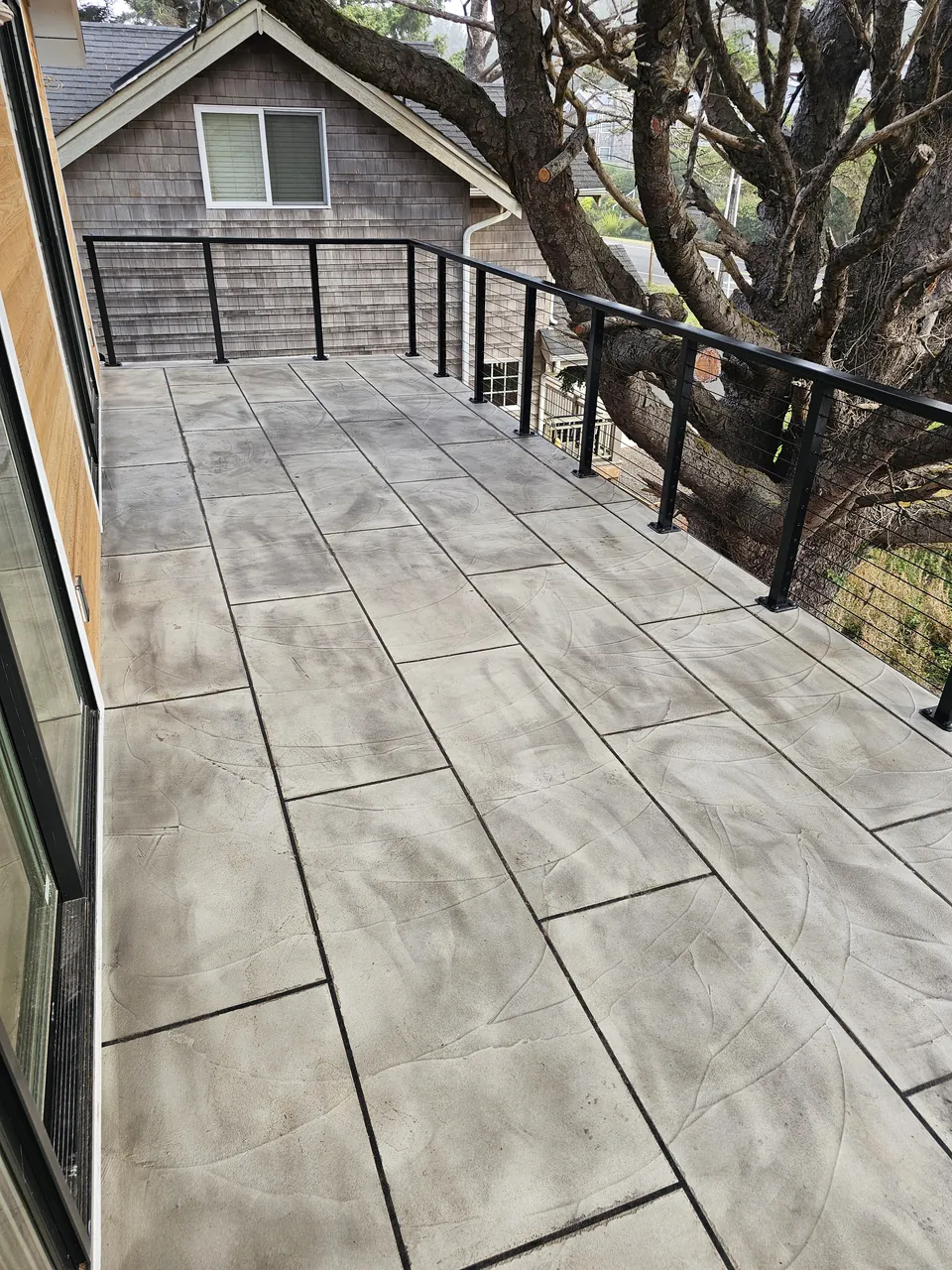
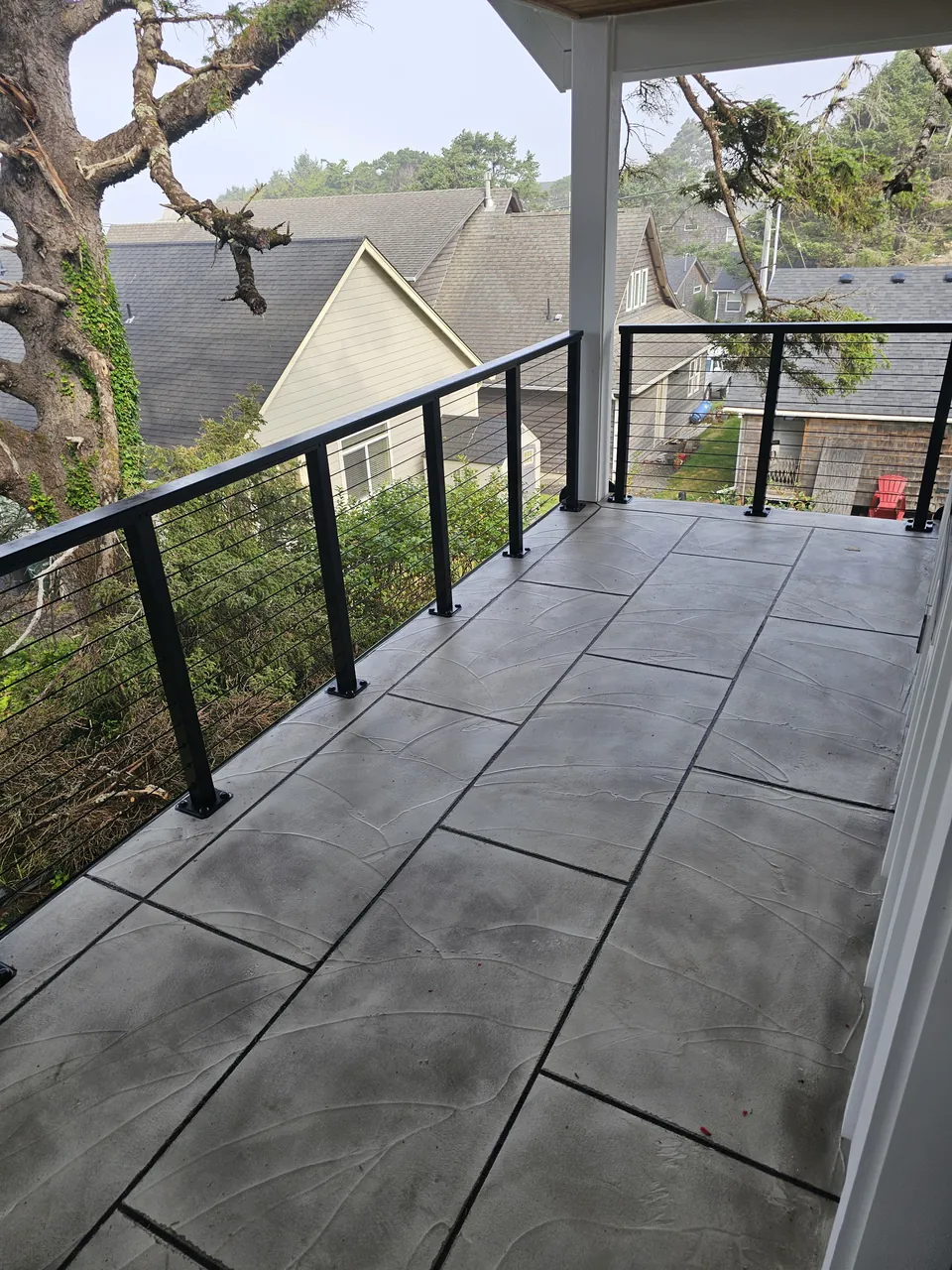
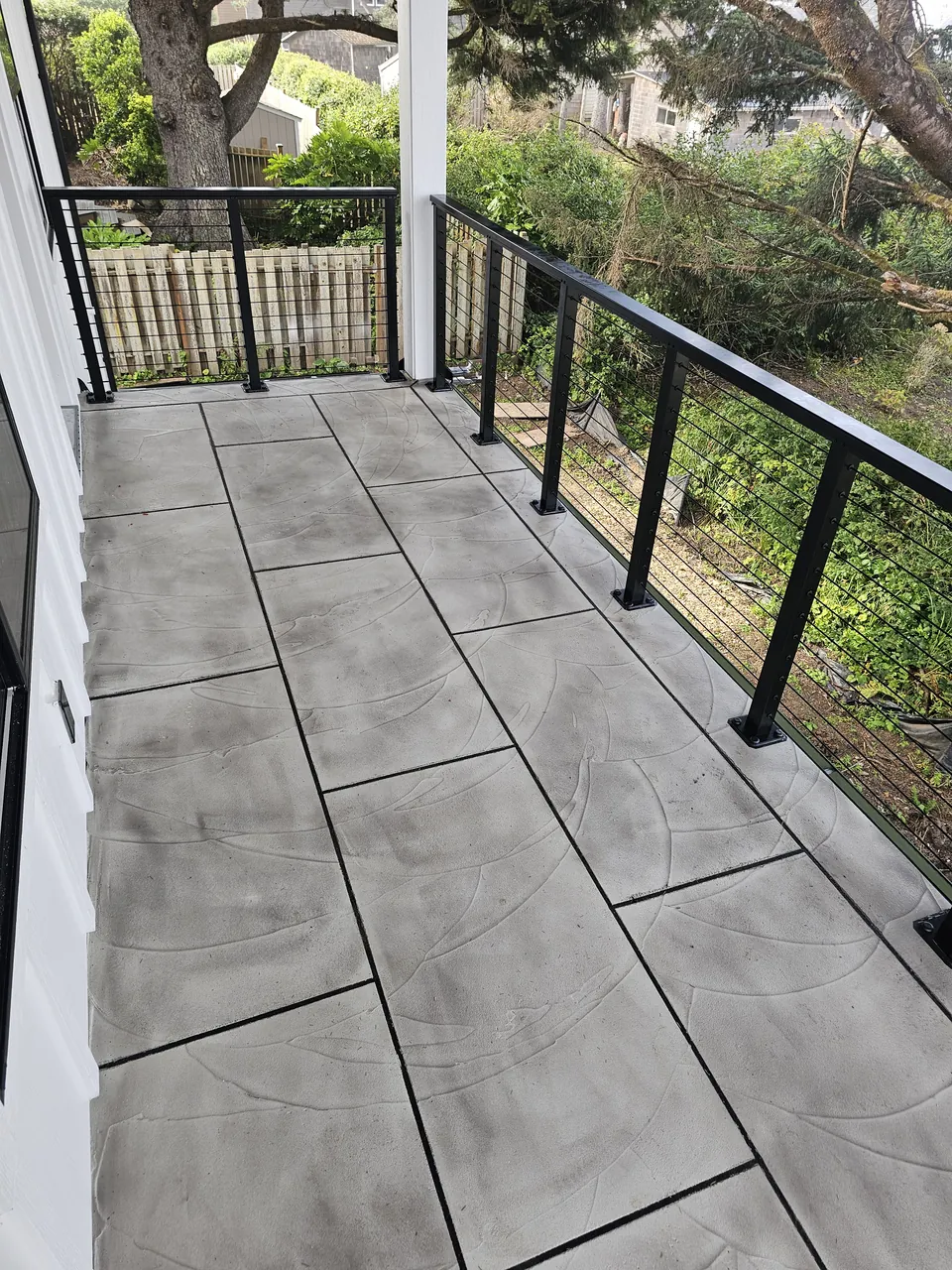
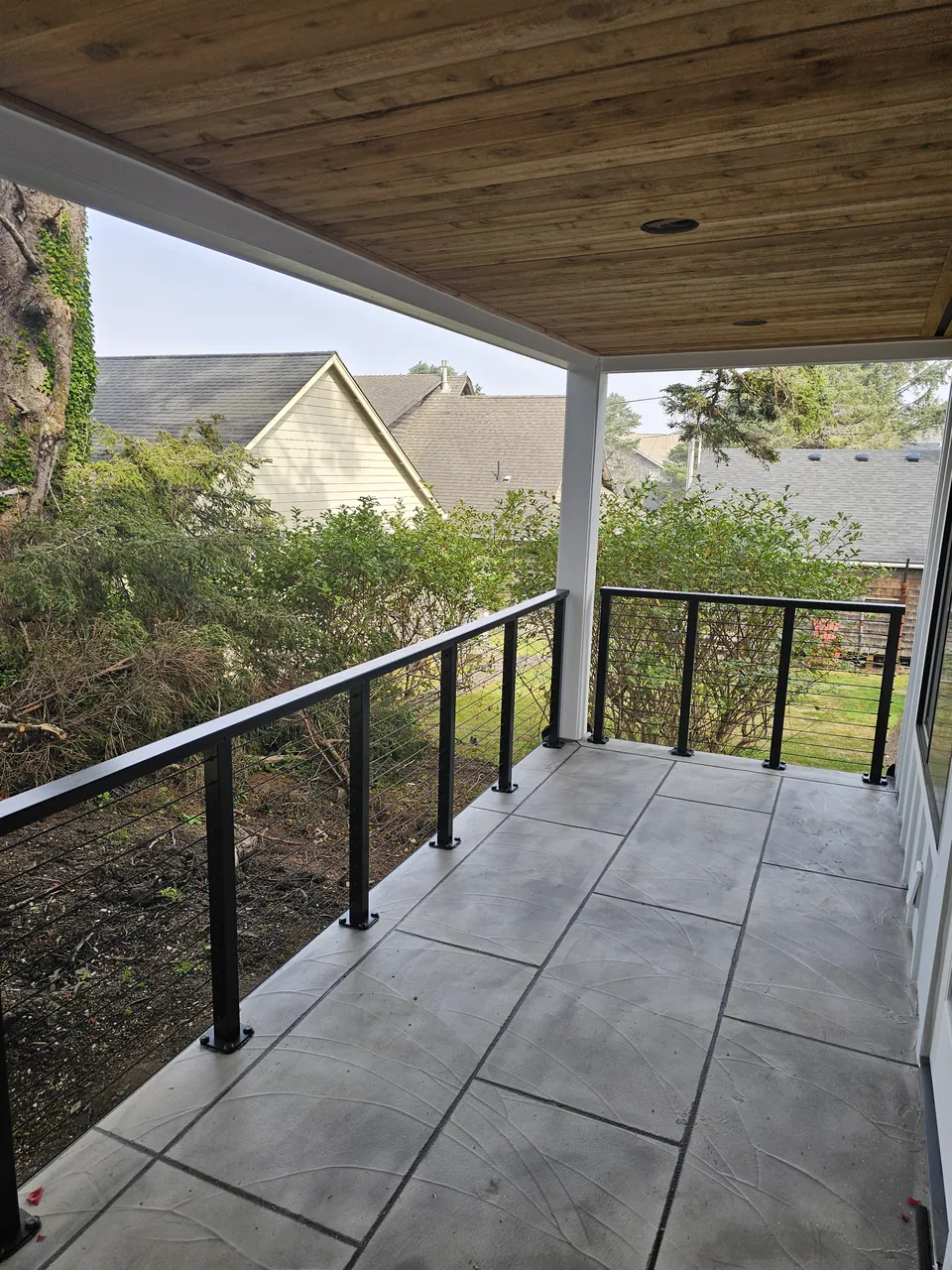
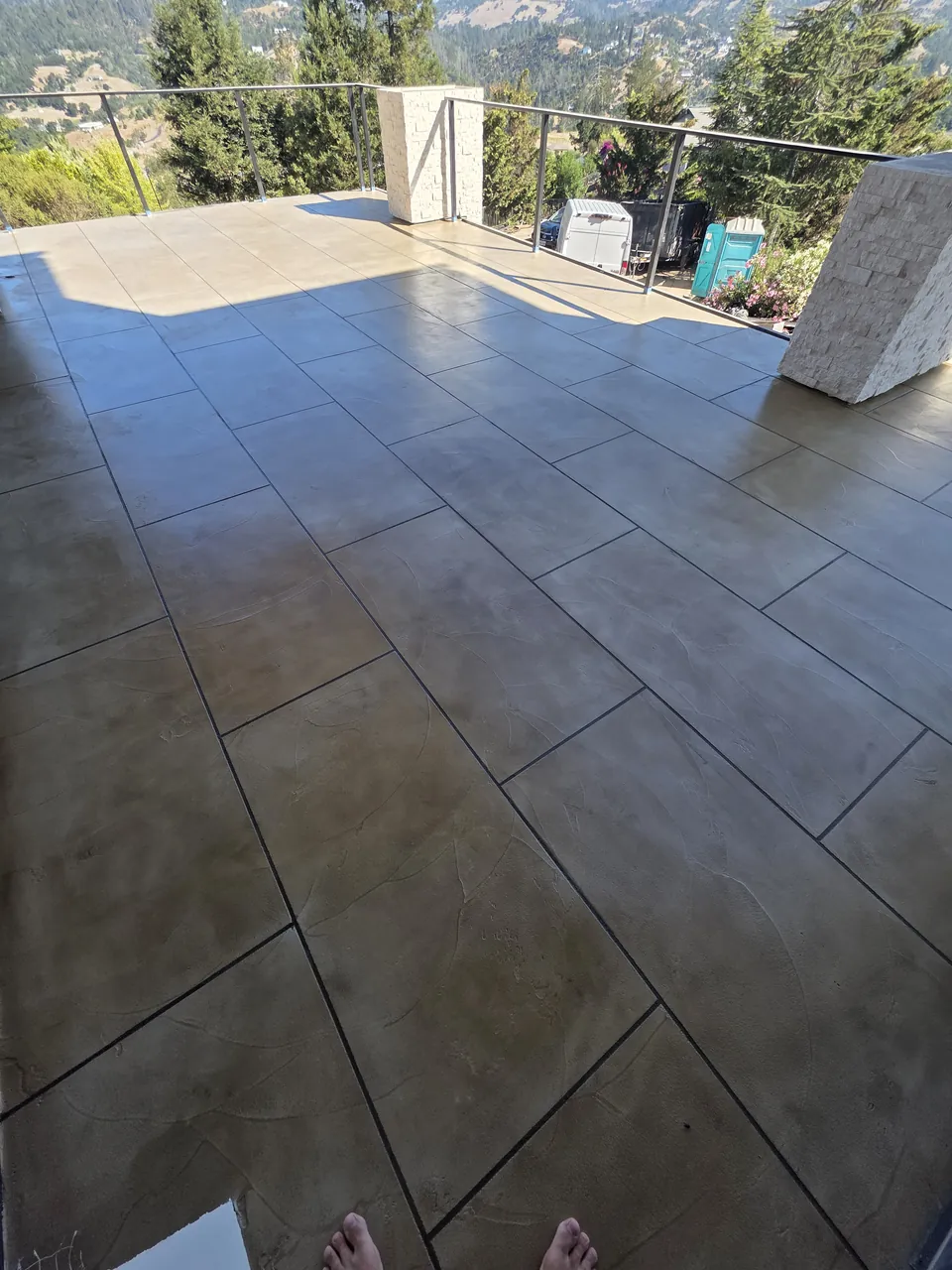
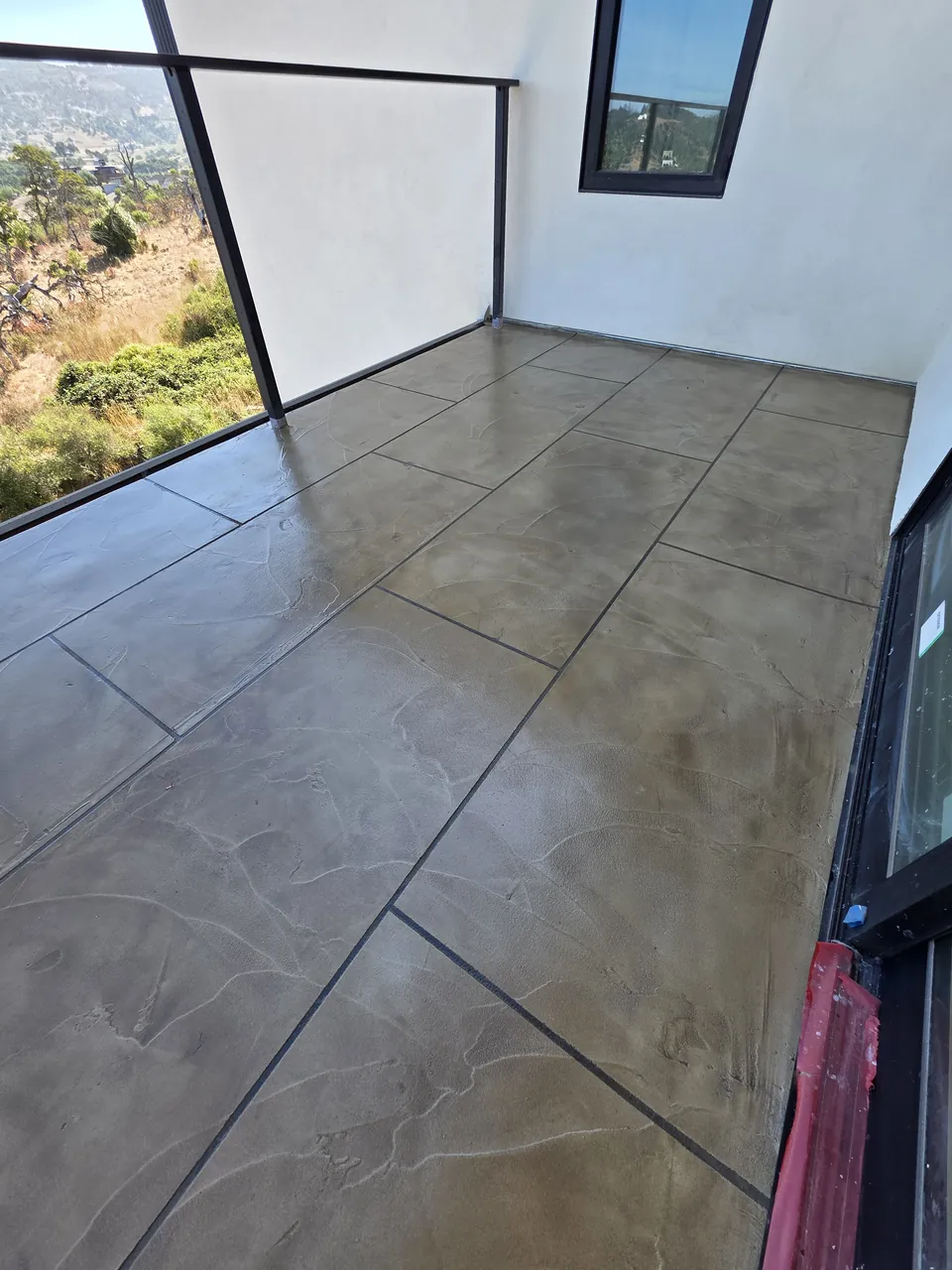
Waterproof does not have to mean plain gray. The texture coat can carry a clean concrete look or a hand-laid plank or paver pattern, light or dark, and we go over the options with you at the estimate.
Installed by our own crew
The crew that comes out for the estimate is the crew that waterproofs your deck. Tear-off, repair, every layer of the system, and the railing are all done in-house, so the details at the wall, the door and the posts are handled by people who know how the layers underneath were built.
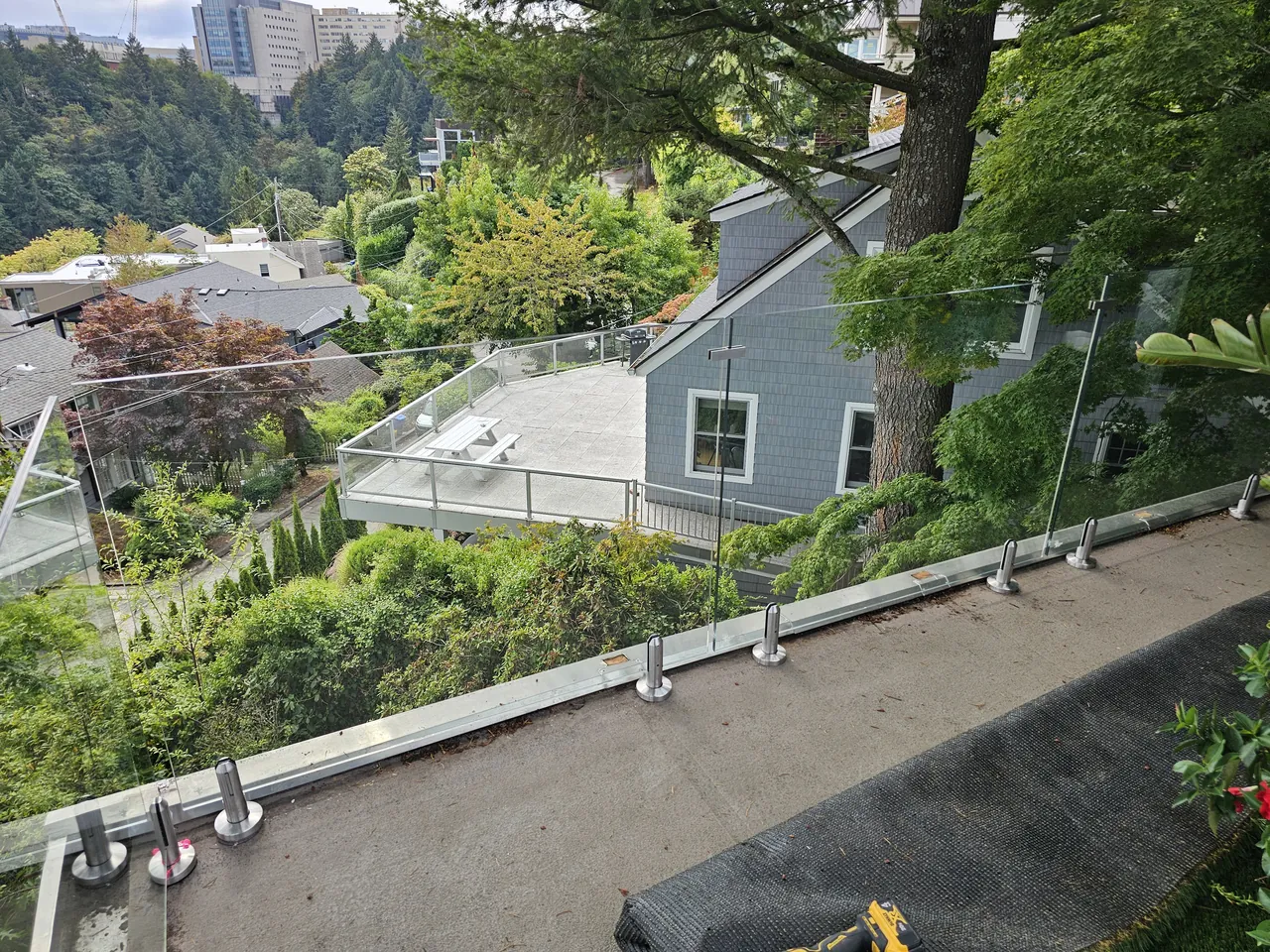
Planning new railing? Do it during the waterproofing so the posts are sealed into the membrane; our deck railing and Vancouver railing pages show the options. Building new? Tim is a registered Washington general contractor; a new deck is framed under him and then waterproofed by our crew.
Deck waterproofing in and around Vancouver
We are a Vancouver company, so decks anywhere from the waterfront and Esther Short to Orchards and Cascade Park are close by. We also waterproof decks in Brush Prairie, Battle Ground, Camas, Salmon Creek, Kalama and Portland, across Clark County, Cowlitz County and the Portland Metro.
What is the difference between a deck sealer and deck waterproofing?
A sealer soaks in or forms a thin film and wears out in a season or two. A waterproofing system like ALX Pro is built in layers over the plywood and bonded into one waterproof surface that protects what is underneath.
Is a waterproof deck slippery when it rains?
It is not. The texture coat is what gives the deck its grip, and the topcoat over it protects that texture through the wet months.
Will it hold up to the east wind and sideways rain?
Yes. The membrane is continuous with no seams on top, and we take care with the wall line, the door threshold and the posts, which is where wind-driven rain usually gets in on east Vancouver homes.
My east Vancouver home backs onto a wooded greenbelt. Is the system fire rated?
Yes. ALX Pro is Class A fire rated with a one-hour fire-rated assembly, and it meets Wildland Urban Interface (WUI) requirements under IAPMO ER-587.
Can you waterproof a concrete porch or steps too?
Yes. ALX Pro goes over concrete steps, porches and patios as well as plywood decks.
How much upkeep does a waterproof deck need?
Plan on a fresh topcoat every 3 to 5 years, which is what Westcoat recommends; how often depends on sun and foot traffic. Beyond that, sweep it and keep the edges and drains clear of leaves.
Can you install it during the Vancouver rainy season?
Yes. We tent the deck with tarps in the rain and keep working. We only pause when temperatures drop below the manufacturer's minimum.