Drips in the garage, a stain on the ceiling, a musty smell in the room under the deck? The water is already past the surface. We track down where it gets in, repair the wet wood, and rebuild the waterproofing so the space below stays dry.
If there is a garage, a bedroom, a family room or a covered patio under your deck, the deck surface is that space's roof. When it cracks, when the seams open, or when the flashing at the house lets go, rain goes into the plywood and then into the ceiling. In a Vancouver winter the wood never gets a chance to dry, so the leak often shows up below as stains or drips long before the deck itself looks bad.
We see it on older split-levels with the garage tucked under the deck, on newer homes where the deck sits over a walkout basement, and on townhomes and condos where one unit's balcony is the ceiling of another unit's living room.
Signs the leak is coming from the deck
Water stains, bubbling paint or sagging drywall on a garage or room ceiling under the deck
Drips that start a few hours into a heavy rain, or only during wind-driven storms
Water on the floor just inside a door that opens onto the deck
A musty smell or mold spots in the room below
Soft spots, cracks or old patches on the deck surface above
Rust streaks or staining on the siding or fascia under the deck edge
How we find where it gets in
The drip you see is rarely right under the hole. Water gets in at one spot, runs along the plywood or a joist, and comes out wherever the ceiling lets it. So we trace it from both sides.
From below, we look at where the stains are and how they line up with the framing. From above, we check the usual entry points: open plywood seams, the joint where the deck meets the house wall, the door threshold, the outer edge, and every railing post or fastener through the surface. Timing is a clue too. A leak that only shows when the east wind blows out of the Gorge usually points to the wall or the door; a leak in every steady rain more often points to the main field of the deck.
The full answer comes when the surface is removed and we can see the wet plywood for ourselves.
Inside the coating
Inside a waterproof deck
This is what goes into every deck we install in Vancouver: seven layers, bonded into one waterproof walking surface.
For decks, balconies & concrete
Westcoat ALX Pro deck system
Plywood or concreteFailing surfaces removed, framing repaired and new plywood installed where needed. ALX Pro also goes over concrete.
Sheet membraneApplied over every plywood seam.
Reinforcing lathFastened across the deck to anchor the system.
Base coatPolymer-modified cement troweled into the lath.
Slurry and texture coatsBuild the walking surface and the decorative finish.
Acrylic topcoatTwo coats seal the finished surface. Class A fire rated system.
How we stop the leak for good
Spot-patching a leak rarely holds, because the wet wood underneath stays wet. We remove the failing surface, replace plywood that is wet or rotted, and repair joists where needed. The connection at the house wall and the door threshold is detailed as part of the job, not left for later.
Then the full Westcoat ALX Pro system goes on: sheet membrane over every seam, lath, a cement base coat, a fiberlath-reinforced waterproof membrane, slurry and texture coats, and two acrylic topcoats. The result is a bonded, fully waterproof walking surface over the entire deck, not just a patch over the spot you found.
Where Vancouver leaks tend to come from
On the east side of town, from Cascade Park out to Fishers Landing, the usual culprit is wind. The winter east wind throws rain hard against the house, and it works into the wall joint and under door sills that would stay dry in calmer weather.
In older neighborhoods like Hough, Shumway and Rose Village, it is more often age. Decks over garages and porches have been patched and repainted for decades, and the seams underneath have long since opened. Under the big trees in Felida and around Burnt Bridge Creek, leaves and needles clog the deck edge, water backs up, and it finds its way in at the low corner.
If the leak has already softened the framing, our deck repair page explains that side of the job.
After the deck is dry
Once the deck above is waterproof, the ceiling below can be fixed without worrying that it will stain again next winter. If the space under the deck is a garage, it is also a good time to think about the floor. We coat garage floors with epoxy flake and polyaspartic: see garage floor coatings in Vancouver.
As a Westcoat Qualified Contractor Applicator, our ALX Pro installs can carry up to a 20-year manufacturer warranty, depending on the system and surface, and it is spelled out in writing.
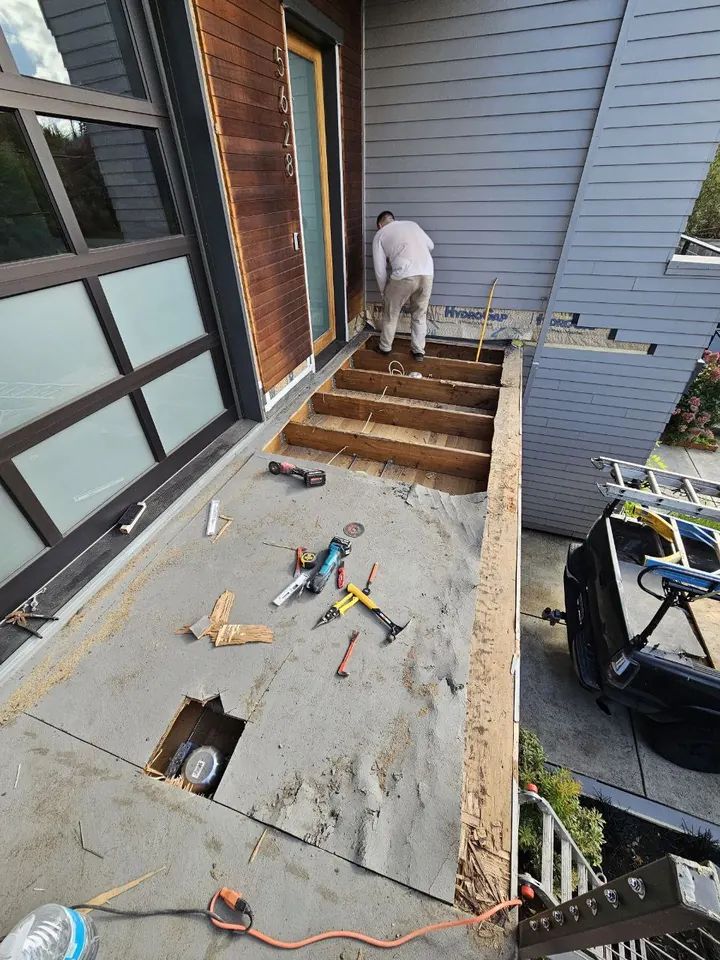
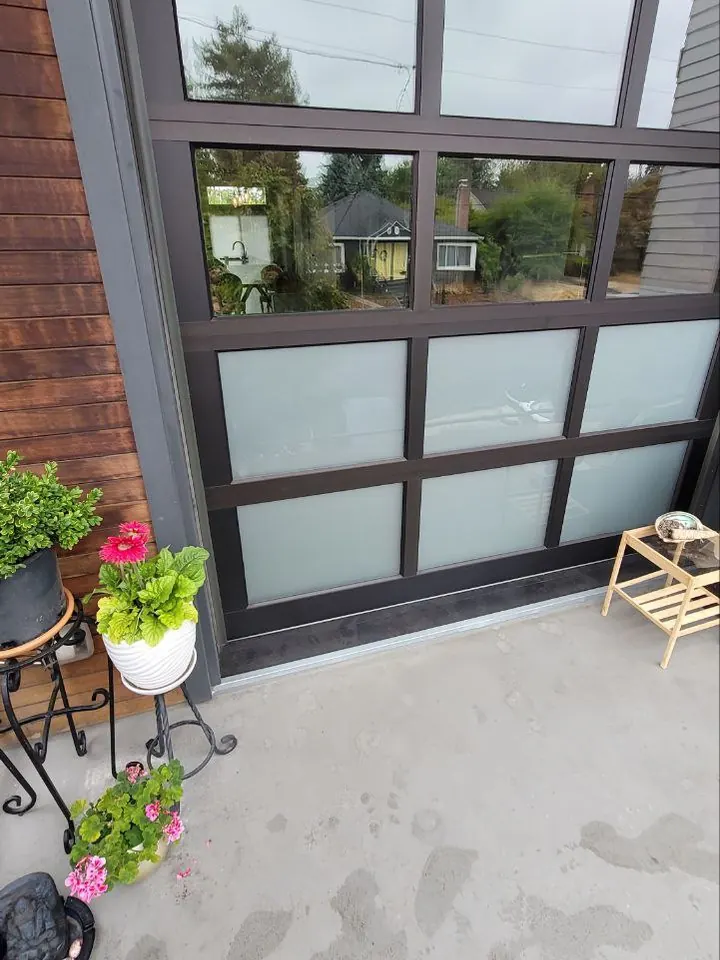
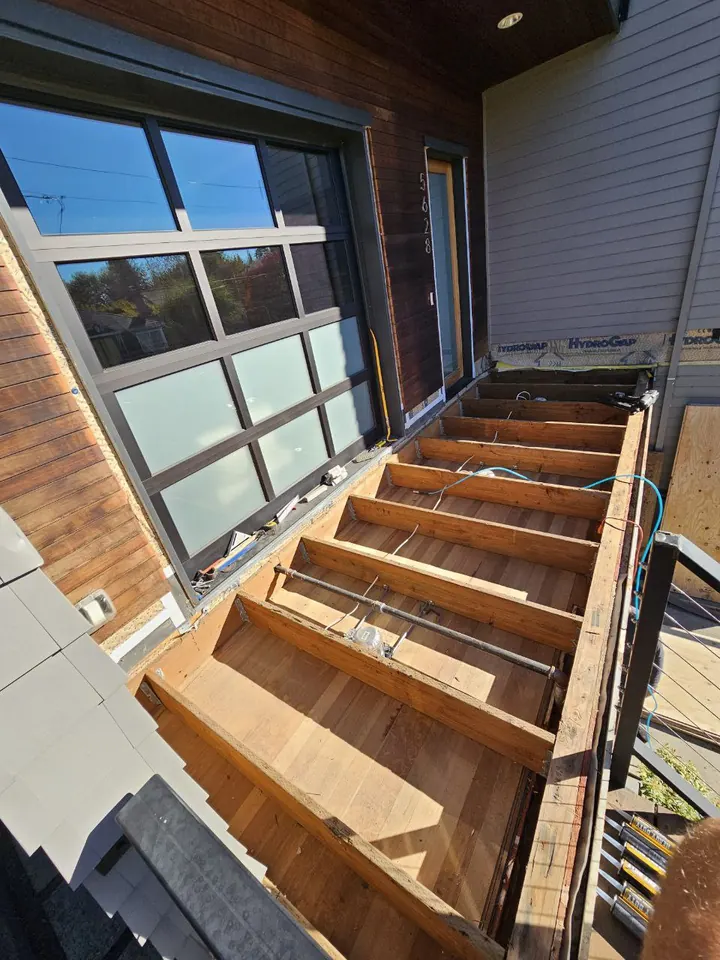
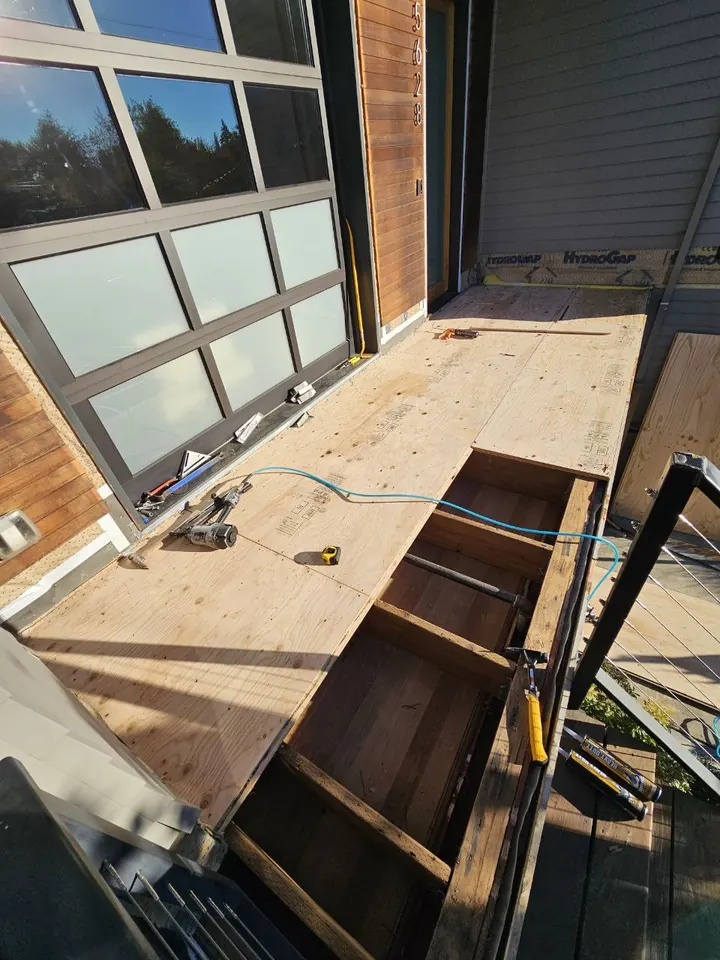
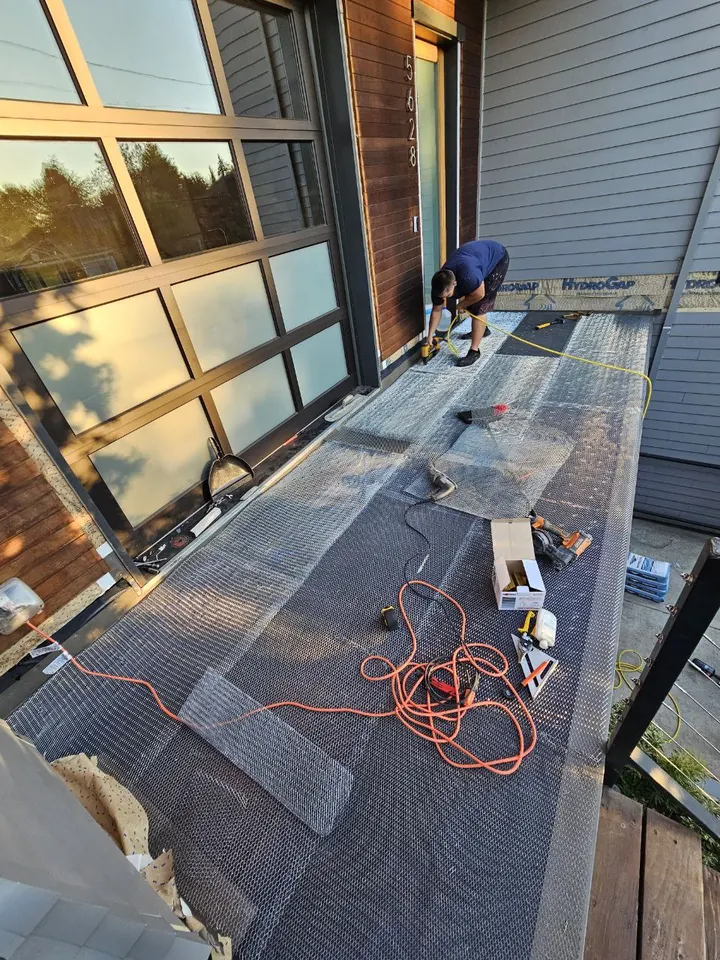
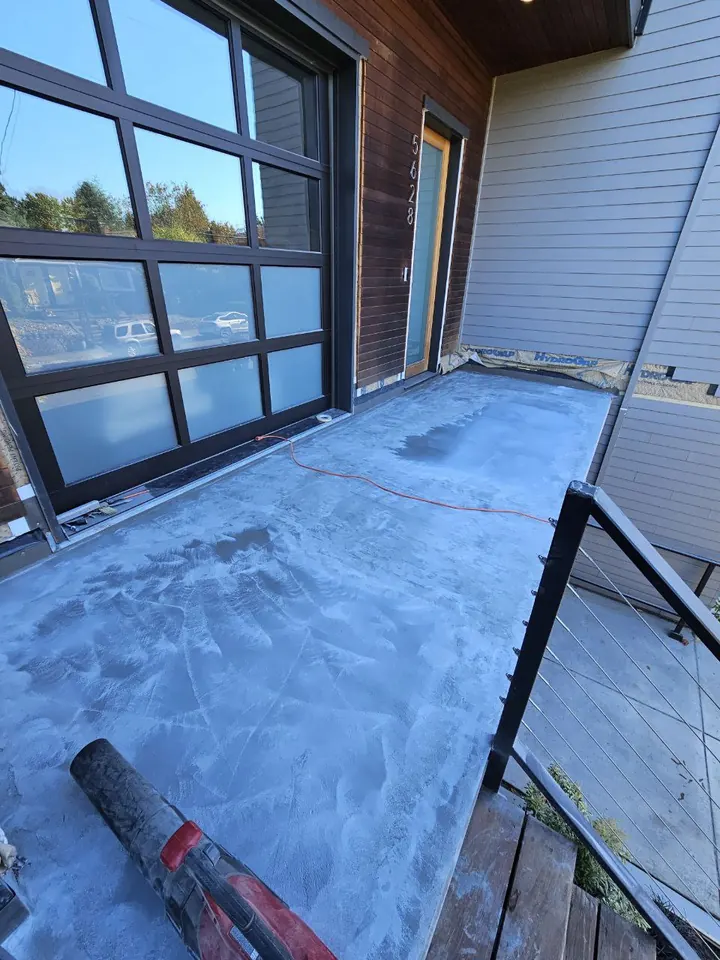
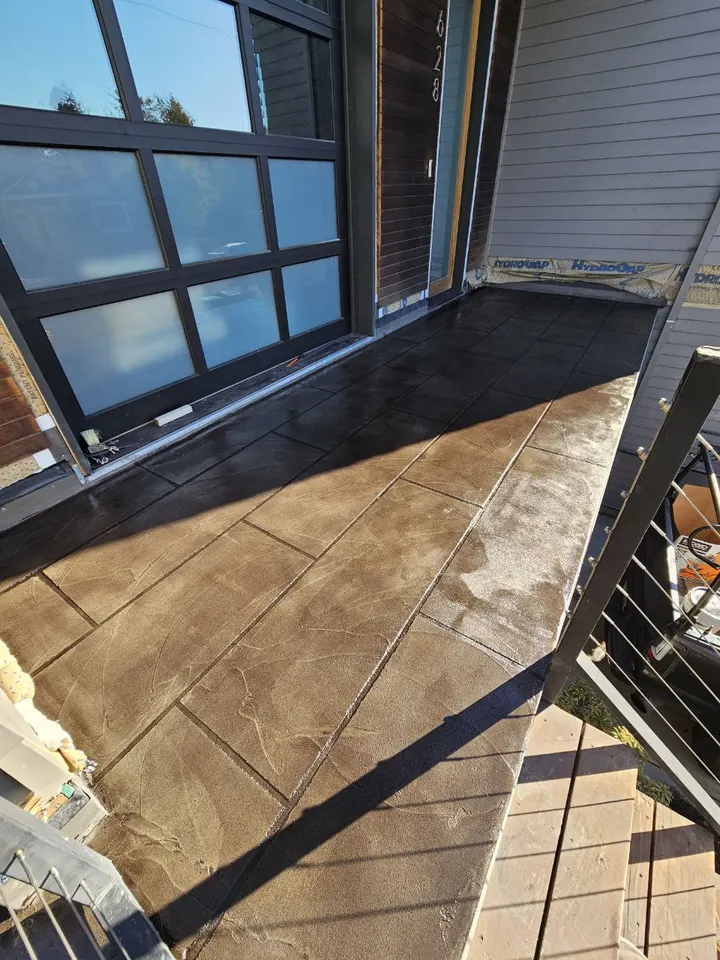
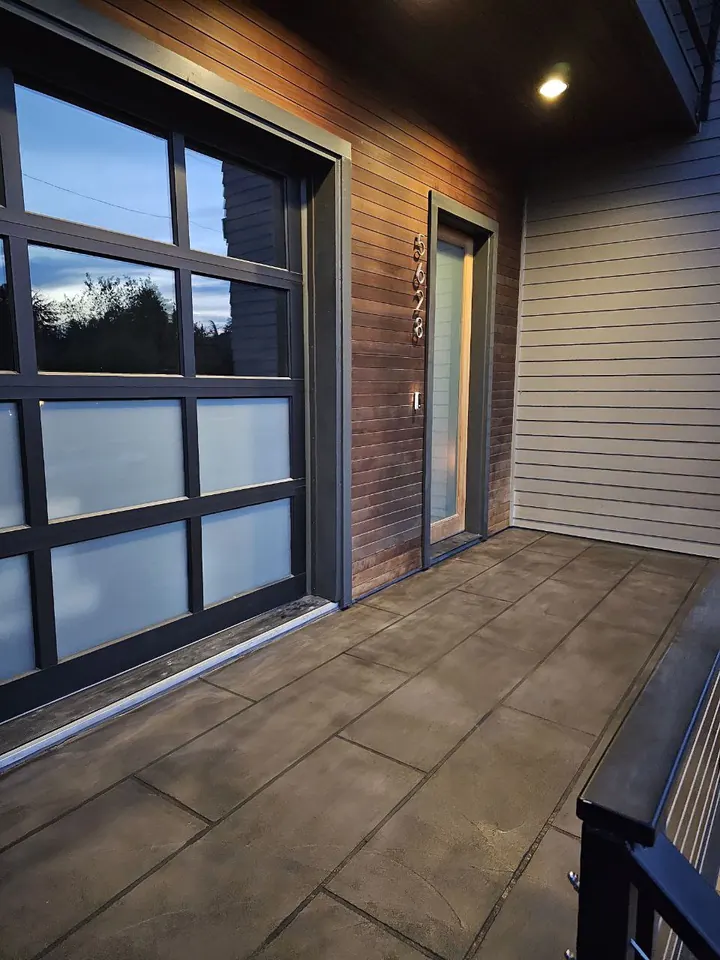
These photos follow one of our own balcony jobs. Step two is usually where the real path of a leak becomes clear.
1. The leaking deckThe surface is checked for cracks, failed seams and old patches above the stained area.2. Finding the pathWith the surface off, wet plywood and staining show where the water was traveling.3. Framing repairJoists that stayed wet are repaired.4. Dry plywoodWet and rotted sheets are replaced with new plywood.5. Seams sealedSheet membrane covers every seam, then lath is fastened down.6. Waterproof membraneBase coat into the lath, then the fiberlath-reinforced membrane that keeps the space below dry.7. FinishSlurry and texture coats build the walking surface.8. Leak stoppedTwo acrylic topcoats seal the system, so the room below stays dry. The surface is Class A fire rated.
Why ALX Pro over a garage or room
Fully waterproof across the whole surface, protecting the space below
Class A fire rated, with a one-hour fire-rated assembly
WUI compliant under IAPMO ER-587
Skid-resistant texture and a UV-resistant topcoat
Plywood or concrete: decks, balconies, landings, porches and stairs
Reseal the topcoat every 3 to 5 years, as Westcoat recommends
Up to a 20-year Westcoat warranty, depending on the system and surface
A dry deck that looks good
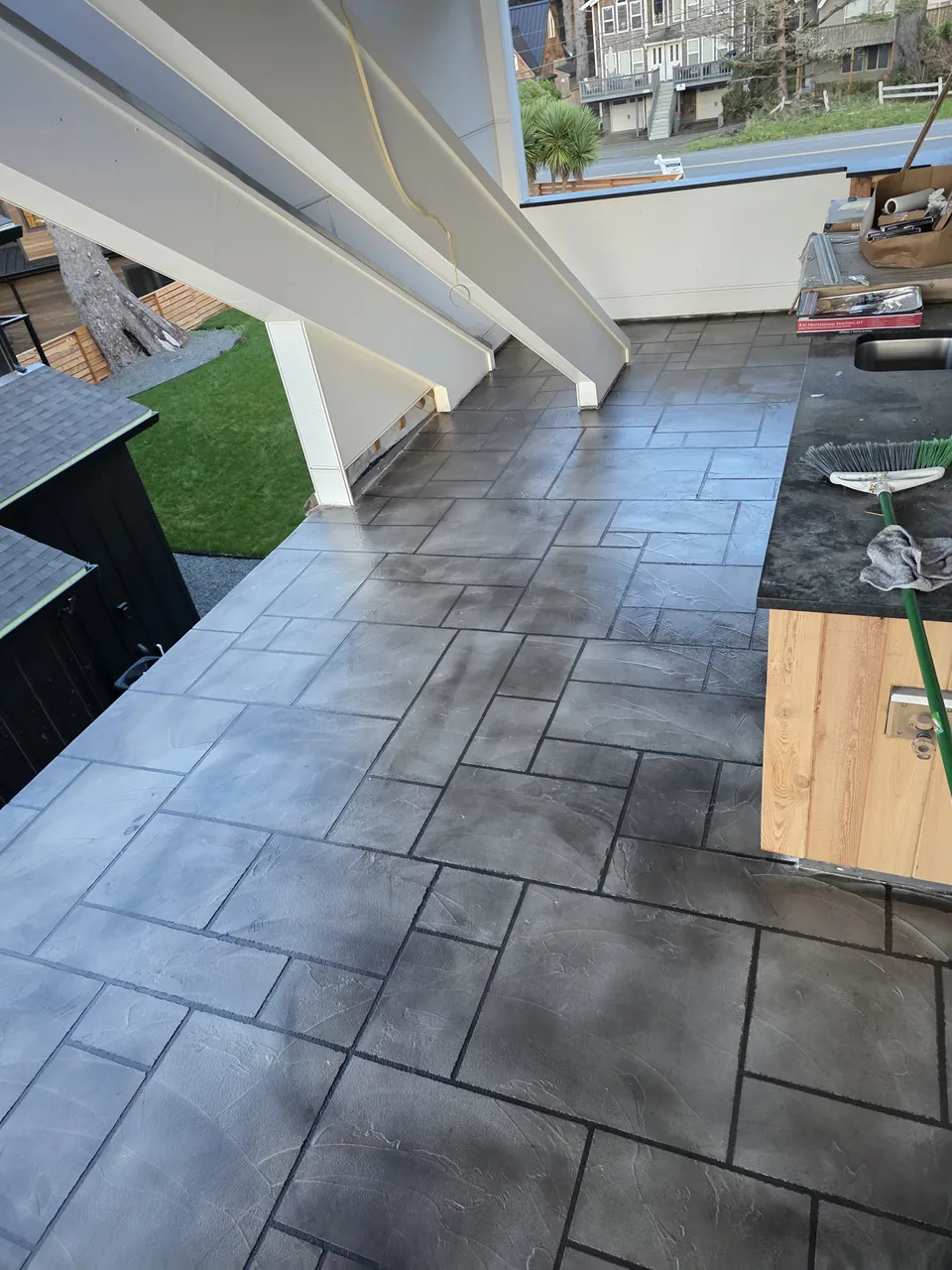
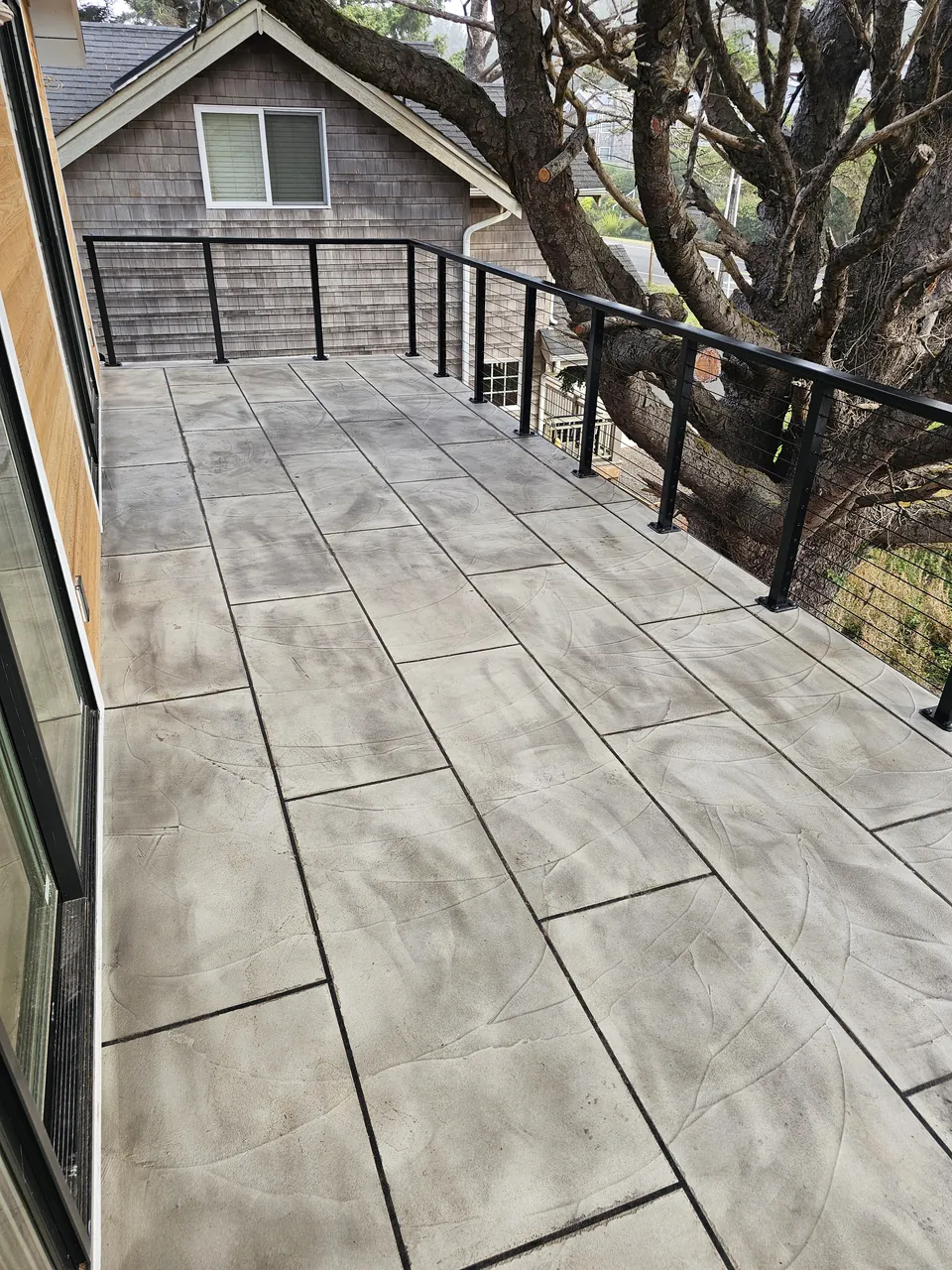
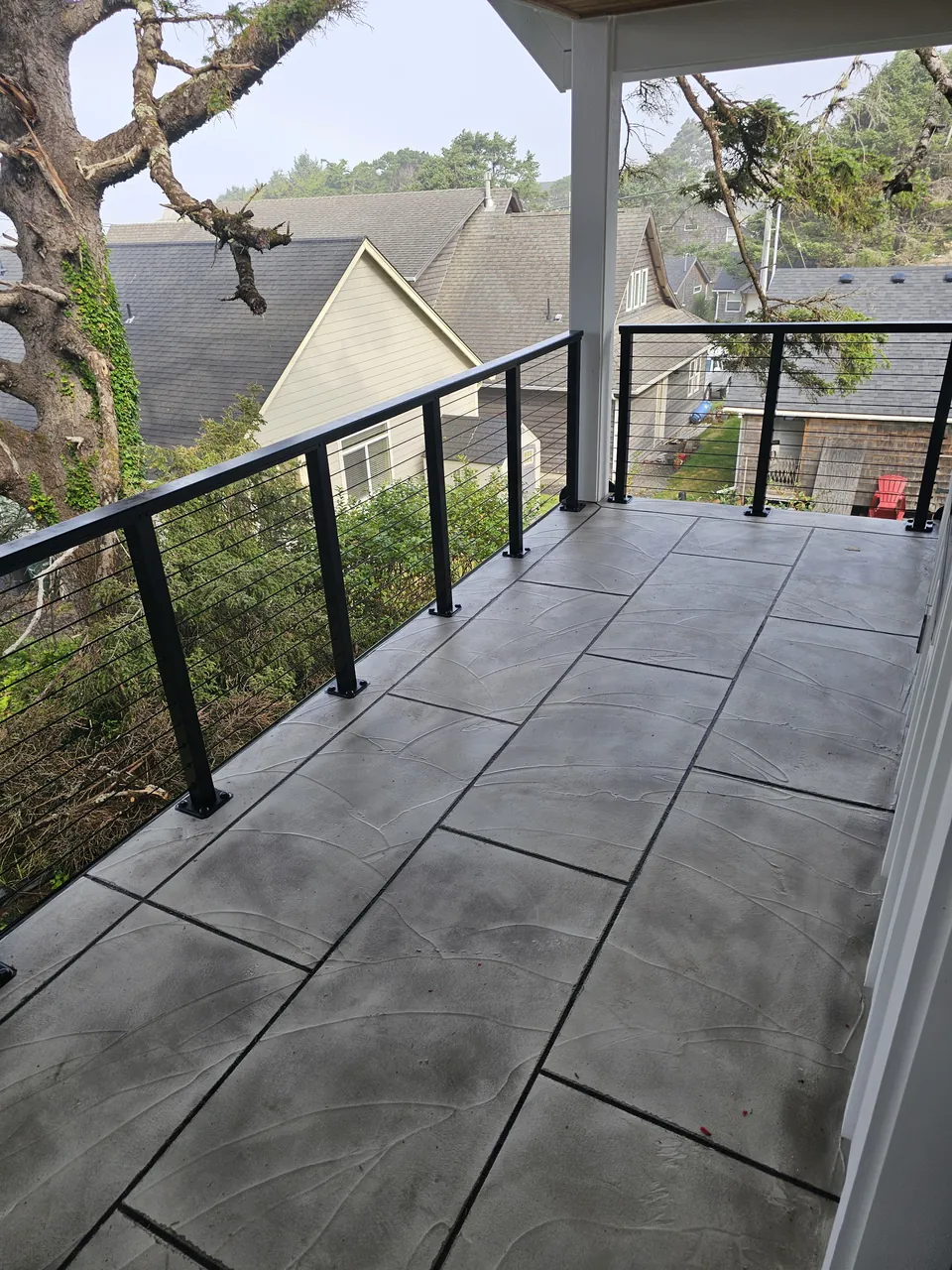
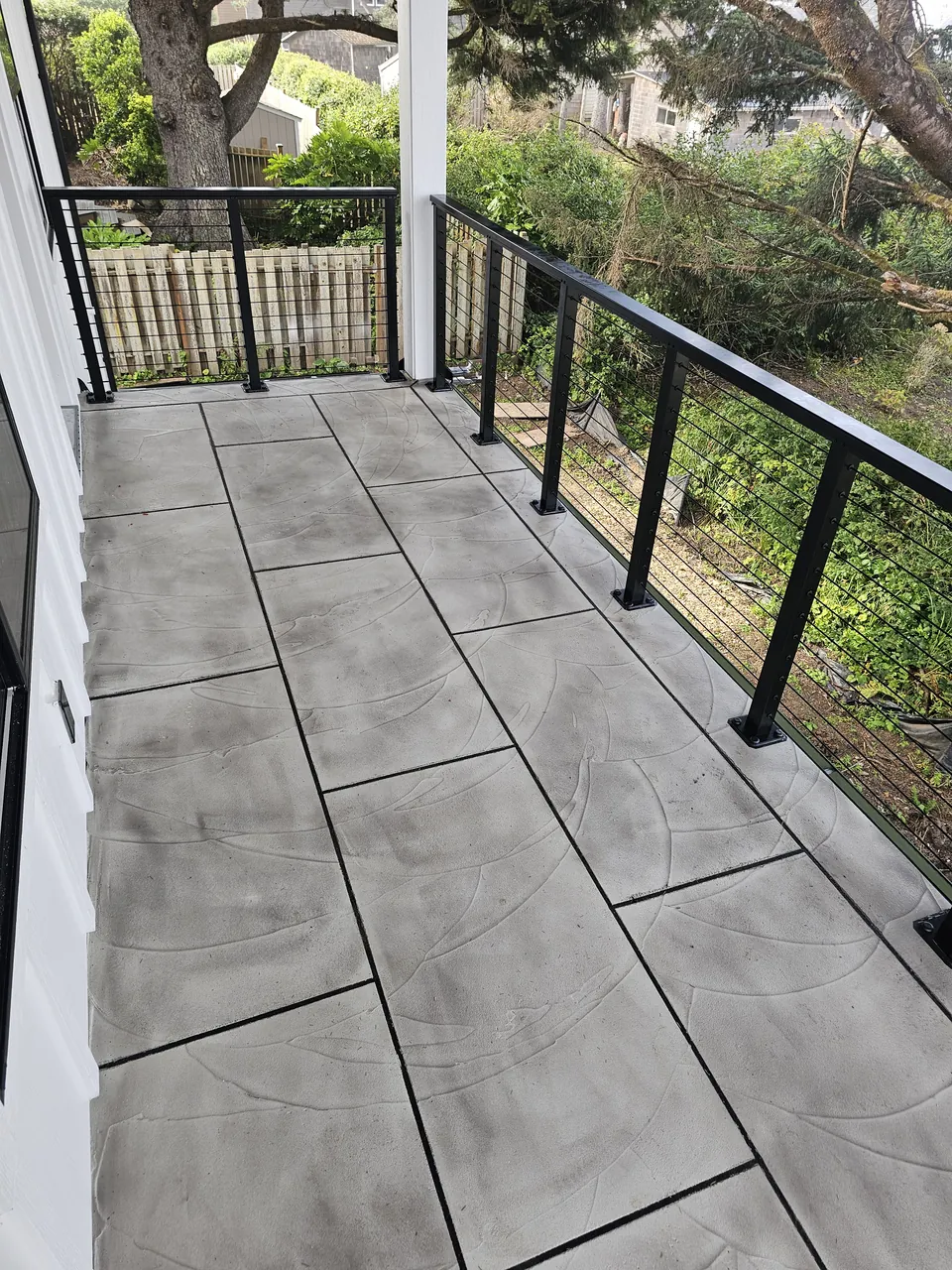
Because the deck gets a whole new surface, you also get to choose how it looks: a clean concrete finish or a hand-laid plank or paver pattern, light or dark. We go over the options when we come out.
Leaks do not wait for summer
Most leak calls come in the middle of the wet season, and that is fine. Our in-house crew works year-round, tenting the deck with tarps in the rain, and only pauses when it gets colder than the manufacturer allows. The same crew opens the deck, repairs it, waterproofs it and installs any railing.
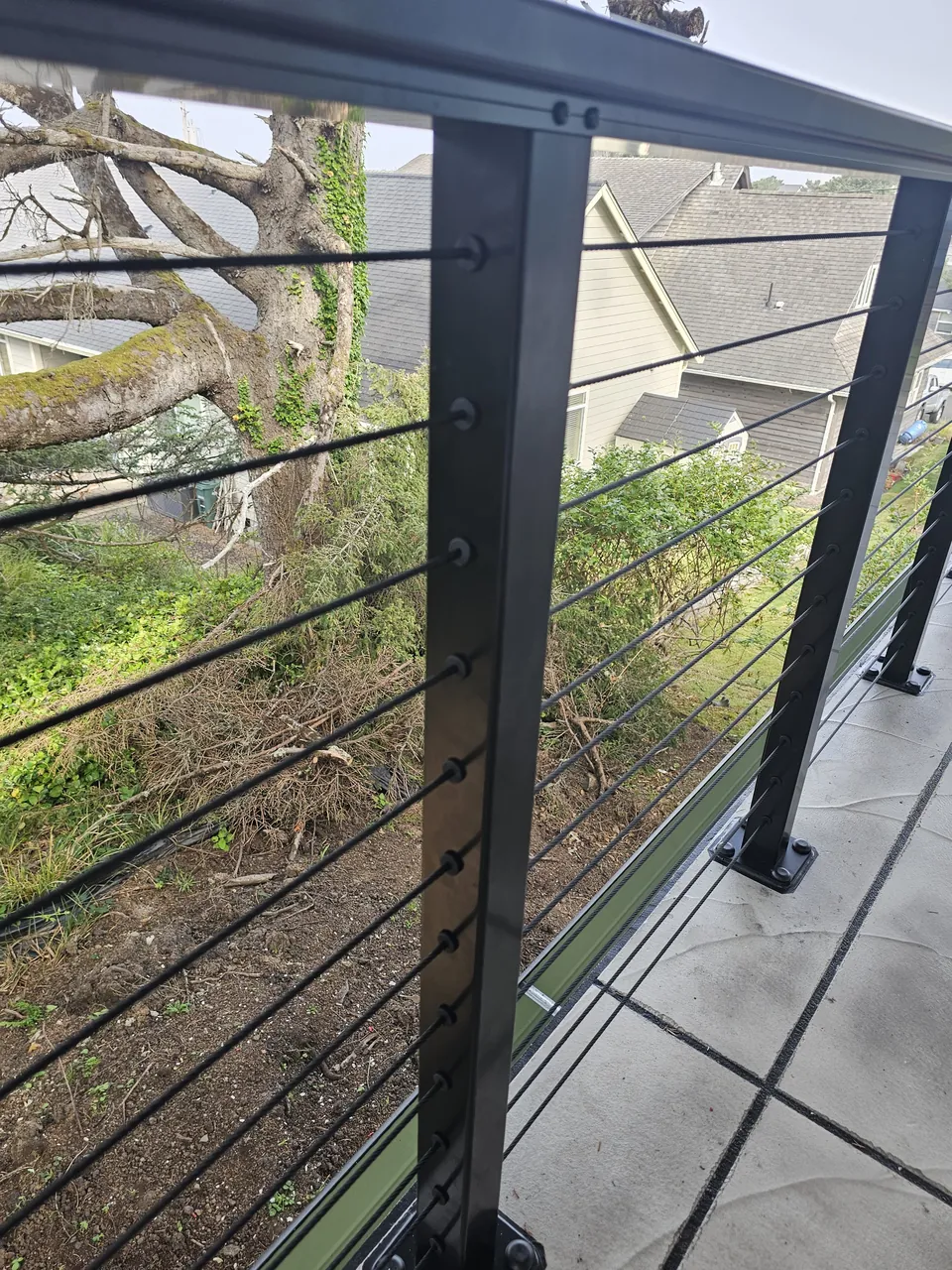
If old railing posts were part of the leak, it is a good time to replace them with cable, glass or black aluminum picket set into the new membrane. See railing in Vancouver. If the framing turns out to be too far gone, Tim is a registered Washington general contractor and can rebuild it, with our crew doing the waterproofing and railing.
Leaking decks we fix near Vancouver
We are based in Vancouver and get to leaking decks in Shumway, Hough, Mill Plain and east toward Fishers Landing quickly. Nearby, we fix leaking decks in Hazel Dell, Orchards, Camas, Washougal and Ridgefield, and across Clark County, Cowlitz County and the Portland Metro.
Recent deck and railing projects
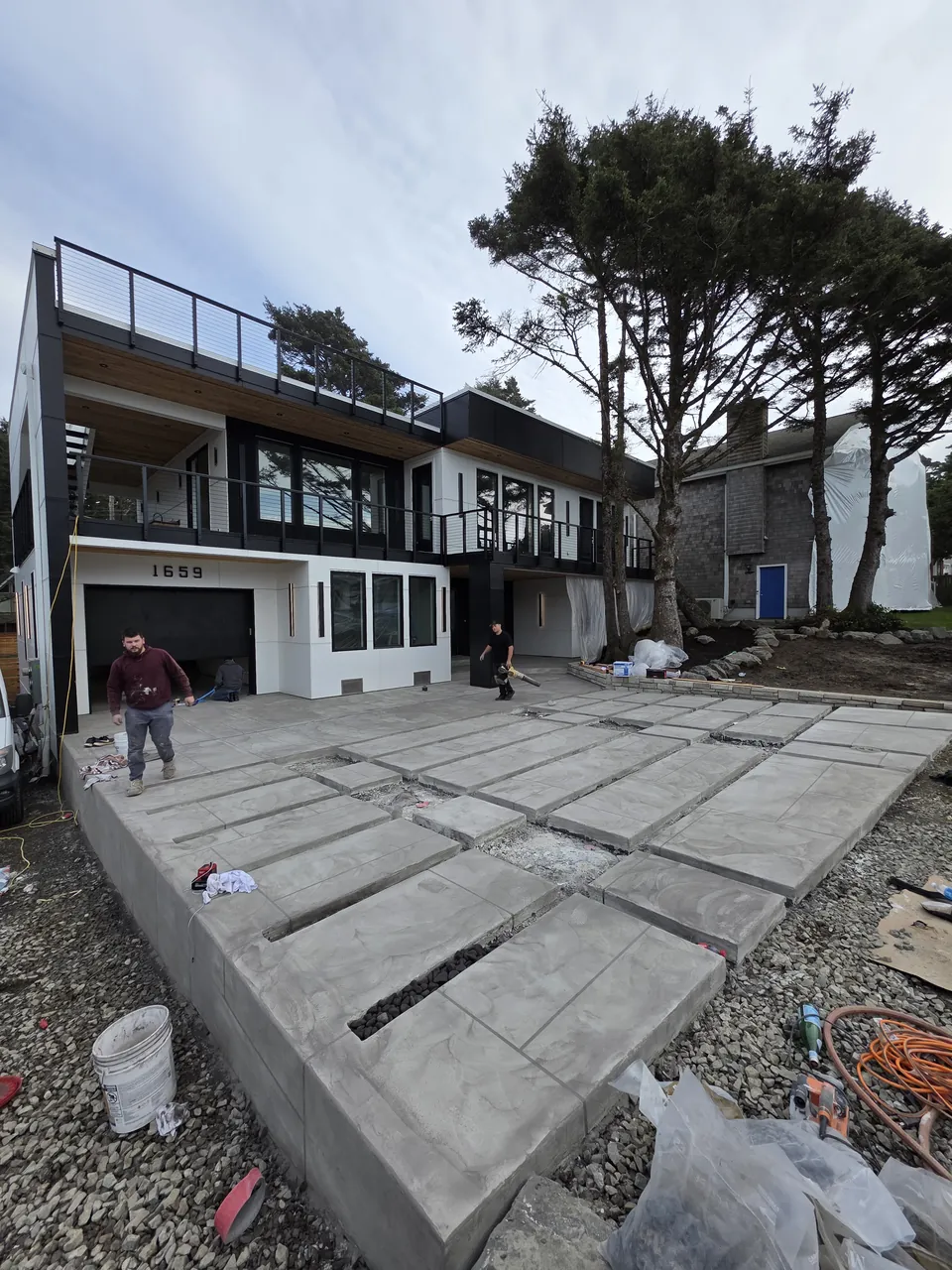
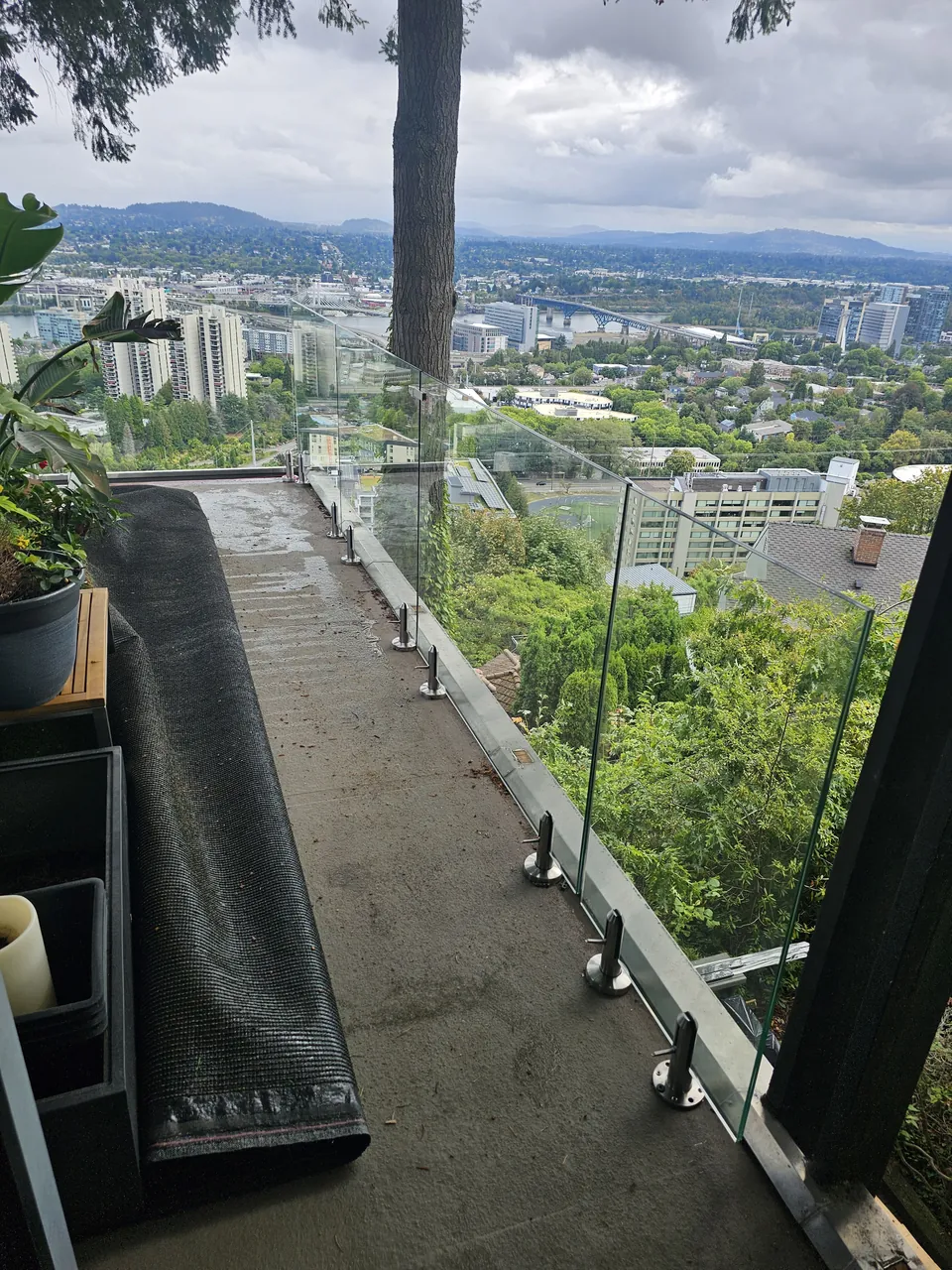
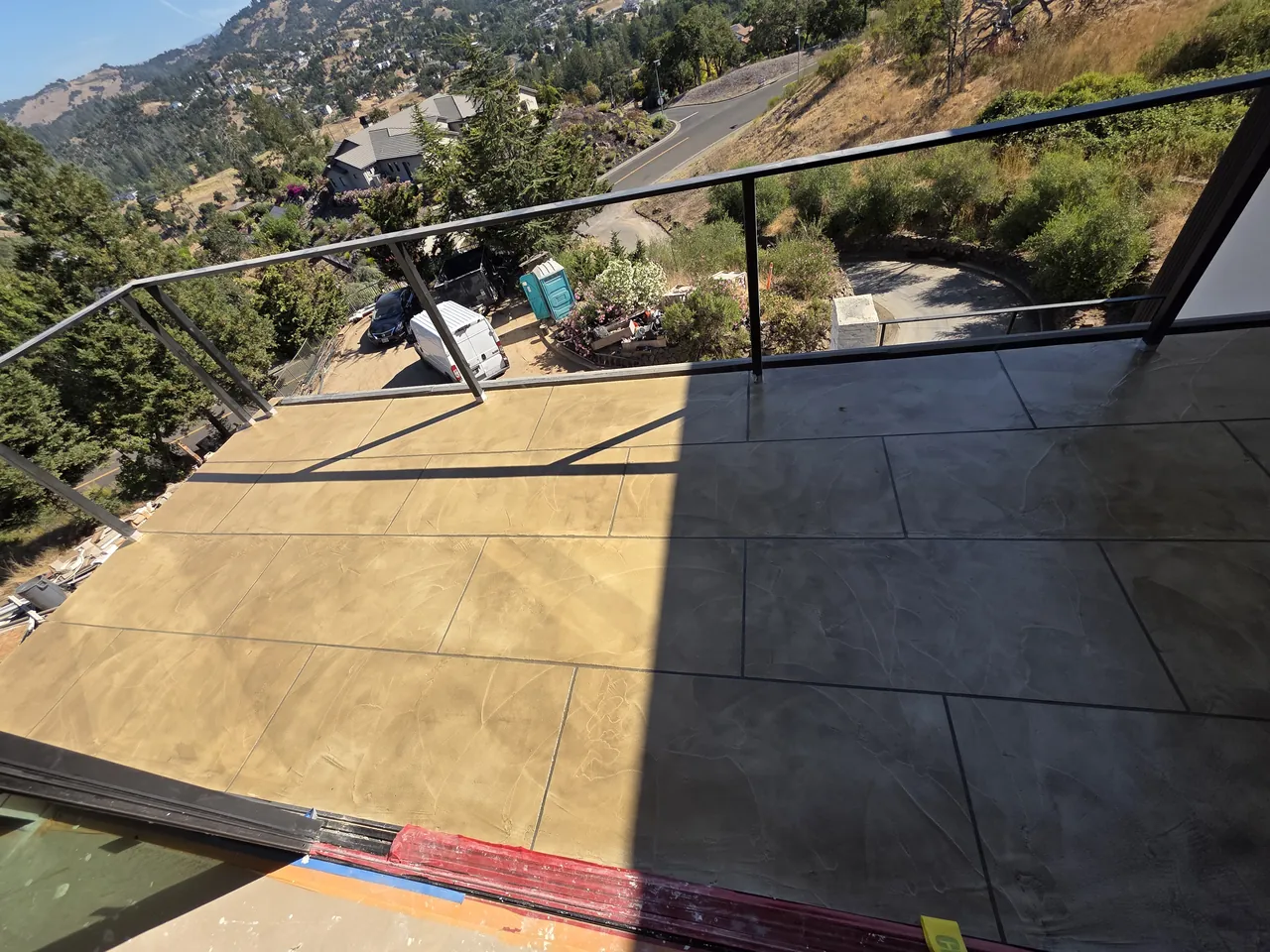
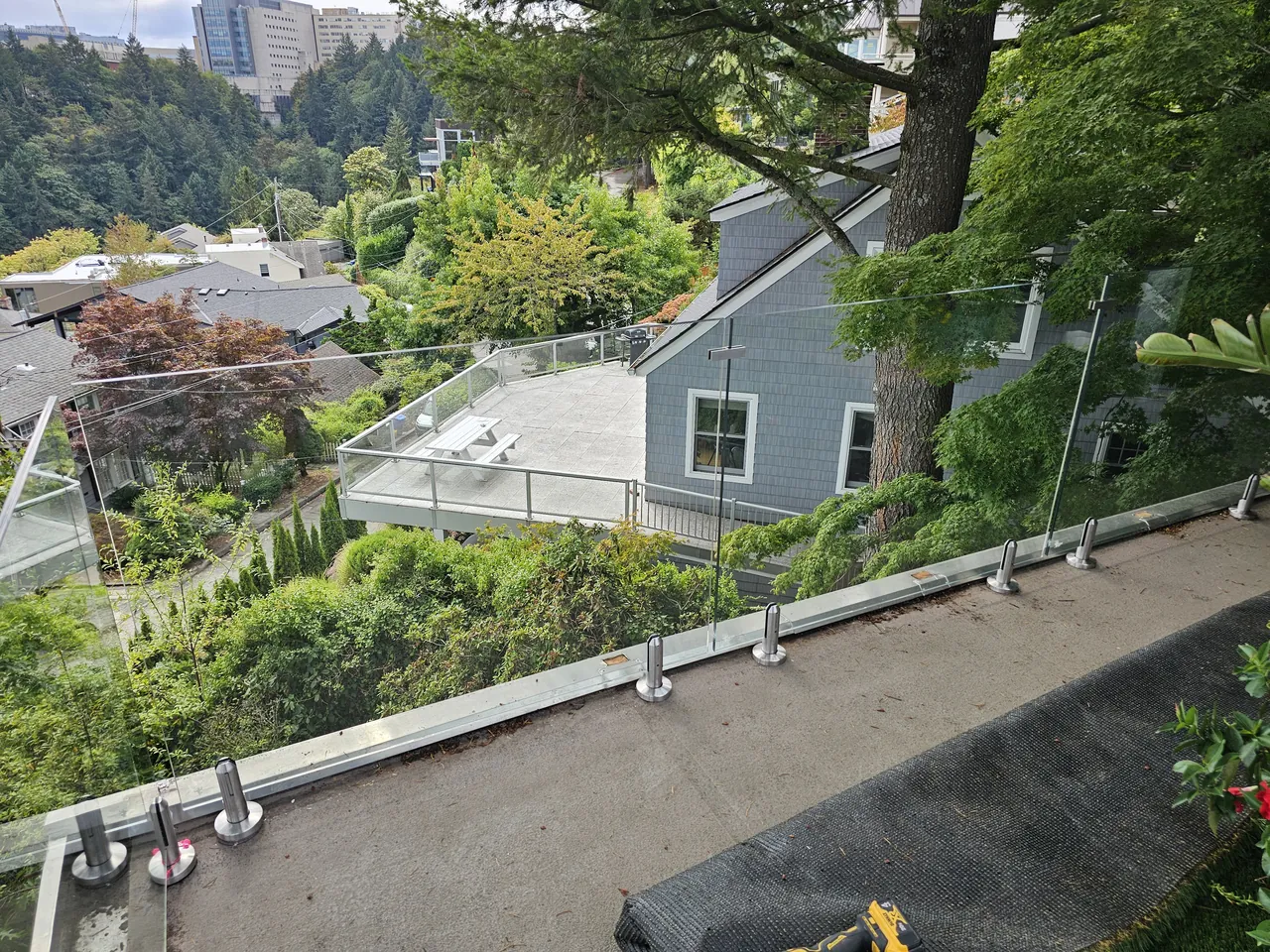
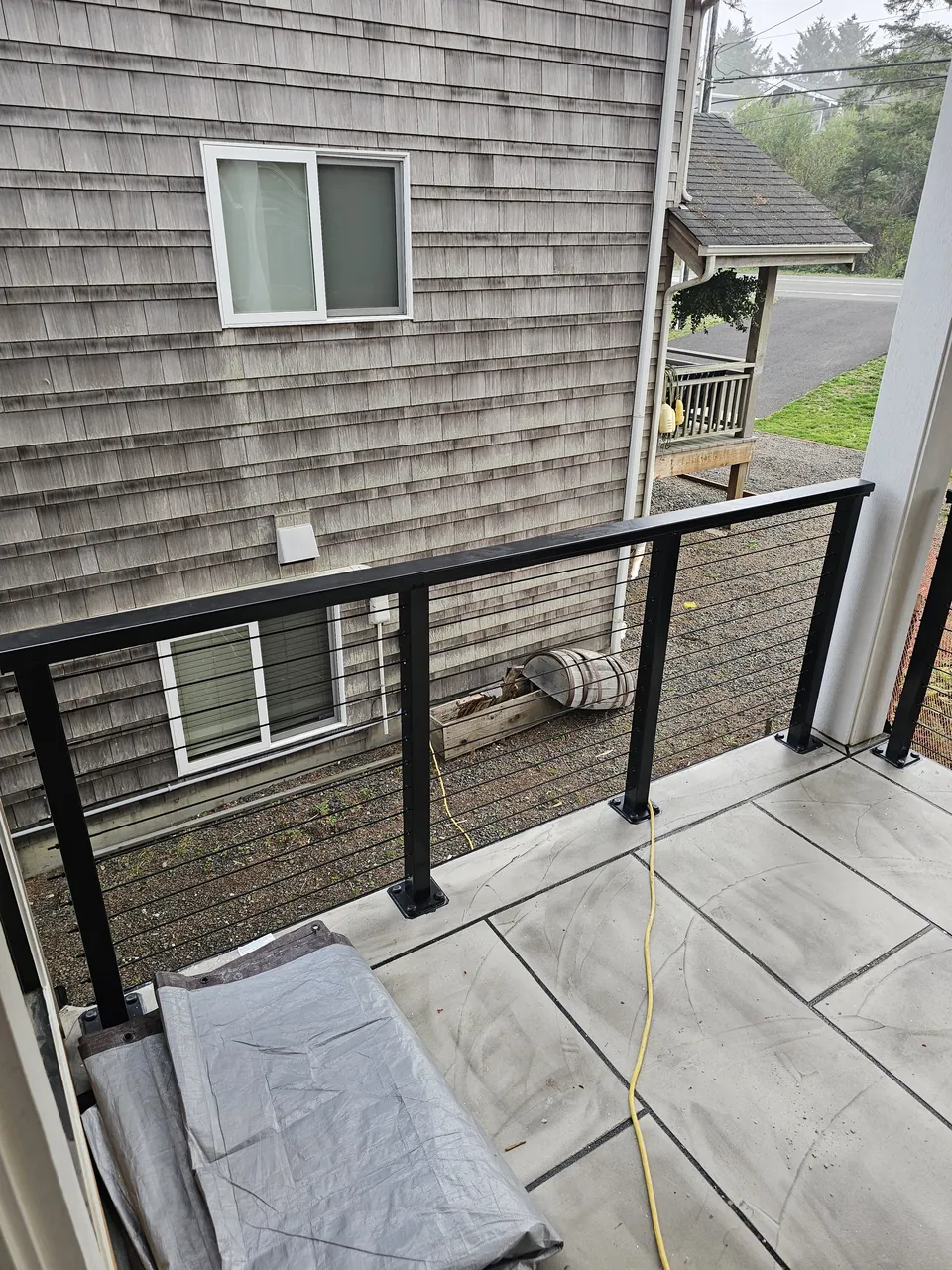
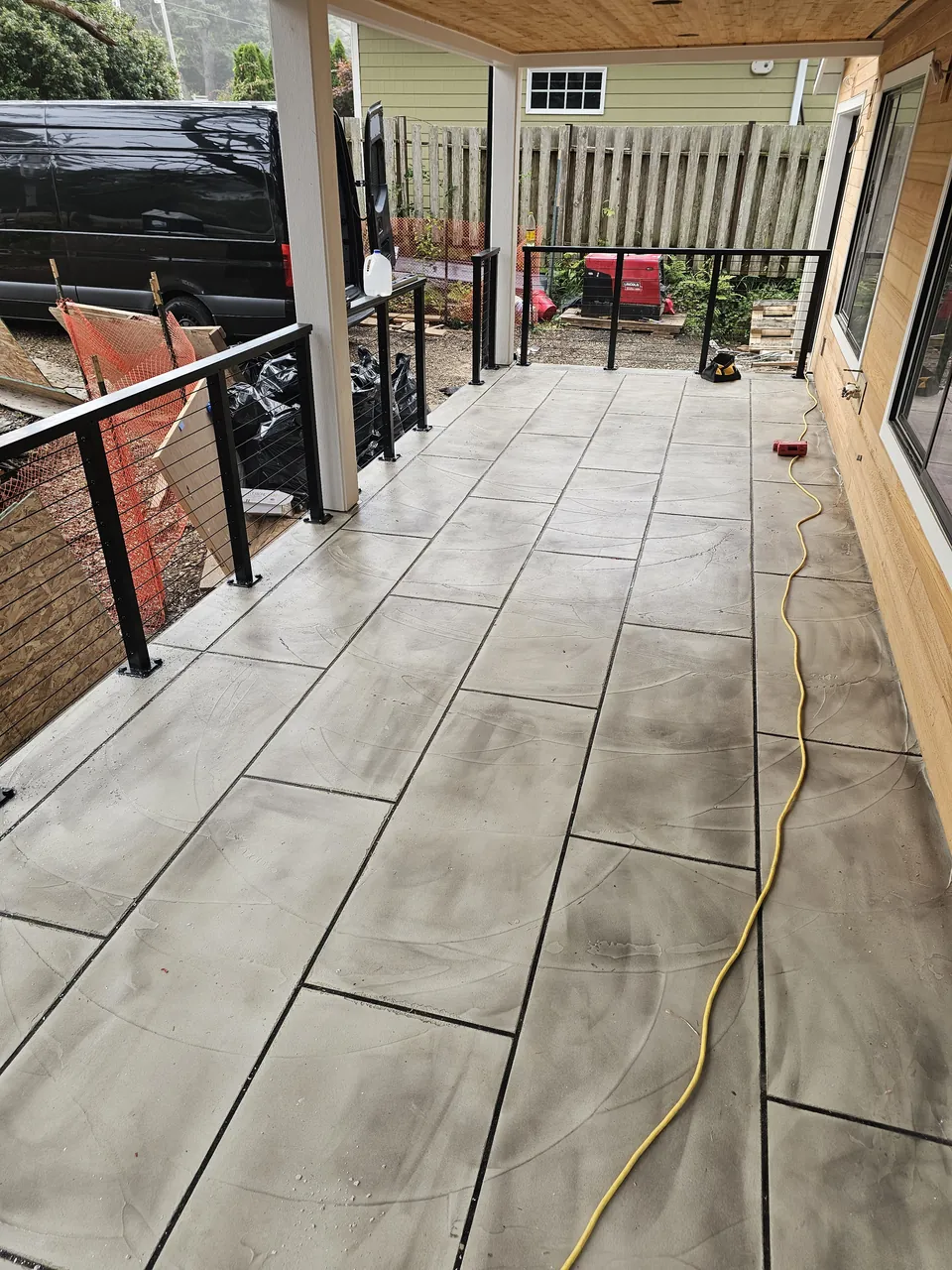
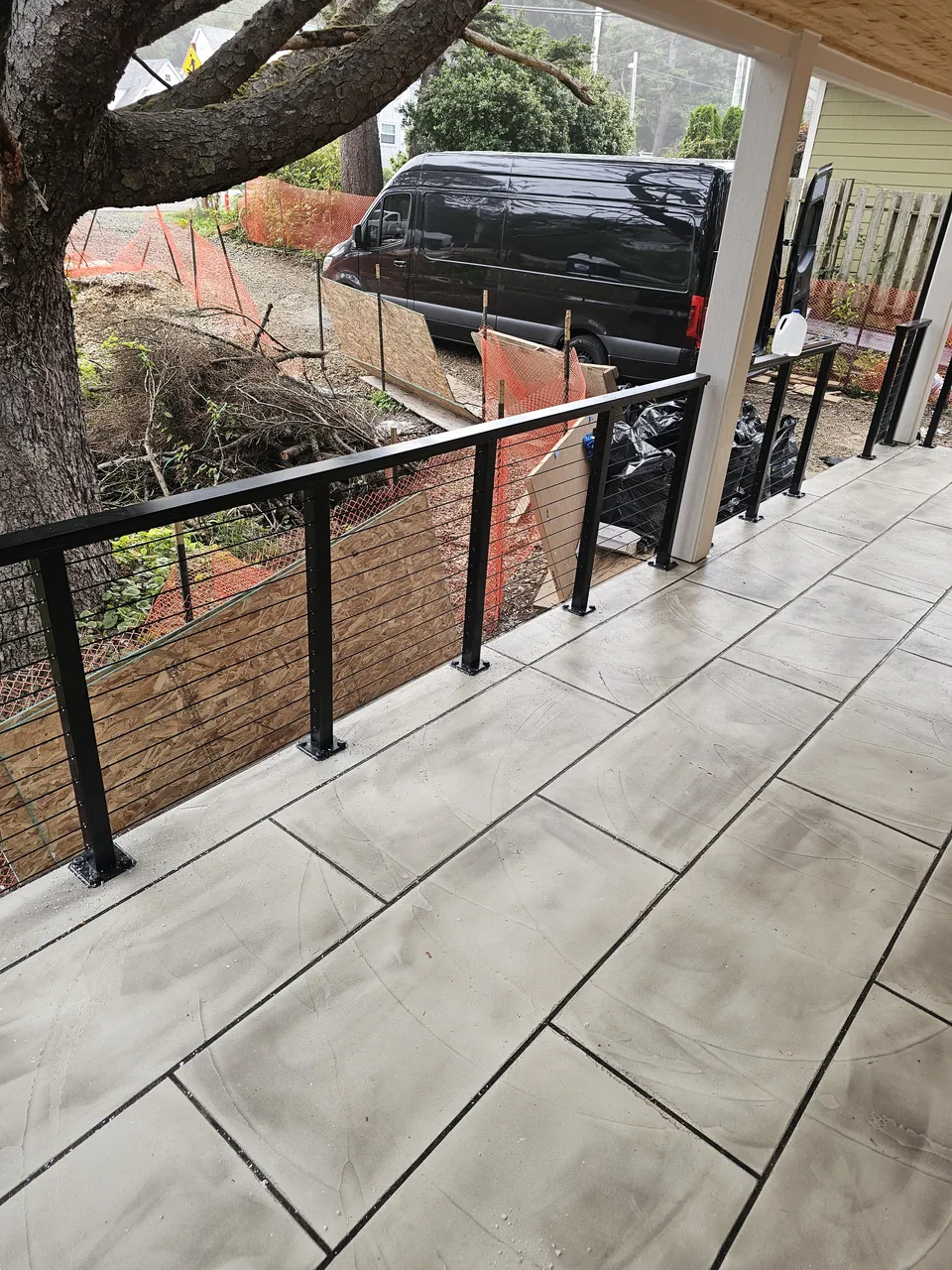
Finished decks and cable railing from our own jobs.
Leaking deck questions
My deck only leaks in heavy rain or when the wind blows. Is it still a problem?
Yes. Water that gets in during storms soaks into the plywood and framing and stays there through our wet season. Leaks that show up with the east wind often come from the wall joint or the door threshold.
How do you find where the leak starts?
We look at the stains below and at the likely entry points above: seams, the house wall, the door, the edges and the railing posts. The full picture comes when the surface is removed and the wet plywood is exposed.
Can you just seal the spot that is leaking?
Sealing one spot rarely lasts, because the wet wood under it stays wet and the water finds the next weak point. We fix the damage first and then waterproof the entire deck.
Do you work on decks over garages and finished rooms?
We do, and it is some of our most common work. Garages, bedrooms, family rooms and covered patios under a deck or balcony all get the same approach.
Our Vancouver split-level has a deck over the garage that drips every winter. Where do we start?
Start with the deck, not the garage ceiling. We find where the water gets in, replace the wet plywood, and waterproof the whole surface. Once the deck is dry, the ceiling can be fixed for good.
Can you start on a leak in the middle of winter?
Yes. We tent the deck with tarps and work through the rain. We only pause when it is colder than the manufacturer allows.