A common mistake in Kelso basements is rolling a hardware-store epoxy kit onto a slab that has water coming up through it. Within a season the coating bubbles, peels and smells musty. The concrete was never the problem. Moisture vapor from the ground was, and in a town built along the Cowlitz River with a high water table in the low areas, that happens a lot.
So every basement job here starts with a calcium-chloride test or an RH probe. The early 1900s to 1950s houses in Downtown Kelso and South Kelso, rather than the hillside ranches of North Kelso and Lexington, are the ones most likely to have basements, and many of them have old floor tile, paint layers or both. The reading and a look at the surface tell us exactly which system the floor needs.
A Basement System Made for Damp Ground
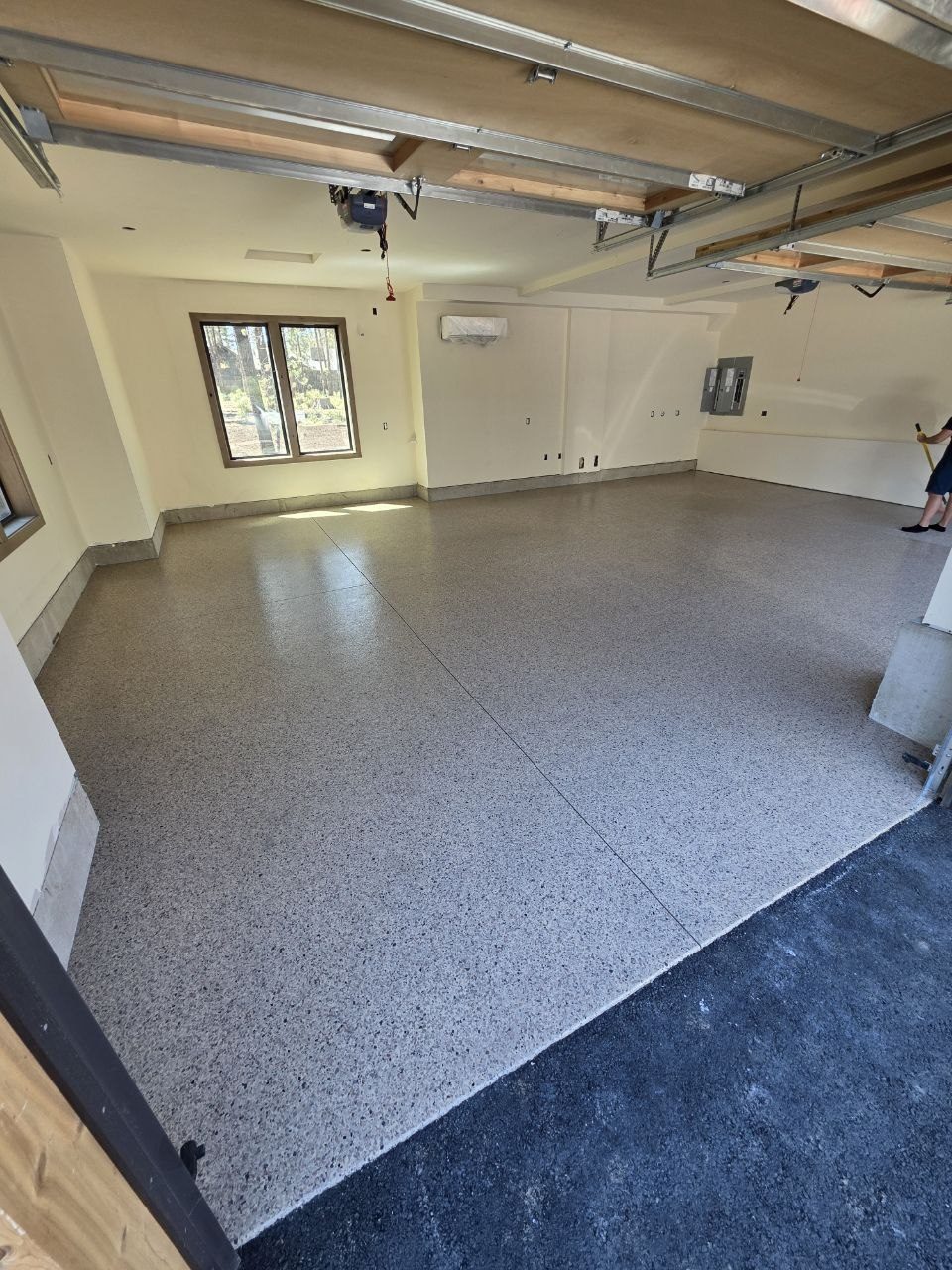
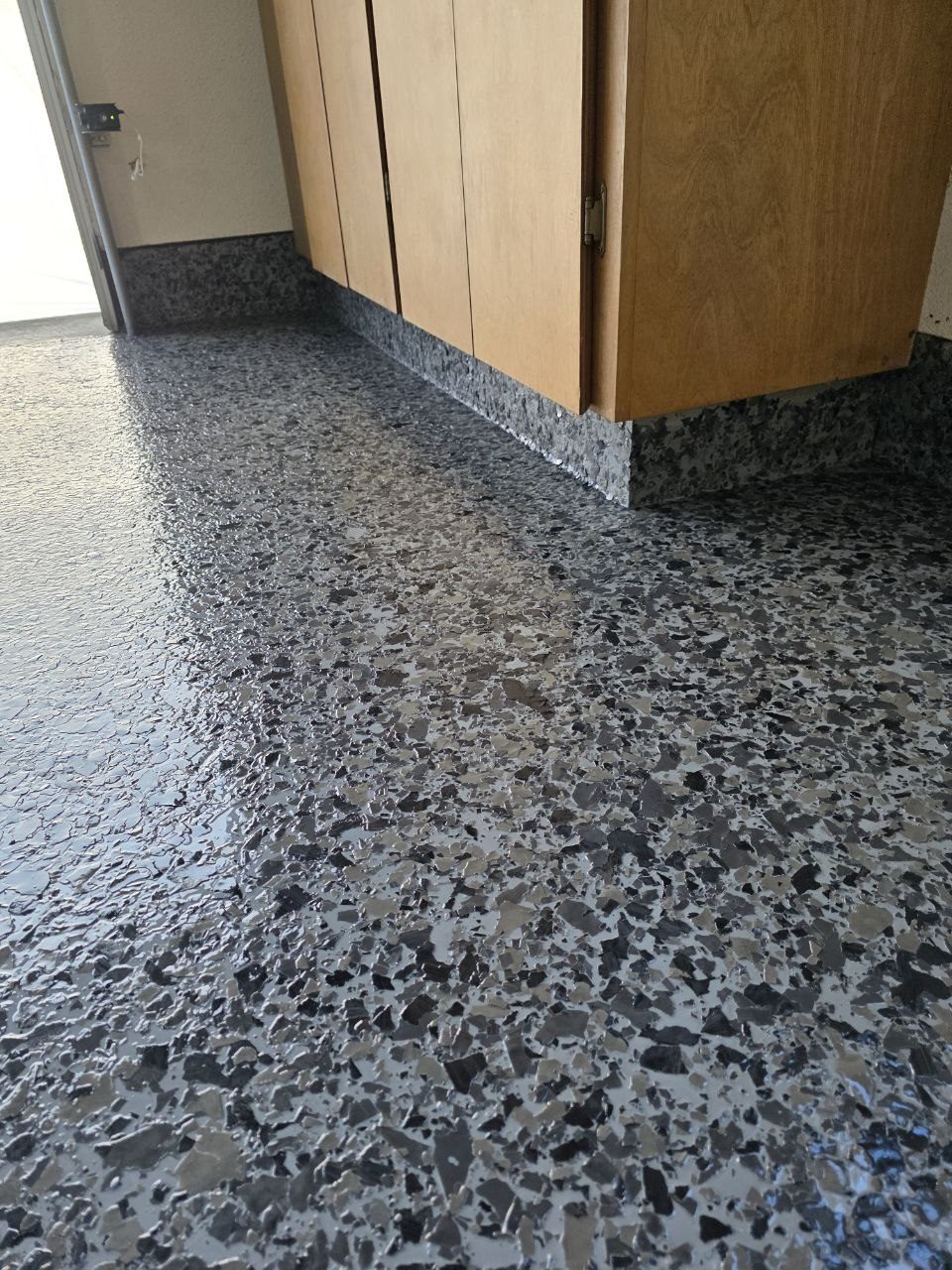
When the test shows high vapor, we roll a moisture-mitigating primer first. It bonds into the ground concrete and holds back the vapor so the rest of the system can stay stuck. On top goes 100% solids epoxy, then a full flake broadcast, then polyaspartic to finish, for a total build of 30 to 40 mils. The finish is mold resistant and mops clean, which is a big step up from bare, dusty concrete.
We never coat over standing water or an active leak. If a wall seeps or the floor puddles after rain, the source has to be fixed first, whether that is gutters, grading or a sump. Once the slab is just damp rather than wet, the coating handles it. Expect the crew in the basement a day or two, then give the floor two or three more days to harden. The warranty is lifetime.
Our Basement Epoxy Floors System
Materials: Moisture-mitigating primer, 100% solids epoxy, flake broadcast, polyaspartic topcoat
Thickness: 30-40 mils
Install time: about 3 days
Walk on it: 1-2 days after
Heavy furniture: about a week after
Warranty: Lifetime
Moisture tolerant. Mold resistant. Easy to clean.