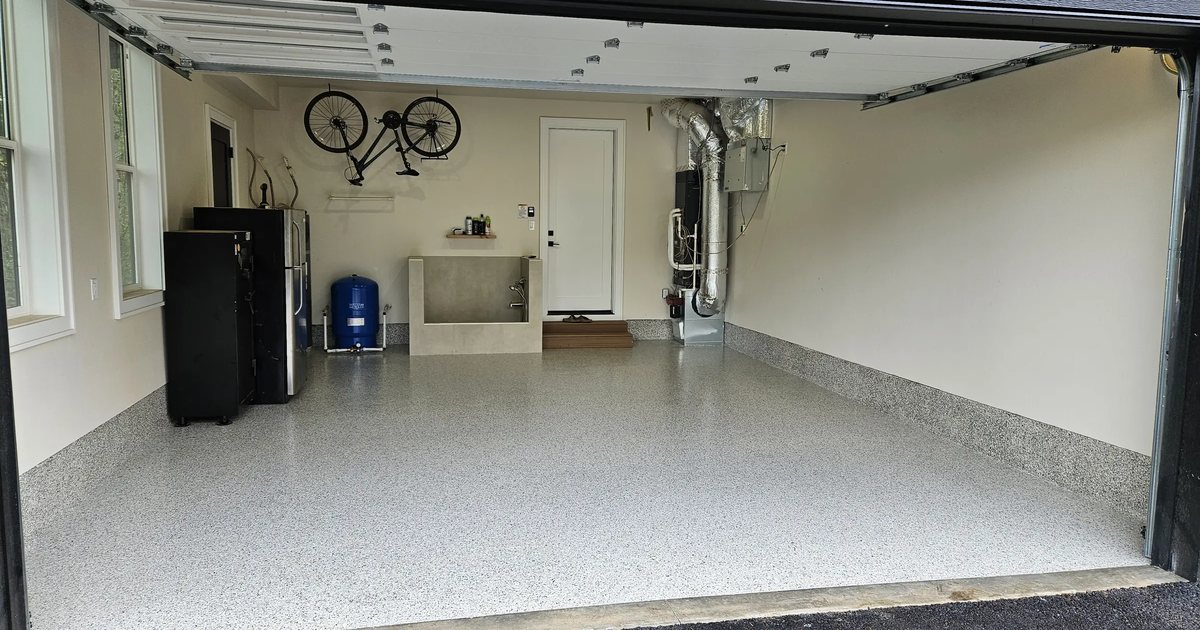
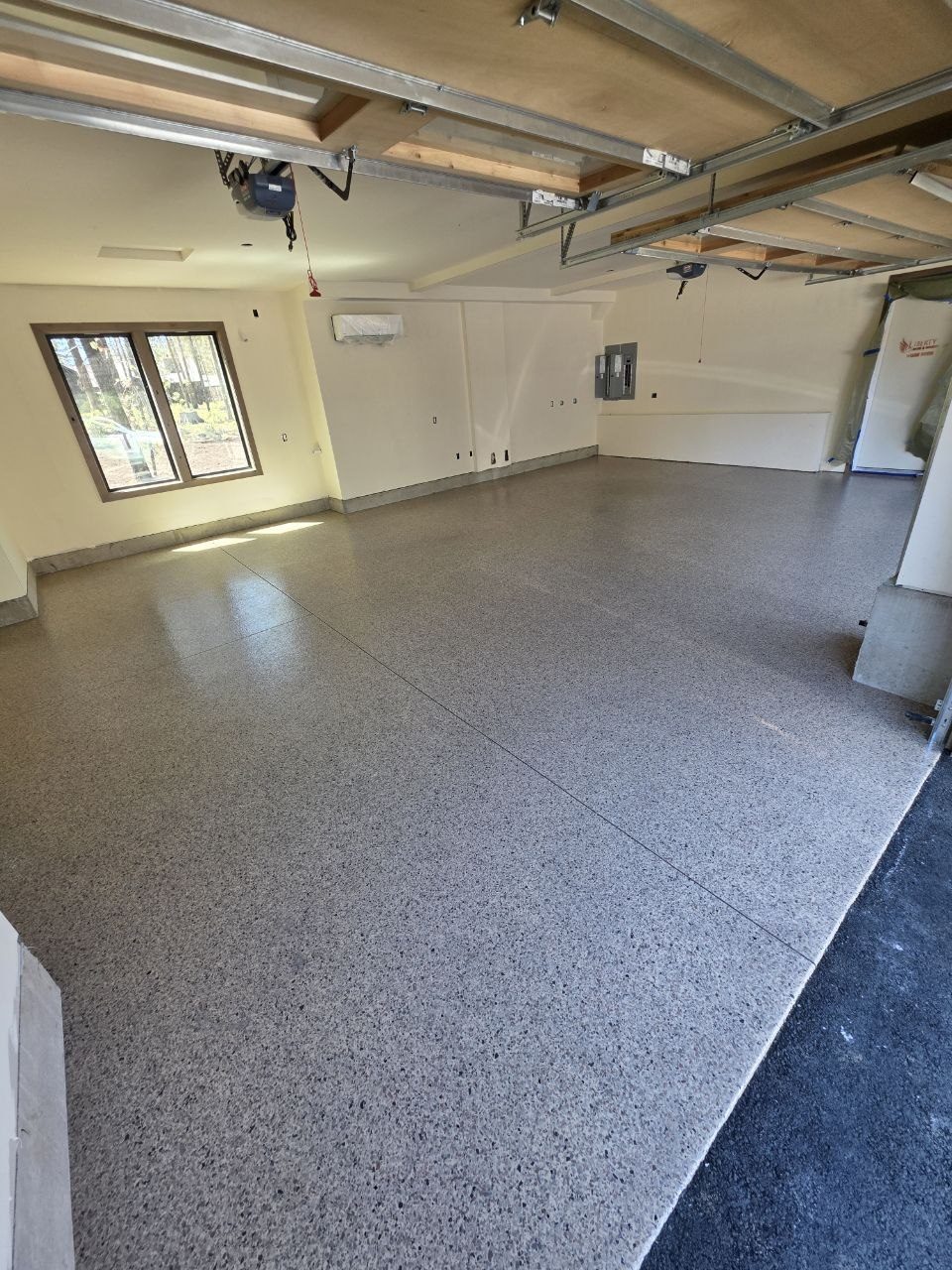
If you live in Vancouver, you know how it goes. From fall into spring, the garage is where wet shoes, wet dogs and wet cars end up. That water, plus road grime and whatever the tires drag in, is exactly what a garage floor coating is built to handle. It is also why one of the first questions we get on the phone is: is there a right time of year to do this?
The short answer is that the weather matters less than most people think, and the concrete matters more. But Vancouver's weather does change how we plan a job, how long the floor takes to cure, and how soon you can park on it. This guide walks through Vancouver's weather month by month using federal climate data, then explains what each season means for your garage floor.
Want a straight answer for your own garage? Call or text (360) 685-7222 or request a free in-home estimate.
The Short Answer
Late spring through early fall, May to September, is the easiest window in Vancouver. The air is warmer, the concrete is warmer, and rain is rare. July and August each average about half an inch of rain, compared with more than five inches in a typical November.
That does not mean the rest of the year is off the table. A garage is a covered space. What really decides whether a day works is the temperature and moisture of the slab itself, not whether it is raining on the driveway. We check the slab before we start, and if it is not ready, we tell you and plan around it.
Vancouver's Weather, Month by Month
The table below comes from NOAA's official 1991–2020 Climate Normals for Vancouver Pearson Field, the weather station closest to central Vancouver. These are 30-year averages, so any single year will run warmer, colder, wetter or drier.
NOAA NCEI 1991–2020 Climate Normals, Vancouver Pearson Field.
| Month | Avg high (°F) | Avg low (°F) | Rain (in) | Wet days* |
|---|---|---|---|---|
| January | 47.0 | 34.4 | 5.34 | 12.6 |
| February | 51.0 | 35.1 | 3.77 | 9.6 |
| March | 56.1 | 38.4 | 3.95 | 11.2 |
| April | 61.2 | 42.2 | 2.93 | 8.4 |
| May | 68.3 | 48.2 | 2.51 | 7.4 |
| June | 73.5 | 53.0 | 1.61 | 4.6 |
| July | 80.9 | 57.1 | 0.42 | 1.3 |
| August | 81.6 | 57.2 | 0.52 | 1.5 |
| September | 75.8 | 52.0 | 1.43 | 3.9 |
| October | 63.7 | 44.8 | 3.41 | 8.1 |
| November | 53.0 | 39.4 | 5.51 | 12.1 |
| December | 46.5 | 35.0 | 6.07 | 13.2 |
| Year | 37.47 | 93.9 |
*Wet days are days with at least 0.10 inch of rain. Source: NOAA National Centers for Environmental Information, U.S. Climate Normals.
What the Numbers Show
- Vancouver averages 37.47 inches of rain a year, spread over about 94 wet days.
- November, December and January together bring 16.92 inches, about 45% of the year's rain.
- June through September brings just 3.98 inches, about 11% of the year's rain.
- From November through March, average overnight lows sit in the mid-30s to high-30s °F, so an unheated garage slab stays cold for weeks at a time.
Why Temperature and Moisture Matter for a Garage Floor Coating
A professional floor coating is not paint that simply dries. The epoxy base and the polyaspartic topcoat cure through a chemical reaction, and like most reactions, it slows down when it is cold. Moisture can also get between the coating and the concrete if the slab is not ready. Three things decide whether a given day is a good day to coat.
Slab Temperature, Not Just Air Temperature
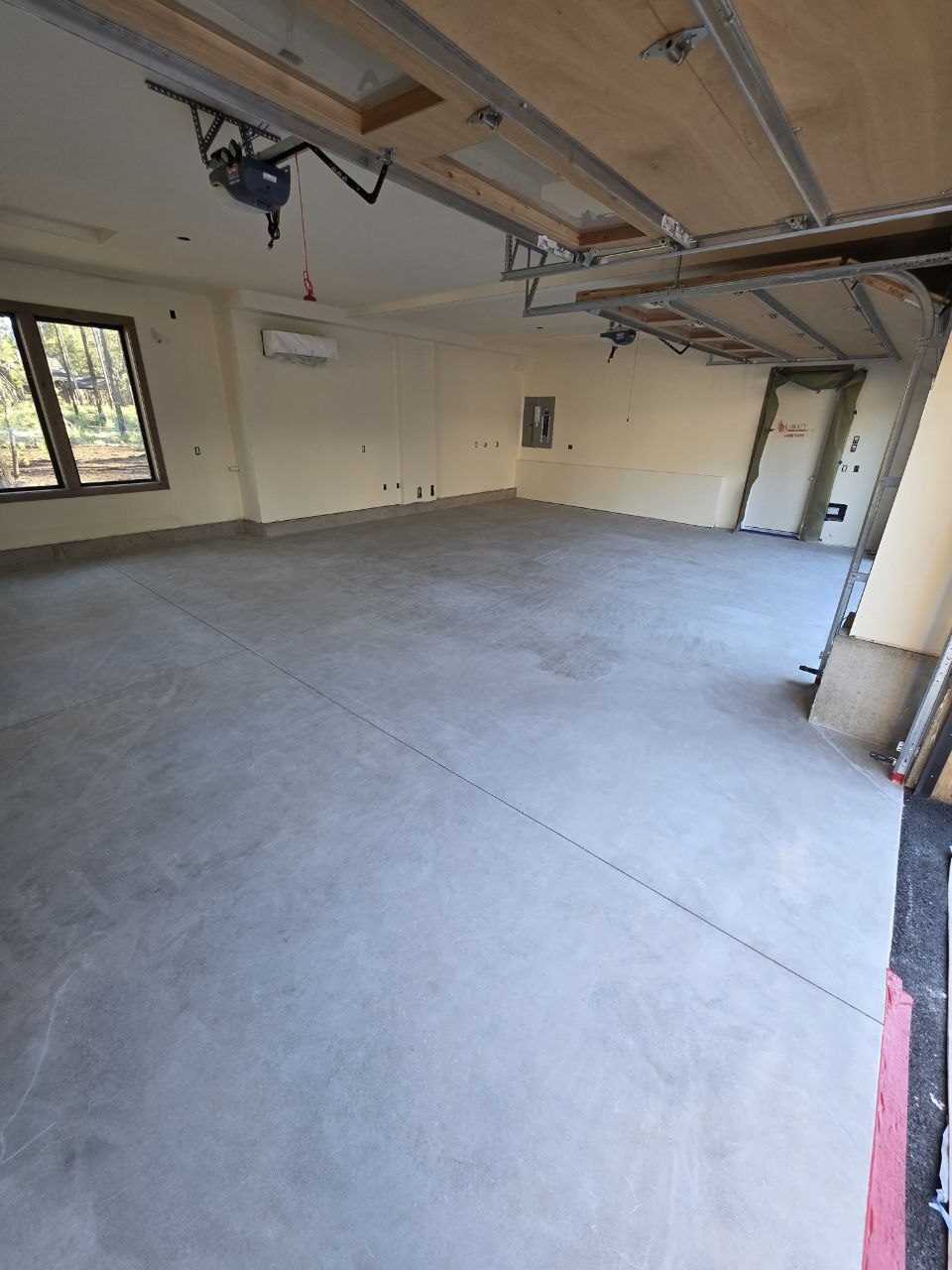
Concrete holds onto cold. On a fall morning, the air in the garage can warm up by early afternoon while the slab is still close to the overnight low. That is why we look at the concrete itself, not just the thermometer on the wall, before we open a single can.
Moisture Coming Up Through the Slab
Rain on the driveway is not the main risk. Water vapor pushing up through the concrete from the ground below is. In Vancouver, rain from November into May means that vapor pressure is working on garage slabs for about half the year, and it is what kills coatings in this town, not frost.
That is why we check every slab with a moisture meter. Fresh concrete, like a newer build or a slab near Vancouver Lake, often gets a calcium-chloride test before we commit to a schedule. When a slab tests high, we put down a moisture-mitigating primer before the base coat. Skip that step and the flakes can bubble up by March.
Condensation on Cold, Damp Days
On cool, humid mornings, a cold slab can pick up a thin film of moisture you cannot always see. Coating over it is a bad idea. We read the conditions on the day of the install and adjust the start time or the schedule when the slab is not ready.
Season by Season: What to Expect in Vancouver
NOAA NCEI 1991–2020 Climate Normals, Vancouver Pearson Field.
| Season | Total rain (in) | Avg high range (°F) | Avg low range (°F) | What it means for your floor |
|---|---|---|---|---|
| Winter (Dec–Feb) | 15.18 | 46.5–51.0 | 34.4–35.1 | Possible in the right garage after slab checks; longer before you park |
| Spring (Mar–May) | 9.39 | 56.1–68.3 | 38.4–48.2 | Gets easier every week; May is a strong month |
| Summer (Jun–Aug) | 2.55 | 73.5–81.6 | 53.0–57.2 | Driest, warmest window; plan around hot afternoons |
| Fall (Sep–Nov) | 10.35 | 53.0–75.8 | 39.4–52.0 | September is excellent; October workable; November needs planning |
Spring (March–May)
Spring is when the phone starts ringing, so it pays to get on the schedule early. March is still wet, with almost 4 inches of rain and average lows near 38°F. By May, the average high is 68°F and rain drops to about two and a half inches. Late April and May are often a sweet spot: warm enough for a normal cure, before summer fills up.
Summer (June–August)
July and August are the driest months in Vancouver, with roughly half an inch of rain each and average highs above 80°F. Warm slabs mean each coat cures on schedule. The one thing to plan around is heat. In general, fast-curing coatings like polyaspartic give any installer less working time on the hottest afternoons, which is why summer jobs across the industry tend to start early in the day.
Fall (September–November)
September is one of the best months of the year for a garage floor in Vancouver, with an average high near 76°F and less than an inch and a half of rain. October is still very workable. By November, rain climbs past 5 inches and overnight lows drop toward 39°F, so slab checks matter more and the floor may need extra time before you park on it. The upside of finishing in the fall: the floor is done before the wettest months arrive.
Winter (December–February)
December is Vancouver's wettest month, at just over 6 inches of rain, and December through February average lows sit around 35°F. Winter jobs depend heavily on the garage. An attached garage that stays warmer than outside is a very different space from a detached shop that sits at the outdoor temperature. We check the slab first, and if the floor should wait for a warmer stretch, we will tell you straight.
Why We Take 2 to 3 Days (and Why One-Day Floors Cut Corners)
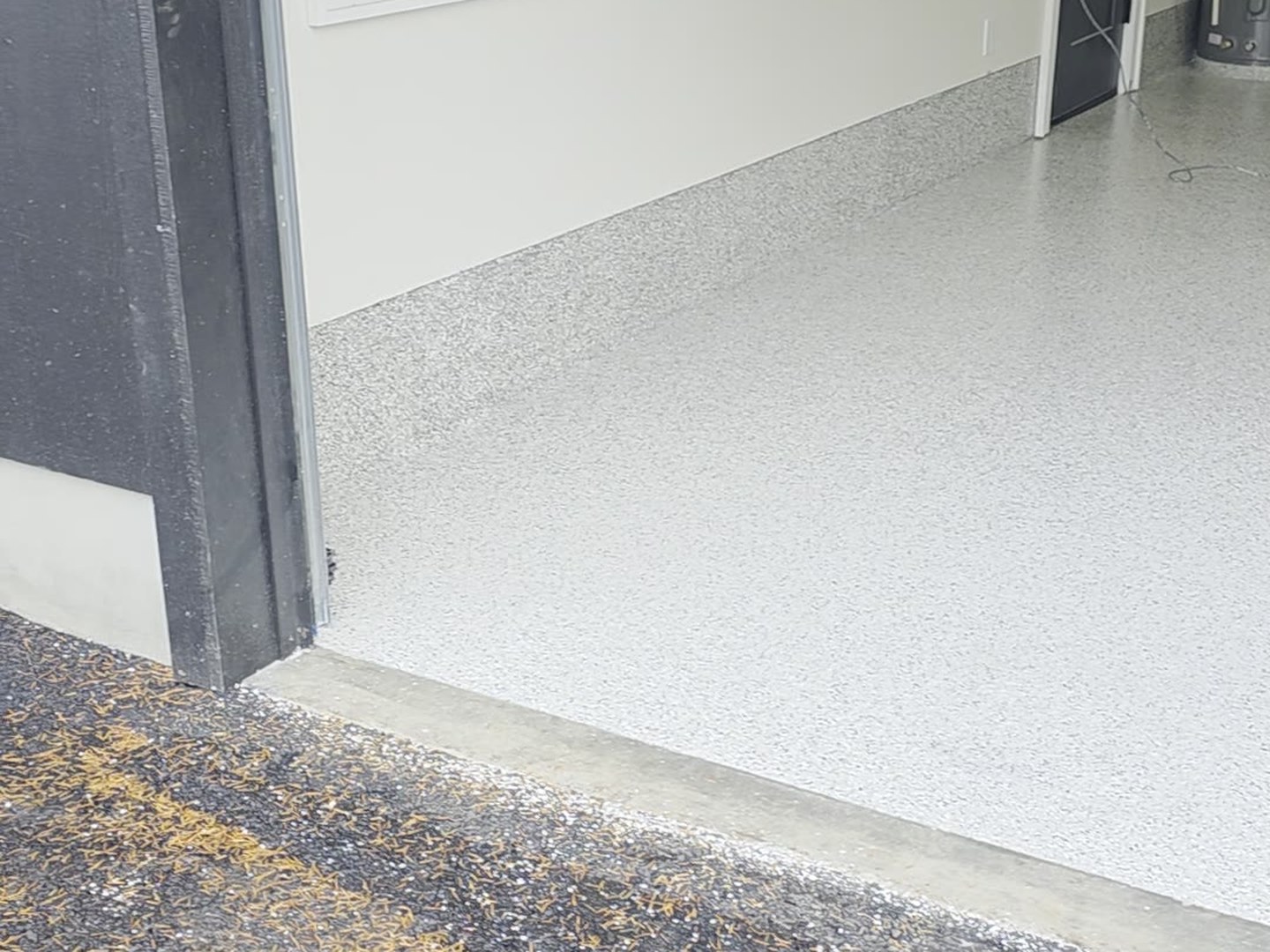
Most garages take us 2 to 3 days on site, depending on size. That is a deliberate choice. Our system is built to penetrate the concrete and cure longer than one-day systems, because a coating that actually bonds into the slab is what holds up to Vancouver's wet months, hot tires and years of daily use. One-day installs get their speed by cutting corners, and the corners they cut are the steps that make a floor last.
- Diamond grind or dustless shot blast, picked for your space (no acid etch)
- Crack and spall repair
- Epoxy base + full flake
- Scrape smooth
- Flake Lock, dries 3–4 hours
- Polyaspartic topcoat
- Bigger garages only
- Walk on it: 1–2 days after
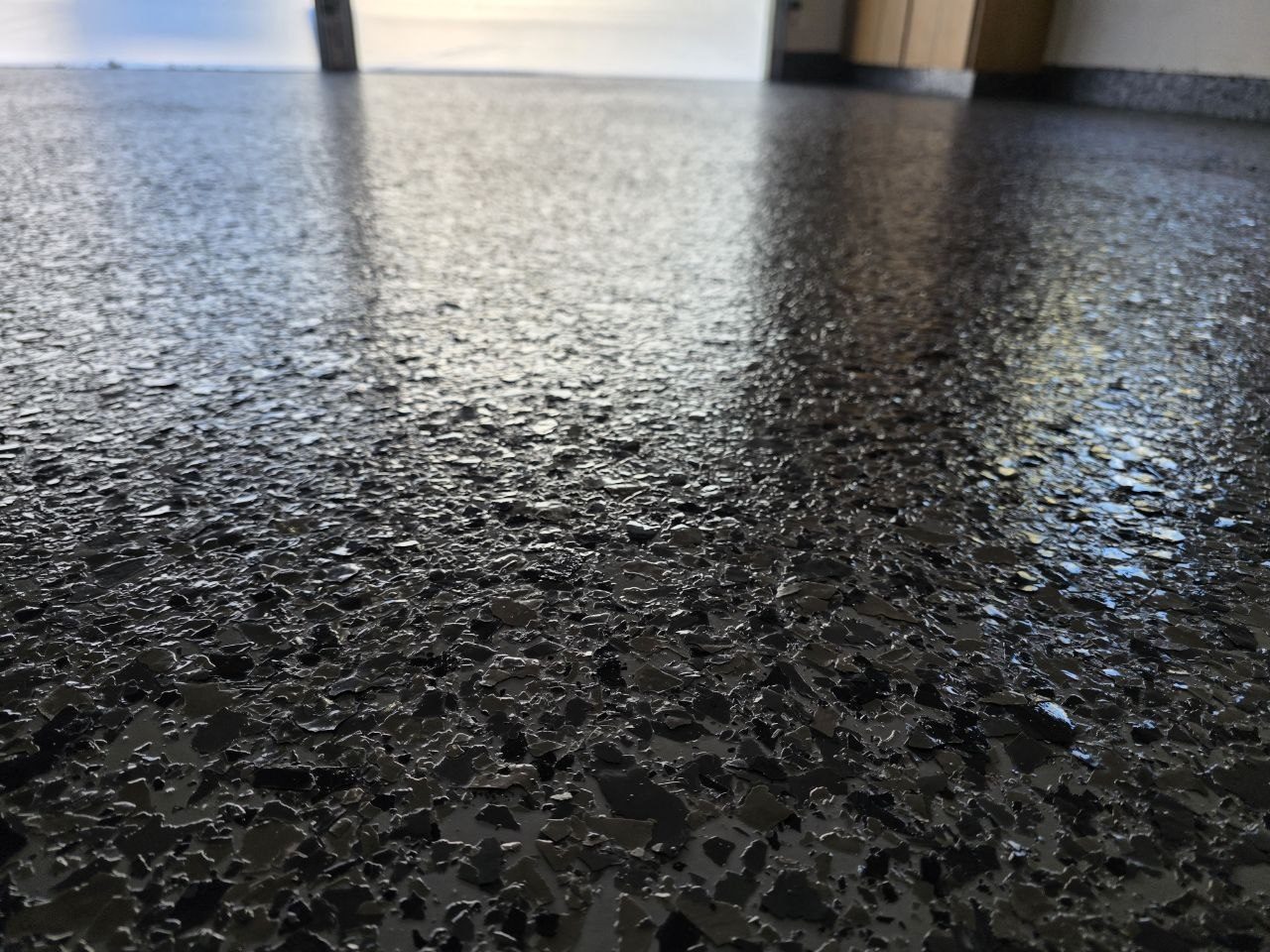
- Park on it: about a week
| When | Step | What we do |
|---|---|---|
| Day 1 | Prep and repair | Diamond grind or dustless shot blast the concrete, whichever suits the space (no acid etching), and fill cracks and spalls with a polyurea crack repair, ground flush |
| Day 1 | Epoxy base and full flake | A thick 100% solids epoxy base coat, with flake broadcast into it until no more will stick |
| Day 2 | Flake Lock | Scrape the flake smooth, apply the Flake Lock coat, and let it dry 3–4 hours |
| Day 2 | Polyaspartic topcoat | Roll on a clear, tough topcoat that stands up to hot tires, oil, gas and chemicals |
| Day 3 (larger garages) | Finish | Bigger garages run into a third day |
| Finished | Full build | 30–40 mils total thickness |
Prep matters more than anything else on that list. We prep the concrete by diamond grinding or shot blasting, and we pick the right method for each space. Both open up the concrete so the epoxy can lock into it mechanically. Acid etching is faster and cheaper, but it does not give a coating the same bond, and skipped prep is the most common reason garage coatings peel.
What Is Shot Blasting?
Shot blasting fires small steel shot at the slab to clean it and rough up the surface. The machine vacuums the shot and the dust right back up as it goes, so it is a dry, dustless process, and the shot gets reused. It works well on larger, open slabs and for stripping thin old coatings, sealers and contaminants, and it leaves a textured profile rated on the industry's ICRI CSP (concrete surface profile) scale. Diamond grinding handles edges and tight spots and takes down high spots, and our grinders run with vacuum dust collection too. On a lot of jobs the shot blaster does the open floor and a grinder does the edges. Either way, we never acid etch.
A Note on Sun and Color
Polyaspartic holds its color in sunlight much better than epoxy, which is why we use it as the topcoat. No coating is completely sun-proof, though. A floor that takes strong direct sun through an open door for years can still slowly shift in tone.
How Long Before You Can Walk and Park on It?
You can walk on the floor 1 to 2 days after we finish. You can park on it in about a week, once the topcoat is fully cured. Cold weather can add a little time to that, which matters most from November through February. When we wrap up, we give you the exact timing for your floor so you are not guessing.
Plan for the car to live in the driveway for that week, and keep heavy items, rolling toolboxes and anything with rubber feet off the floor until we say it is ready.
What Does a Garage Floor Coating Cost in Vancouver?
Every slab is different, so we price each floor after a free in-person inspection. No two garages have the same concrete, so we do not post a price for the coating itself. Here is what moves the cost of a job, from the things that matter most to the things that do not matter at all. If a peeling or failing coating has to come off first, removal is included in your written quote.
| Item | Price | What moves it |
|---|---|---|
| Flake epoxy floor with polyaspartic topcoat | Priced after a free in-person inspection | Condition of the concrete: cracks, spalls, oil, old paint or sealer, moisture, and the size of the space |
| Old coating removal (if needed) | Included in your written quote if needed | What kind of coating is down now and how well it is stuck; confirmed after the inspection |
| Moisture-mitigating primer (if the slab tests high) | Included in your written quote if needed | The moisture reading at the inspection |
We only give an exact price after we inspect your slab in person. Cracks, oil, old paint or coatings, moisture and the size and shape of the space all change the work. At the free in-home estimate, we measure, check the slab and bring real sample boards. Exact pricing comes after that free in-person inspection, with a written quote. The time of year does not change how we price a floor.
Our Warranty
Every 360 Surfaces flake floor comes with a 5-year written workmanship warranty. Whatever month we install in, the warranty is the same, because we do not coat a slab that is not ready.
Garage Floor Coatings Across Vancouver and Clark County
Vancouver is home base for us. The truck is 10 to 20 minutes from any garage in town. We work in neighborhoods all over the city, including Felida, Cascade Park, Fisher's Landing, Hough, Uptown Village and Minnehaha, and across Clark County in Salmon Creek, Hazel Dell, Orchards, Camas, Washougal, Ridgefield, Battle Ground, Brush Prairie and La Center.
See our Vancouver epoxy flake floors page, the full epoxy flake floor system, or every city we serve on our service areas page. Comparing products? Read Polyaspartic vs Epoxy.
Frequently Asked Questions
What is the best month to coat a garage floor in Vancouver, WA?
May through September is the easiest window. July and August are the driest months of the year in Vancouver, and September is still warm with little rain. Floors can be done in other months too, as long as the slab passes our temperature and moisture checks.
Can you coat a garage floor in the fall or winter?
Often, yes. A garage is a covered space, so what matters is the temperature and moisture of the concrete, not the rain outside. We check the slab before we start, and if it is not ready we will tell you and plan the job for when it is. Cold weather can add time before you can park on the floor.
Does rain on install day matter?
Not much on its own. The bigger risk is water vapor coming up through the slab from the ground, which is why we check the concrete with a moisture meter and add a moisture-mitigating primer when a slab tests high.
How long does a garage floor coating take to install?
Most garages take us 2 to 3 days on site, depending on size. Our system is built to penetrate the concrete and cure longer than one-day systems, on purpose, because that is what makes it last.
When can I walk and park on my new floor?
You can walk on it 1 to 2 days after we finish and park on it in about a week, once the topcoat is fully cured. Cold weather can add a little time, and we give you the exact timing for your floor when we wrap up.
How much does a garage floor coating cost in Vancouver?
Every slab is different, so we price each floor after a free in-person inspection. If an old, failing coating has to come off first, removal is included in your written quote. Exact pricing comes after a free in-person inspection, with a written quote.
Will a polyaspartic topcoat turn yellow?
Polyaspartic holds its color in sunlight much better than epoxy, which is why we use it as the topcoat. No coating is completely sun-proof, though, and a floor that takes strong direct sun for years can still slowly shift in tone.
What warranty comes with the floor?
Every 360 Surfaces flake floor comes with a 5-year written workmanship warranty.
Get a Free Garage Floor Estimate in Vancouver, WA
Thinking about getting your garage done before the wettest months, or want a spot on the spring schedule? Call or text (360) 685-7222, email info@360surfaces.com, or book your free in-home estimate. We will measure the space, inspect and moisture-check the slab, and show you real flake samples. Exact pricing comes after that free in-person inspection, with a written quote.