
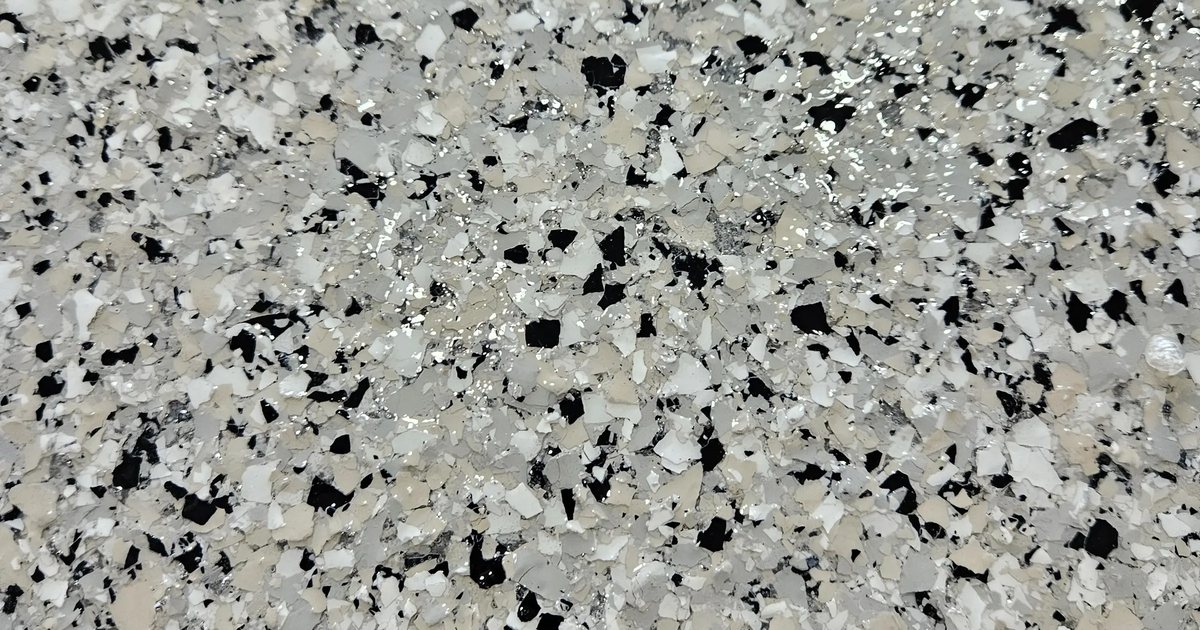
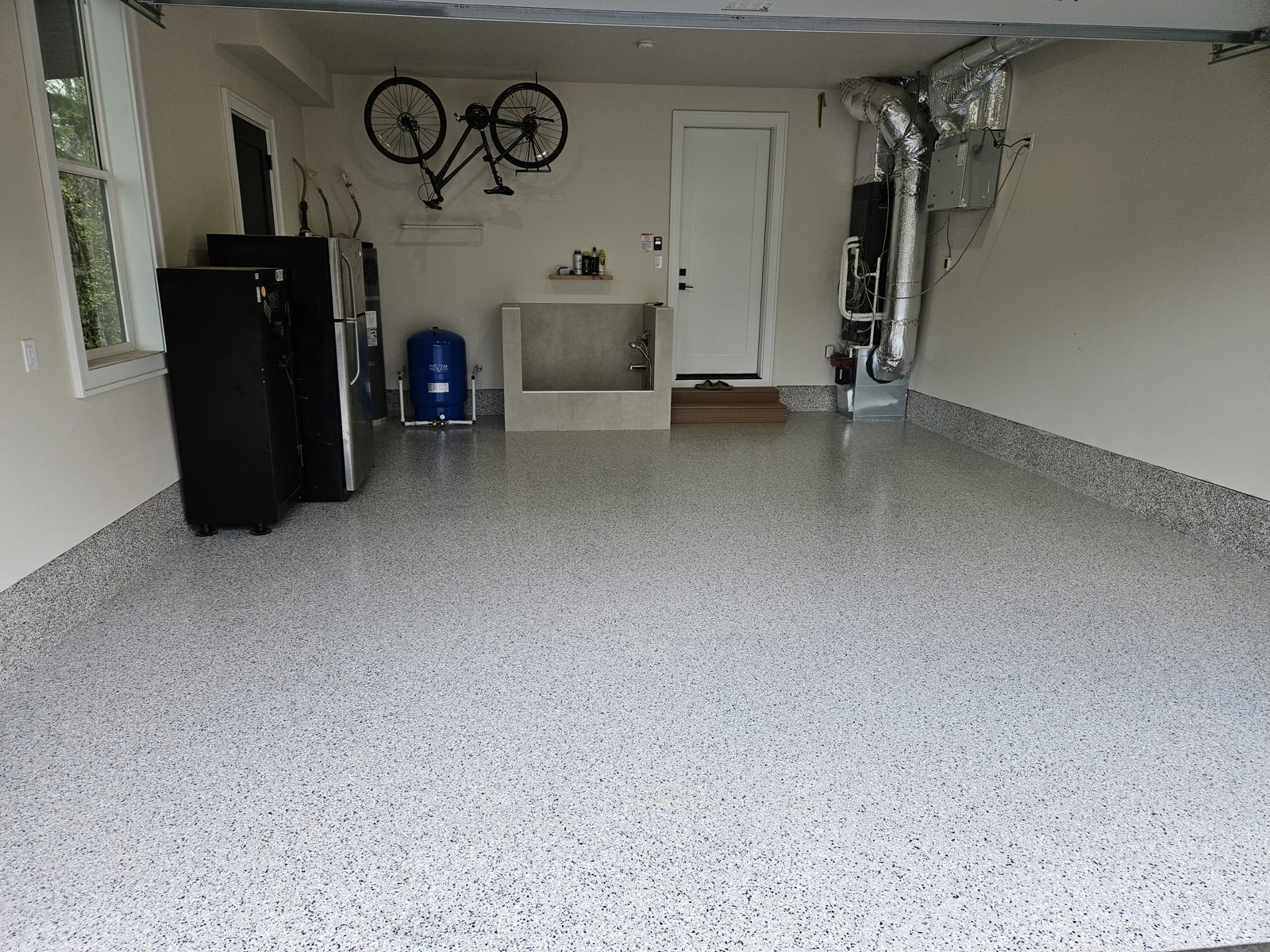
Walk into a Hazel Dell garage built in the 1970s and you can usually guess what is on the floor. There is a coat of gray paint from some decade past, worn through where the tires sit, with hairline cracks running under it. The slab is thin, it has decades of oil in it, and if the house sits low near Lakeshore or Vancouver Lake, it may feel damp in winter.
None of that stops us from coating it. But all of it has to be dealt with before the first coat goes down. A flake floor is only as good as the concrete underneath it, and in Hazel Dell, getting an older slab ready is most of the job.
This guide covers what we find in Hazel Dell garages, how we choose between dustless shot blasting and diamond grinding for each floor, why we never acid etch, and how local weather and moisture shape the schedule. If you would rather just talk it through, call or text (360) 685-7222 or request a free in-home estimate.
What We Find in Hazel Dell Garages
Between the Highway 99 strip, Minnehaha and Walnut Grove, most of the housing is single-story ranches on flat lots from the 1960s, 70s and 80s, with attached 2-car garages. The slabs are 40 to 60 years old, thin and finely cracked. Closer to Vancouver Lake and along the Burnt Bridge Creek Trail, the ground holds water most of the year. And on the other end of the spectrum, newer infill townhomes in Northwest Vancouver have fresh concrete that is still drying out.
Each of those is a different starting point, and each gets its own prep plan.
Old Gray Floor Paint
Old floor paint is the first thing to go. Nothing bonds well to it, and it is usually only weakly bonded to the slab itself. If we coated over it, the new floor would only be as strong as that old paint. So the paint comes off, along with the tired top skin of the concrete, until clean, sound concrete shows.
Decades of Oil
A garage floor that has held cars for 50 years has oil in the pores. Taking the surface down mechanically removes the most contaminated layer and opens up fresh concrete for the base coat to grab.
Hairline Cracks
Fine cracks are normal in slabs this age. We fill them with polyurea and grind them flush so they do not telegraph through the finished flake floor.
Moisture From Below
Many older slabs here were poured without a vapor barrier underneath. In the low, flat neighborhoods near Vancouver Lake, where the water table is close to the surface, moisture readings run higher than they do up in the hills. That is why we meter every floor in Hazel Dell, and run a calcium-chloride test when the slab calls for it.
Shot Blasting or Diamond Grinding: How We Choose for Each Floor
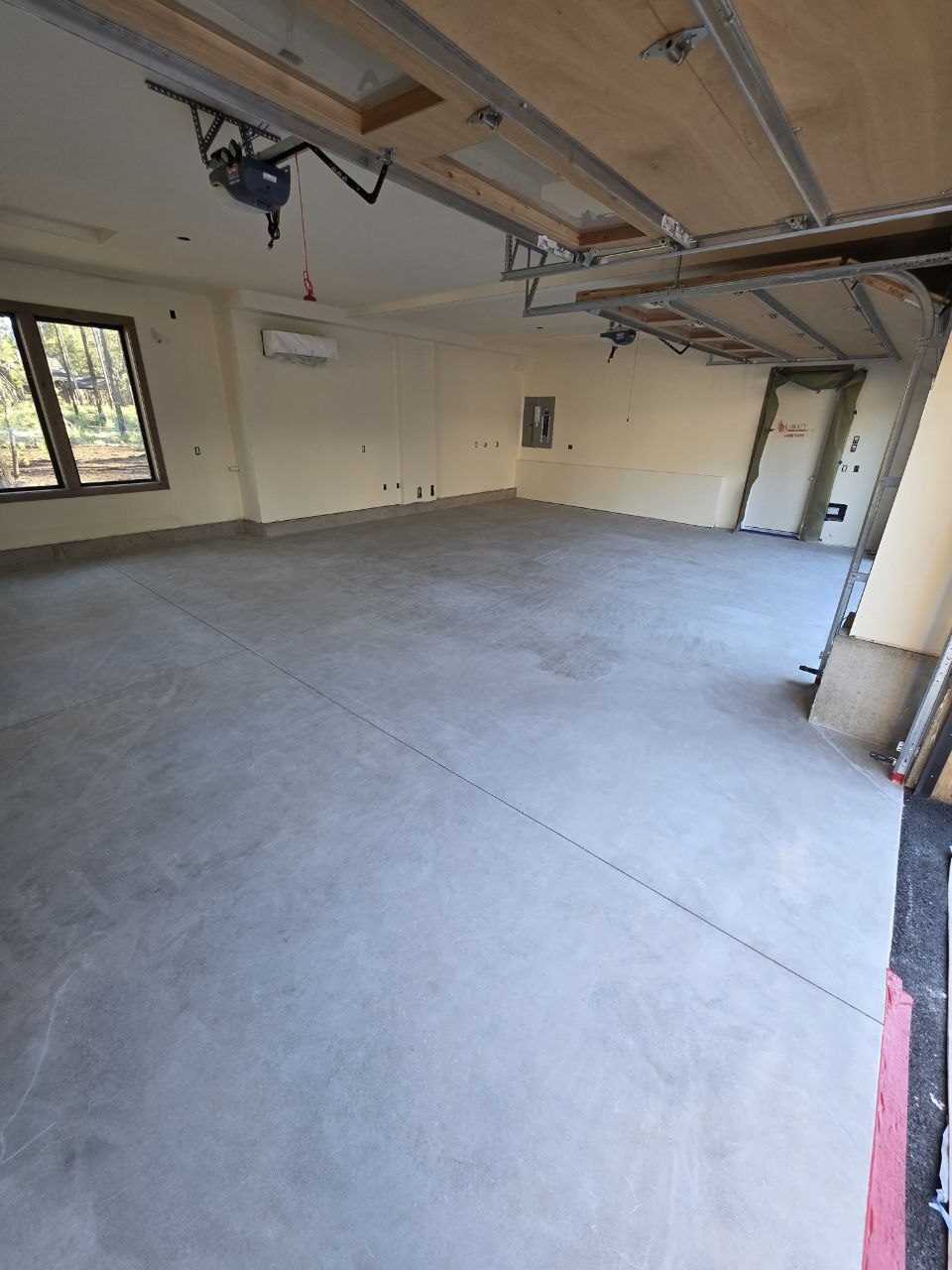
We prep every floor mechanically, and we have two tools for it: dustless shot blasting and diamond grinding. We pick per space, and many garages get some of each.
Dustless shot blasting fires steel shot at the concrete and vacuums it right back up, along with the dust and debris it knocks loose. It is our choice for big open areas of slab and for stripping thin old coatings like floor paint, because it covers open floor quickly and evenly.
Diamond grinding uses rotating diamond tooling to cut the surface down. It is our choice for edges, corners and tight spots where a shot blaster cannot reach, like along walls, around steps and under a water heater platform.
| What we find | Where it's common | Prep method | Why |
|---|---|---|---|
| Old gray floor paint across the slab | 1960s–80s ranch garages | Shot blasting on the open floor; diamond grinding along walls and edges | Strips the thin old coating and the weak top layer so the base coat bonds to sound concrete |
| Bare slab with decades of oil | Older attached 2-car garages | Shot blasting on the open floor; diamond grinding at edges | Removes the most contaminated surface and opens fresh concrete |
| Hairline cracks | Slabs 40 to 60 years old | Polyurea crack fill, ground flush | Keeps cracks from telegraphing through the flake |
| Tight spots: steps, corners, around fixtures | Every garage | Diamond grinding | Reaches where a shot blaster cannot |
| High moisture readings | Low lots near Vancouver Lake and Lakeshore | Mechanical prep plus a moisture-mitigating primer | Many older slabs have no vapor barrier underneath |
| Fresh concrete still drying | Newer infill townhomes in Northwest Vancouver | Moisture test first, then mechanical prep | New concrete can hold a lot of water for its first year or two |
Why We Never Acid Etch
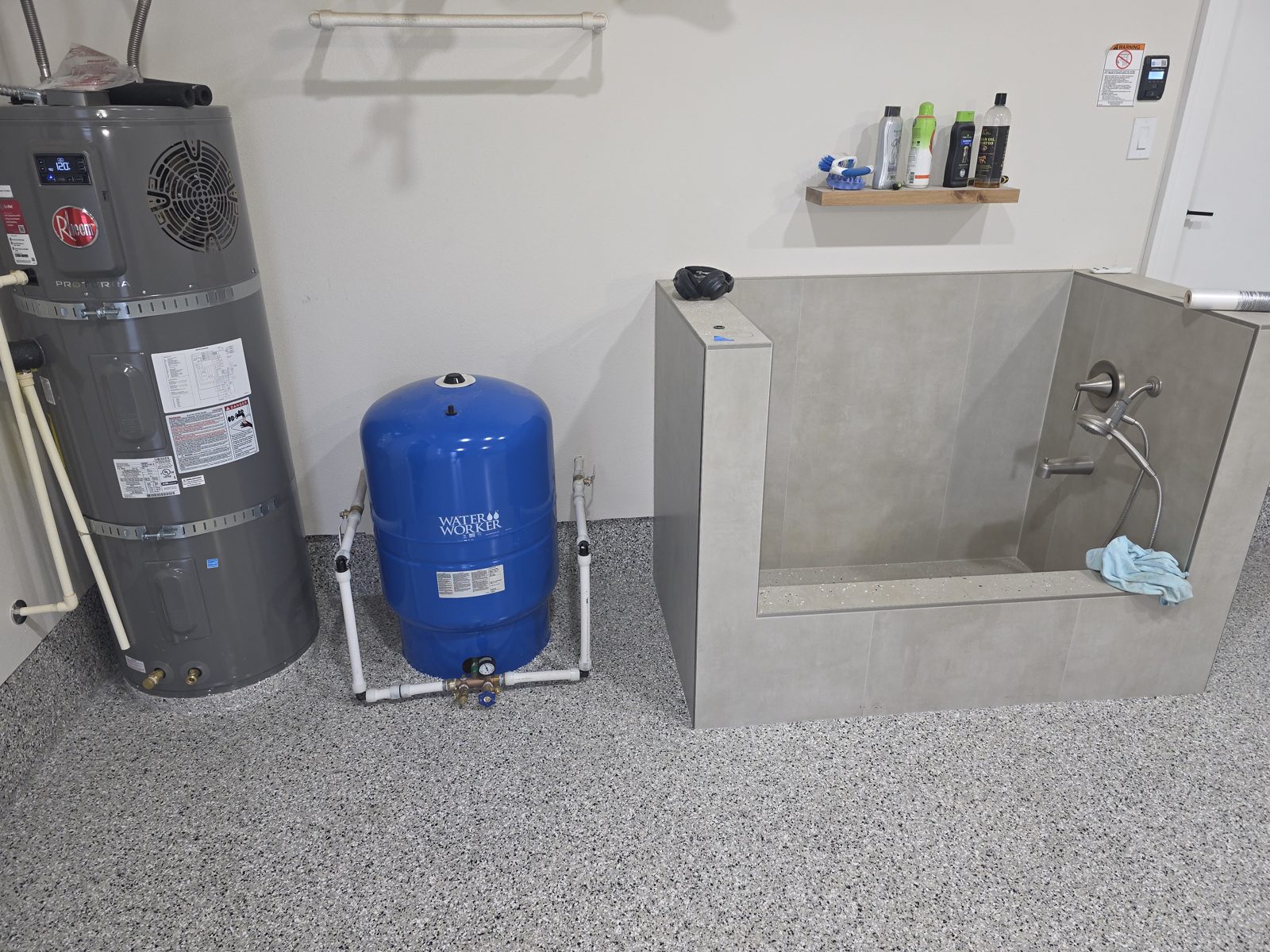
Acid etching is a chemical wash that some installers use instead of mechanical prep. It is quick and cheap, and it is one of the corners that gets cut on fast, low-cost installs. We never acid etch.
On a Hazel Dell slab, acid etching has nothing to offer. It will not remove old floor paint. It does not pull out the oil-soaked top layer. And it does not create the open, clean profile a 100% solids epoxy base needs to bond. Skipped prep, not bad product, is behind most coating failures, and acid etching is a form of skipped prep.
- How it worksSteel shot fired at the slab, vacuumed back up
- Best forBig open slabs, stripping thin old coatings
- Removes old paintYes
- Profile for bondingYes
- Do we use it?Yes, chosen per space
- How it worksRotating diamond tooling cuts the surface
- Best forEdges, corners, tight spots
- Removes old paintYes
- Profile for bondingYes
- Do we use it?Yes, chosen per space
- How it worksChemical wash on the surface
- Best forNothing we install
- Removes old paintNo
- Profile for bondingNo
- Do we use it?Never
| Dustless shot blasting | Diamond grinding | Acid etching | |
|---|---|---|---|
| How it works | Steel shot fired at the slab, vacuumed back up | Rotating diamond tooling cuts the surface | Chemical wash on the surface |
| Best for | Big open slabs, stripping thin old coatings | Edges, corners, tight spots | Nothing we install |
| Removes old paint | Yes | Yes | No |
| Mechanical profile for bonding | Yes | Yes | No |
| Do we use it? | Yes, chosen per space | Yes, chosen per space | Never |
Hazel Dell Weather and Slab Moisture
The closest NOAA weather station to Hazel Dell is Vancouver 4 NNE, about four miles north-northeast of downtown Vancouver near Minnehaha. Its official 1991–2020 Climate Normals show how much water these slabs deal with.
NOAA NCEI 1991–2020 Climate Normals, Vancouver 4 NNE.
| Month | Avg high (°F) | Avg low (°F) | Rain (in) | Wet days* |
|---|---|---|---|---|
| January | 45.3 | 31.9 | 6.05 | 13.3 |
| February | 49.4 | 31.7 | 4.14 | 10.2 |
| March | 54.0 | 34.9 | 4.43 | 12.2 |
| April | 59.0 | 38.4 | 3.58 | 10.4 |
| May | 66.1 | 44.3 | 2.81 | 7.7 |
| June | 70.8 | 48.9 | 1.84 | 5.1 |
| July | 78.0 | 52.8 | 0.48 | 1.4 |
| August | 79.0 | 52.1 | 0.62 | 1.9 |
| September | 73.7 | 46.9 | 1.61 | 4.0 |
| October | 62.1 | 40.5 | 3.61 | 8.6 |
| November | 51.2 | 35.7 | 6.31 | 13.5 |
| December | 44.6 | 31.7 | 6.79 | 14.8 |
| Year | 42.27 | 103.1 |
*Wet days are days with at least 0.10 inch of rain. Source: NOAA National Centers for Environmental Information, U.S. Climate Normals.
What the Numbers Mean for Your Garage
- The station averages 42.27 inches of rain a year, over about 103 wet days.
- November through March brings 27.72 inches, about 66% of the year's rain, on about 64 wet days.
- June through September brings just 4.55 inches, about 11% of the year.
- December, January and February all have average lows just under 32°F, so an attached garage slab here can stay cold for long stretches.
Months of steady rain keep the ground wet, and on low lots with a high water table, that moisture works up through slabs that have no vapor barrier. That is the reason we test moisture on every Hazel Dell floor, and the reason a high reading means a moisture-mitigating primer goes down before the epoxy base. Skip that step and the coating can bubble and lift.
For a month-by-month look at timing across Vancouver, see Best Time to Coat a Garage Floor in Vancouver, WA.
Cold slabs matter too. Coatings cure through a chemical reaction that slows down in the cold, so in the colder months we check the slab's temperature and condition before we start, and cold weather can add a little time before you can park on the floor.
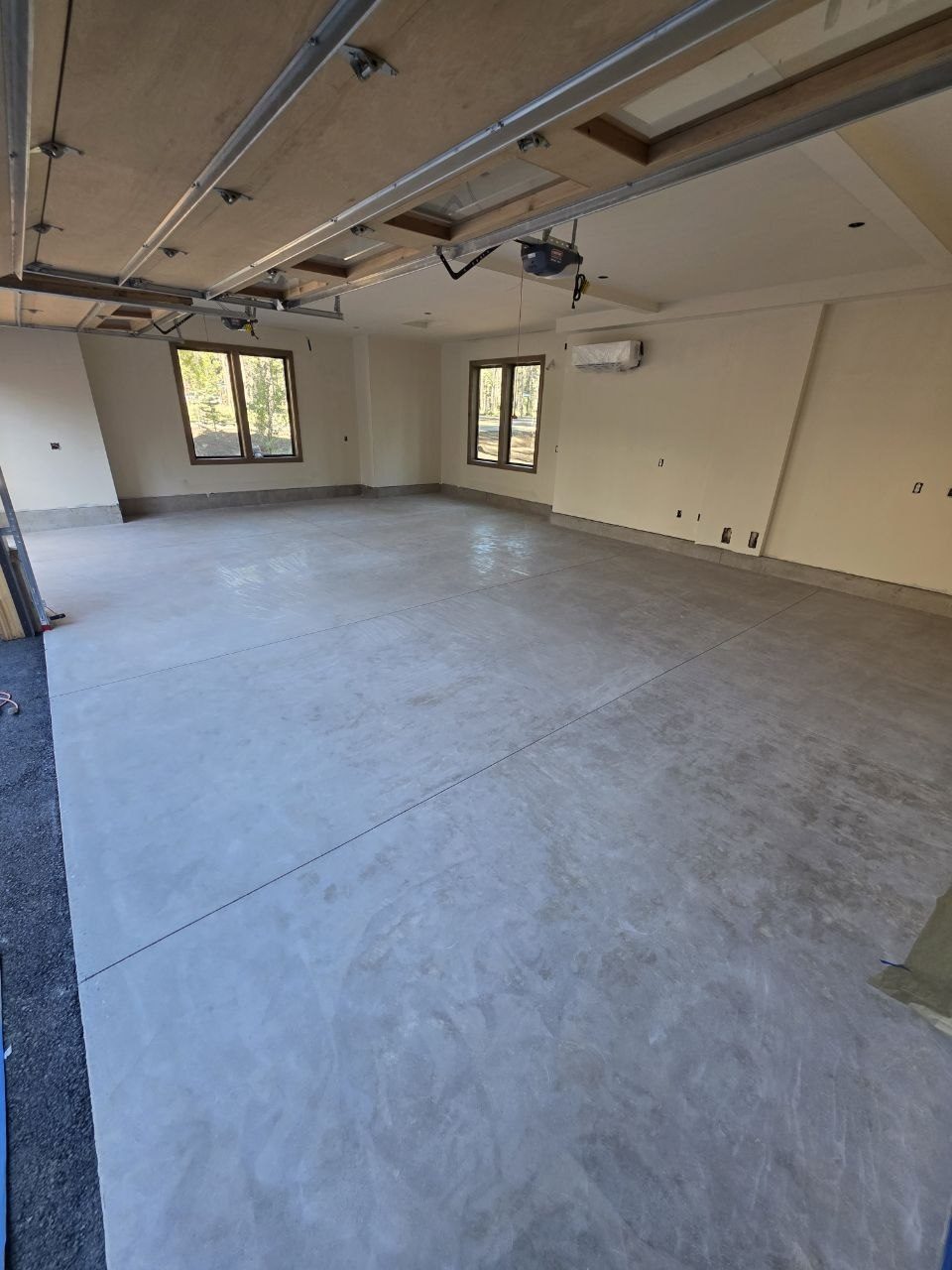
Our Flake System on an Older Slab
Once the slab is prepped, the system itself is the same one we install everywhere: a 100% solids epoxy base, a full flake broadcast, a Flake Lock coat and a polyaspartic topcoat. The finished build is 30 to 40 mils.
On a thin older slab, that thickness works in your favor. It stiffens and seals the surface, which stops the concrete from dusting and keeps oil from soaking in. It does not add structural thickness, though. A thin slab that is intact is a fine candidate. One that is broken into moving pieces is not, and we will tell you that.
The polyaspartic topcoat is resistant to hot-tire pickup and is chemical and impact rated, and it wipes clean with mild soap and water. Polyaspartic also holds its color in sunlight much better than epoxy, although no coating is completely sun-proof. With proper prep and a polyaspartic topcoat, our garage floors are built to last 15+ years.
Why We Take 2 to 3 Days
A typical Hazel Dell ranch garage keeps our crew there two days, or three when the floor is larger. That is a deliberate choice. Our system is built to penetrate the concrete and cure longer than one-day systems, because a coating that bonds into the slab is what stands up to wet winters, hot tires and daily use. One-day installs get their speed by cutting corners, and on an older slab, the corners they cut are the ones that matter most.
- Shot blast the open floor, diamond grind edges
- Polyurea crack fill
- Moisture primer if needed
- Epoxy base + full flake
- Scrape loose flake
- Flake Lock, dries 3–4 hours
- Polyaspartic topcoat
- Larger floors only
- Walk on it: 1–2 days after
- Park on it: about a week
| When | Step | What we do |
|---|---|---|
| Day 1 | Prep | Shot blast the open floor and diamond grind edges and tight spots, removing old paint and the oil-soaked top layer |
| Day 1 | Repair | Fill hairline cracks with polyurea and grind flush |
| Day 1 | Primer (if needed) | Moisture-mitigating primer when the moisture test reads high |
| Day 1 | Base and flake | 100% solids epoxy base coat with a full flake broadcast |
| Day 2 | Flake Lock | Scrape loose flake, apply the Flake Lock coat, let it dry 3–4 hours |
| Day 2 | Topcoat | Polyaspartic topcoat |
| Day 3 (larger floors) | Finish | Bigger garages run into a third day |
| After | Cure | Walk on it in 1–2 days; park on it in about a week |
Our shop is about 10 minutes away up Highway 99, which makes it easy to get an early start on the second day.
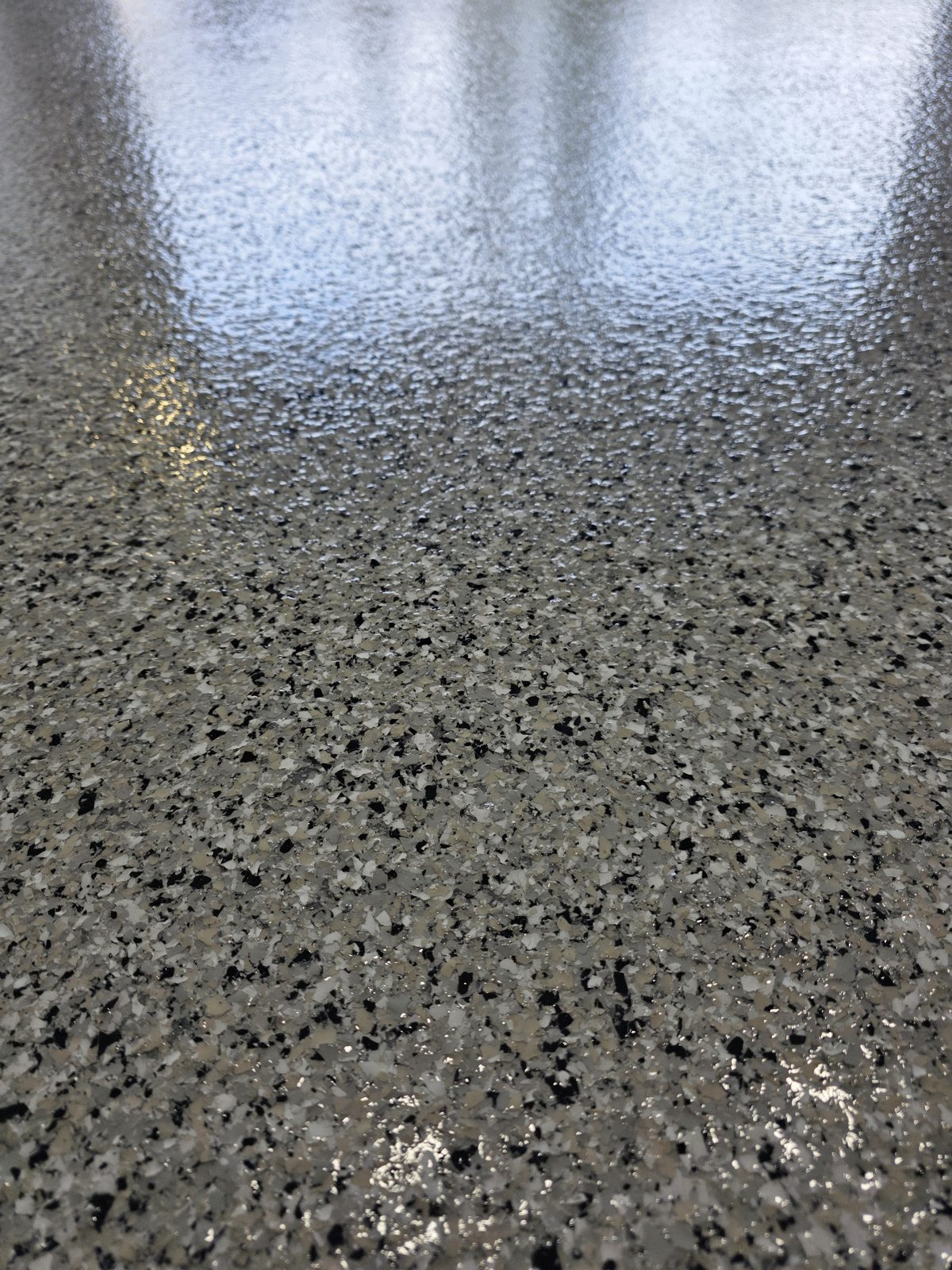
Removing an Old Coating: What It Adds
If your Hazel Dell garage has an old coating that is peeling or failing, or old paint that has to come off, removing it is included in your written quote. We provide that quote after we inspect the floor in person, because the type of coating, how well it is bonded and the condition of the slab underneath all change the work.
Our Warranty
Every 360 Surfaces flake floor comes with a 5-year written workmanship warranty. On older slabs, that is exactly why we do not skip prep: the warranty only means something if the floor underneath is ready.
Serving Hazel Dell and Nearby Neighborhoods
We install garage floors across Hazel Dell, Lakeshore, Northwest Vancouver, Minnehaha and Walnut Grove. See our Hazel Dell epoxy flake floors page, or our basement floors and metallic epoxy floors in Hazel Dell. Nearby, we also install flake floors in Vancouver, Salmon Creek, Orchards, Ridgefield and Battle Ground.
Want the full system details? See epoxy flake floors, compare products in Polyaspartic vs Epoxy, or view every city on our service areas page.
Frequently Asked Questions
Do I need to strip the old gray paint off my Hazel Dell garage floor first?
No, leave it to us. Chemical strippers make a mess and do not get it all. Removing the paint is part of our prep: on a big open floor we usually shot blast it off, and we grind along the walls and in tight spots. Removing an old coating or paint is included in your written quote, which we provide after we inspect the floor in person.
Do you use diamond grinding or shot blasting?
Both. We choose per space. Dustless shot blasting, where steel shot is fired at the slab and vacuumed back up, is our pick for big open slabs and for stripping thin old coatings. Diamond grinding is our pick for edges, corners and tight spots. Many garages get some of each.
Do you ever acid etch?
No. We never acid etch. Every floor is prepped mechanically, by shot blasting or diamond grinding, so the coating has an open, clean surface to bond to.
Our house is near Lakeshore and the floor gets damp spots in winter. Can it still be coated?
Usually. Damp spots on a slab near Vancouver Lake are often vapor coming up through concrete with no barrier under it. We test the moisture level and, when it is high, use a moisture-mitigating primer. If there is standing water or an active leak, that has to be solved first.
Will the hairline cracks show through the flake?
No. Hairline cracks get filled with polyurea and ground flush before the base coat, and a full flake broadcast hides the repair lines. A slab that is heaving or shifting is a different conversation.
Will a flake floor make a thin slab stronger?
It stiffens and seals the surface, which stops dusting and oil soaking in. It does not add structural thickness. A thin slab that is intact is a good candidate; one broken into moving pieces is not, and we will tell you that.
How long does a Hazel Dell garage take?
A typical Hazel Dell ranch garage keeps our crew there two days, or three when the floor is larger. We take 2 to 3 days on purpose, so each coat gets the time it needs. You can walk on it 1 to 2 days after we finish and park on it in about a week.
What warranty comes with the floor?
Every 360 Surfaces flake floor comes with a 5-year written workmanship warranty.
Get a Free Garage Floor Estimate in Hazel Dell
Ready to find out what your Hazel Dell slab needs? Call or text (360) 685-7222, email info@360surfaces.com, or request your free in-home estimate. We will look at the floor, check the moisture, show you real flake samples, and walk you through the prep your slab needs.