Back a drift boat in off the Kalama River and you bring half the gravel bar with it. Wet hull, wet tires, sand in the treads. On bare concrete that grit gets ground in every time you walk across it, and the water sits in the low corner until it evaporates or soaks in. A broadcast flake floor gives the grit nothing to grind into and lets you squeegee the puddle straight out the door.
Kalama sits about 35 minutes north of our shop in Vancouver, up I-5 to exit 30. We make that run for garage floors because the town has exactly the kind of slabs this system was built for: older hillside garages that have been patched over the years, rural shop floors poured by the owner, and boat bays that never quite dry out. Each one needs a slightly different prep, and all three end up with the same finished floor.
What a Full-Broadcast Flake System Does With River Grit
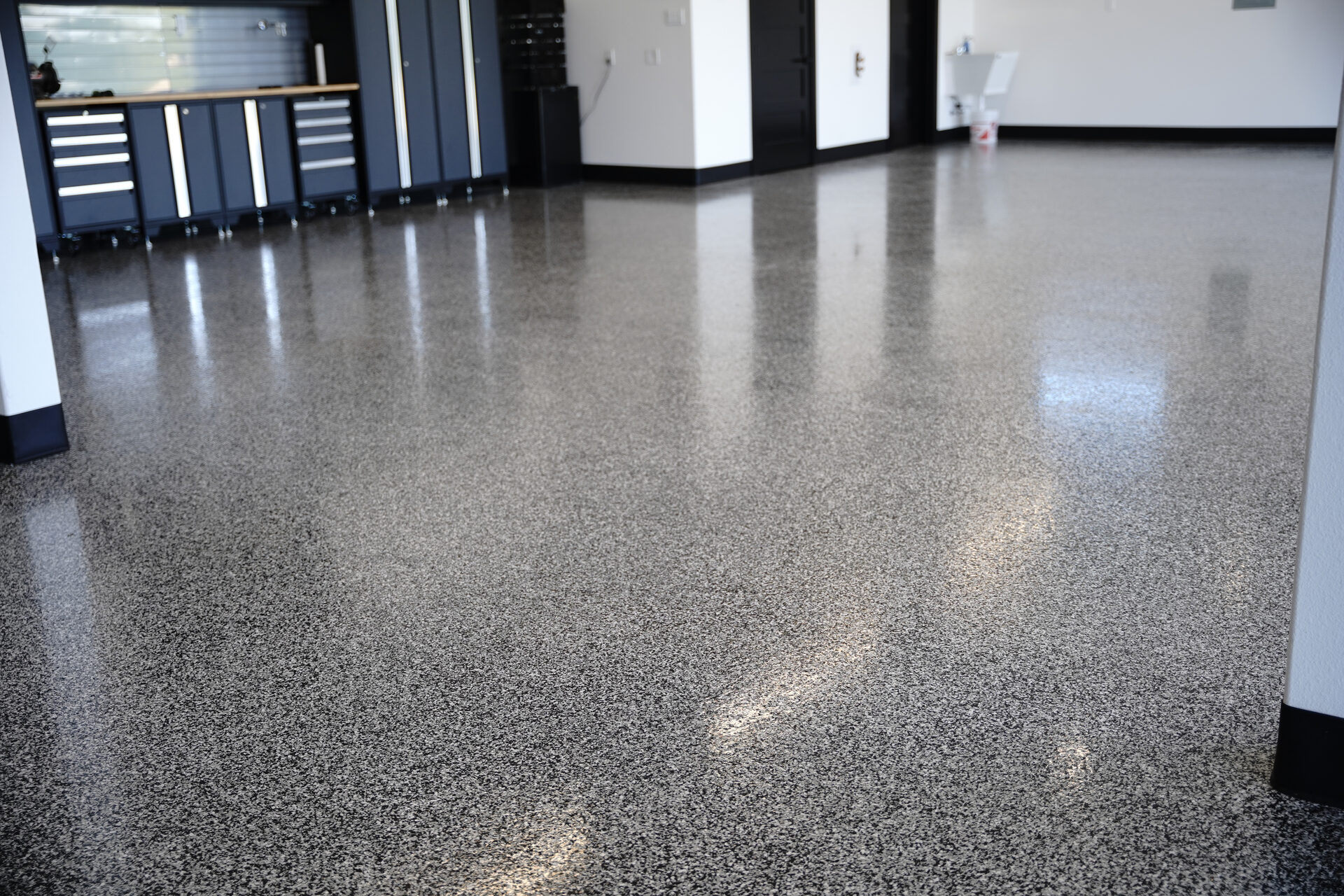
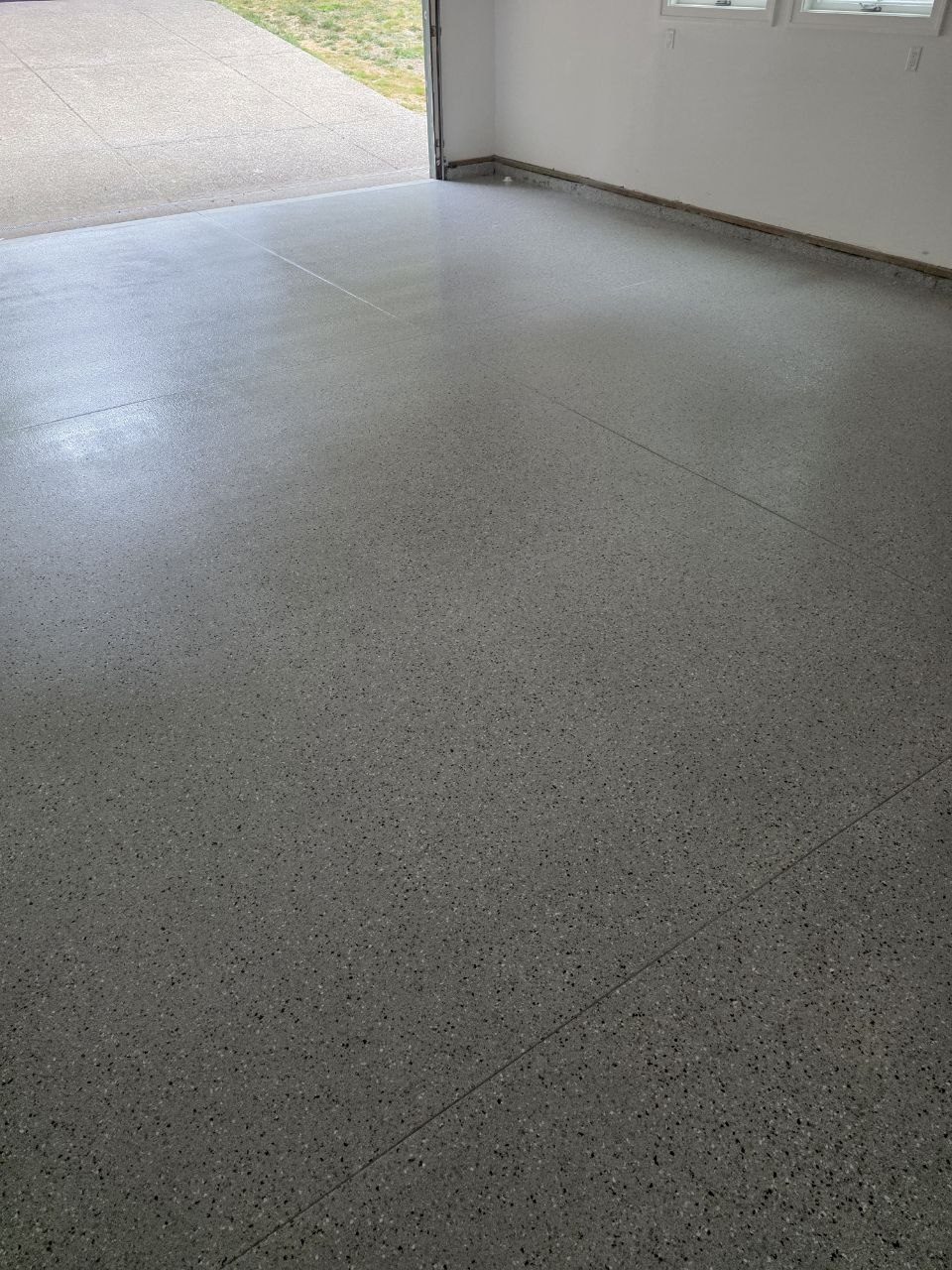
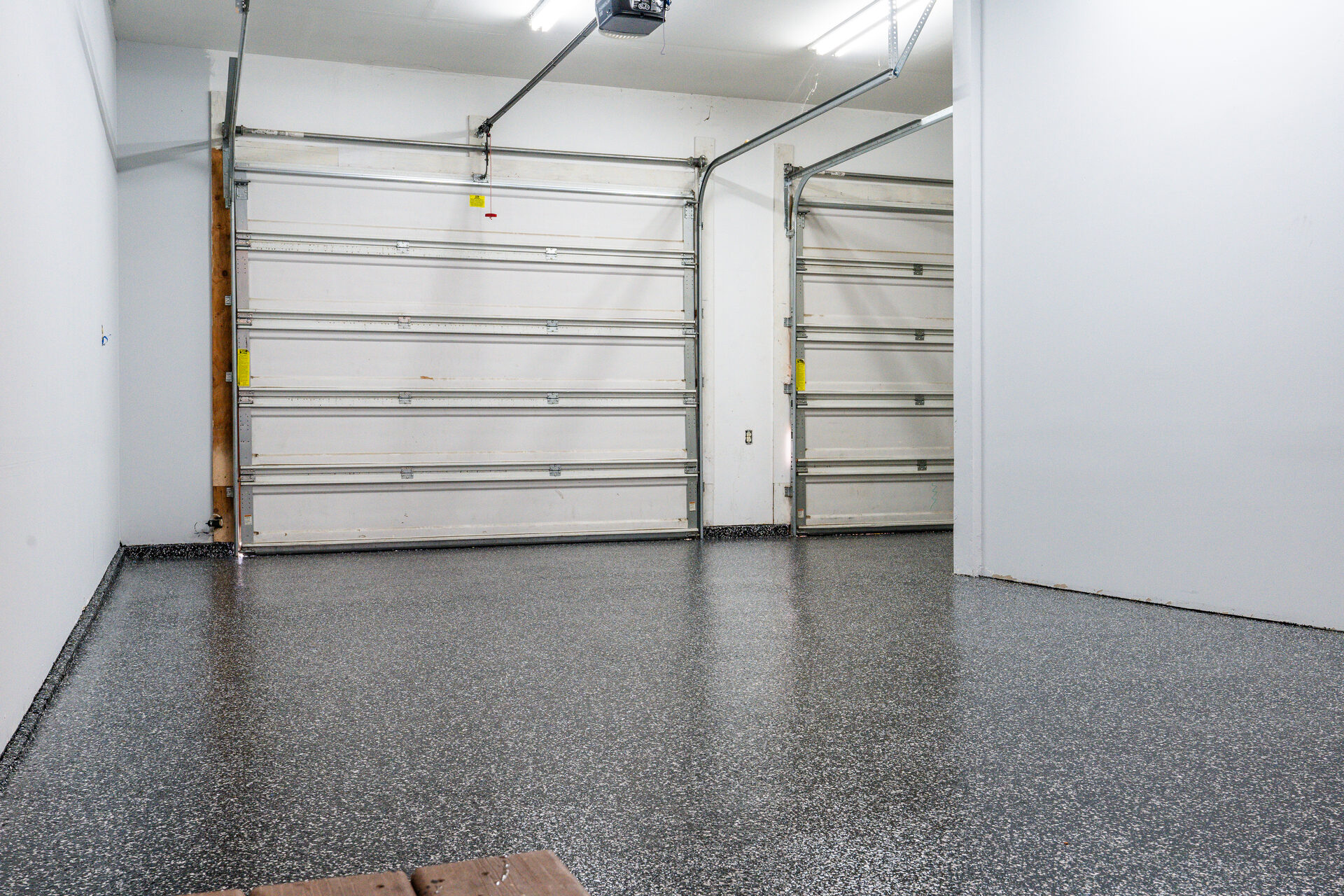
The base coat is 100% solids epoxy, rolled onto concrete we have diamond ground or shot blasted to open the pores. While it is still wet we throw colored vinyl chips until the surface will not take any more. That full broadcast is the point. It builds texture for traction on a wet floor, hides tire marks and sand, and gives the polyaspartic topcoat something thick to lock onto. Finished thickness lands between 30 and 40 mils.
Polyaspartic matters in a town where the garage door stays open on summer afternoons and trailers come up from the river wet and sandy. Gas, oil, and river grime wipe off it with a rag. It also resists hot tires, which is what peels cheap kit coatings after a drive back from Longview. People can cross the new Kalama floor in two days or so, and cars and the boat trailer return after roughly a week. The warranty is lifetime.
Our Epoxy Flake Floors System
Materials: 100% solids epoxy base, full flake broadcast, Flake Lock, polyaspartic topcoat
Thickness: 30-40 mils
Install time: about 3 days
Walk on it: 1-2 days after
Park on it: about a week after
Warranty: Lifetime
Hot-tire pickup resistant. Chemical and impact rated.