
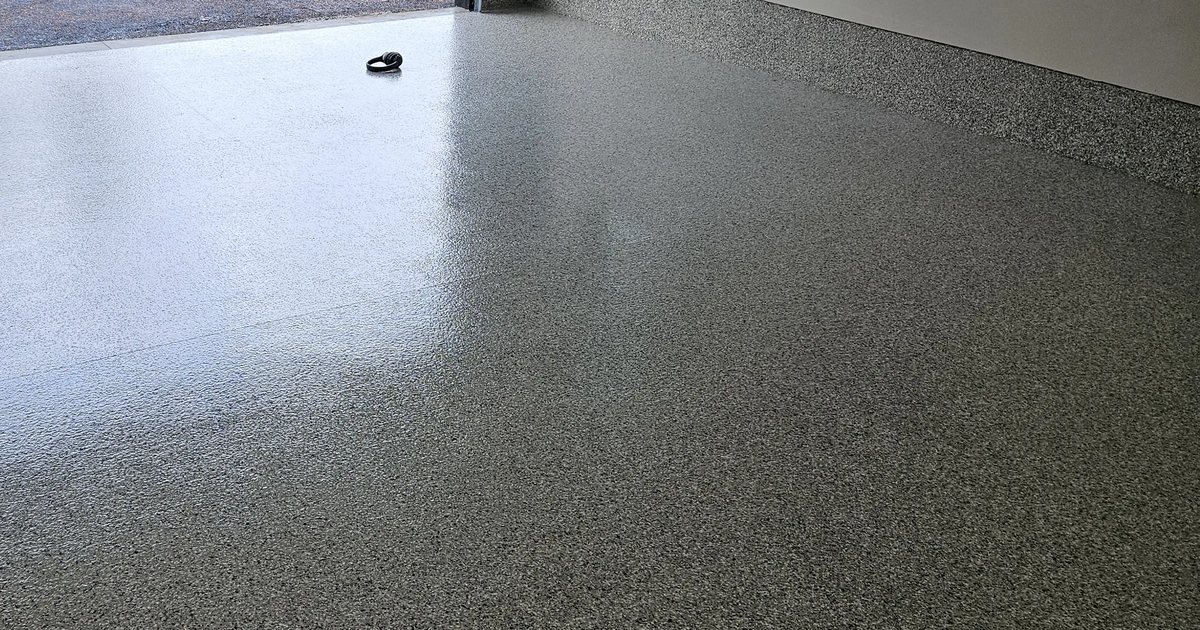
A full flake garage floor is one of the easiest floors in the house to keep clean. Winter is the season that tests it. From November on, cars come home wet. Tires carry in grit, sand, leaves and needles, and on the days the roads are treated, a film of de-icer and road grime comes in with them. Vancouver gets most of its roughly 37.5 inches of yearly rain between November and January, so for a few months the garage is the place where all of that water and dirt lands.
The good news is that a properly installed epoxy flake floor with a polyaspartic topcoat does not need special products or a complicated routine. It needs a few simple habits, done consistently, and a short list of things to avoid. This guide covers how to clean an epoxy garage floor through a Northwest winter, what each kind of winter mess means for the floor, and why the way the floor was installed matters as much as the way it is cleaned.
The Short Version
- Sweep or dust-mop often. Grit is what wears a floor, and winter tires bring in a lot of it.
- Squeegee standing water out the door instead of letting it dry on the floor.
- Wash with warm water and a mild soap, using a soft-bristle broom or a microfiber mop.
- Rinse off de-icer and road film when you see it, instead of letting it build up all season.
- Wipe up oil and fluids when you notice them.
- Avoid harsh solvents, abrasive pads and wax. The floor never needs wax.
That is the whole routine. The rest of this guide explains the reasons behind each step, so you know what actually matters and what you can skip.
Why Winter Is Hard on Any Garage Floor
Most of the wear on a garage floor does not come from the car itself. It comes from what the car carries in. In dry months, tires bring in a little dust. In wet months, they bring in a slurry of water, sand and fine grit that gets pressed into the floor every time you drive in and walk across it. Grit under a shoe or a tire acts like fine sandpaper. Over months, that is what dulls the gloss in the lanes where you walk and drive most.
Water adds its own problems. When dirty water dries, it leaves the dirt behind as spots and tide marks. Melting slush can sit in the same low spots for days. And road treatment leaves a white or grey film that shows up clearly on darker floors. None of that hurts a sound coating quickly, but all of it is easier to remove early than late.
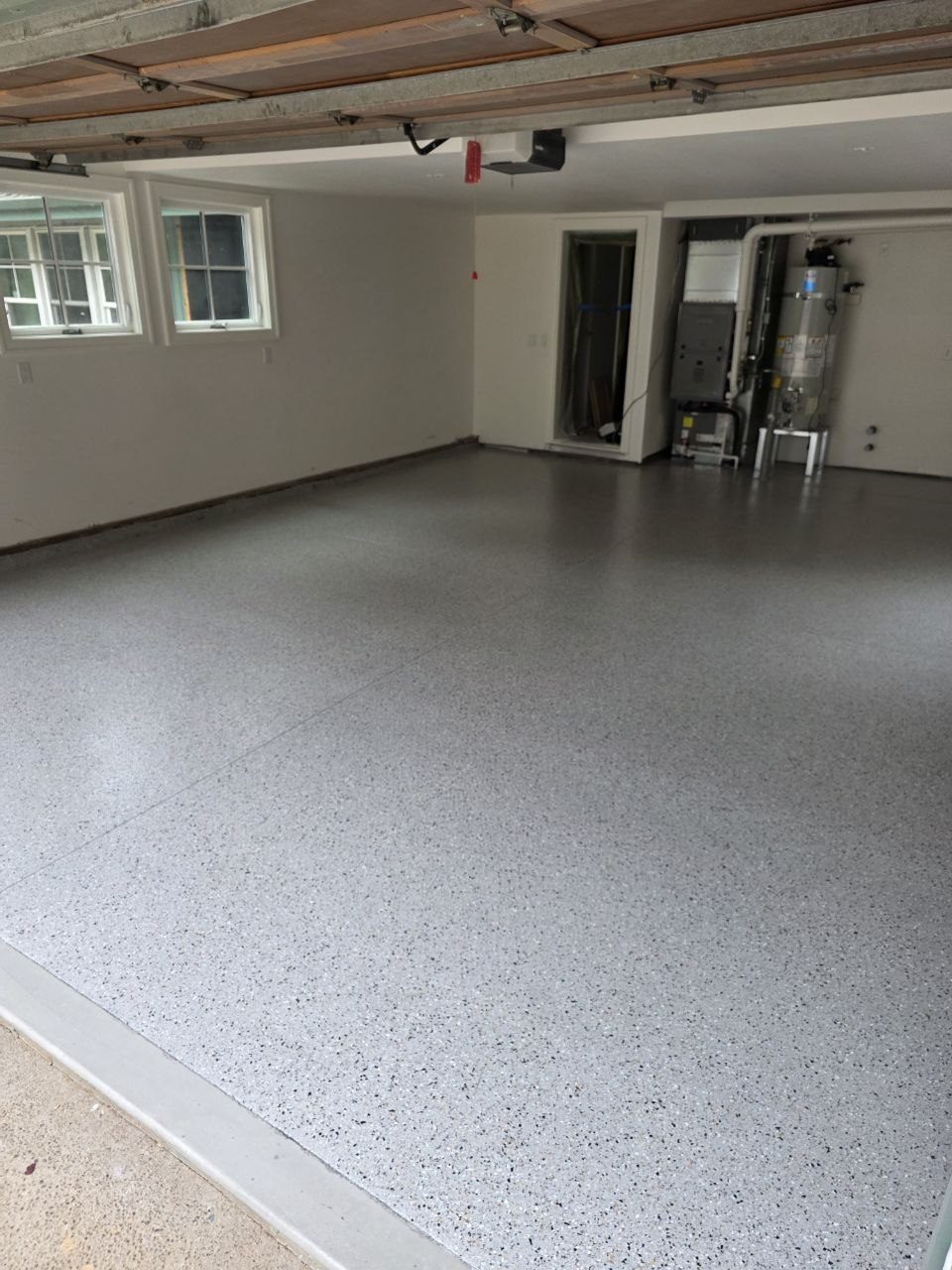
Everyday Care: Sweep, Squeegee, Mat
Sweep or dust-mop regularly
Removing grit is the single most useful thing you can do for the floor. A soft push broom or a wide dust mop picks up sand and debris without scratching. Through the wet months, a quick pass once or twice a week, plus a pass after any trip that brings in a lot of mud or gravel, keeps most of the abrasive material off the floor. Pay extra attention to the area just inside the garage door and the path from the car to the house door. That is where most of the dirt lands.
Squeegee standing water
A floor squeegee is one of the best tools a coated garage can have. After a heavy rain or when snow melts off the car, push the water toward the door and out. Clean water that dries leaves little behind. Dirty water that dries leaves a spotty film that then has to be washed. Squeegeeing takes a minute and saves you a full wash later.
Use mats where they help
A good entry mat at the house door keeps wet grit from following you inside, and a mat where you step out of the car catches a lot of what comes off your shoes. Choose mats made for use on coated floors. Some rubber-backed mats can mark a coating if they sit in one place for a long time, so it is worth checking the label and lifting mats now and then to clean and dry underneath.
Washing the Floor
When the floor needs more than a sweep, wash it the simple way: warm water and a mild soap, a soft-bristle broom or a microfiber mop, then squeegee the water out. Work from the back of the garage toward the door so you are not walking through dirty water. On most floors, that is all it takes, even in the middle of winter.
A few points make washing easier:
- Sweep first. Washing a gritty floor just moves the grit around in water.
- Use a little soap, not a lot. Too much soap leaves a film that attracts dirt and can feel slick. If the floor feels filmy after washing, rinse it with clean water.
- Change the water when it gets dirty. Mopping with muddy water leaves the mud behind.
- Dry it off. A final pass with the squeegee leaves fewer water spots, especially on darker blends.
The floor never needs wax or floor polish. They are not part of caring for a polyaspartic topcoat, and they can make the surface slippery.
De-icer and Road Film
On days when the roads have been treated, the underside of the car and the tires bring in de-icer and road grime. It usually shows up as a white or grey haze where the tires stop and where water drips off the car. It is a nuisance more than a danger to a sound topcoat, but there is no reason to let it build up for the whole season.
Rinse it off when you notice it. Warm water and a mild soap removes it, followed by a squeegee and a rinse with clean water if a haze remains. If the car comes home coated in slush, letting it drip and then squeegeeing the meltwater out the next morning is often enough. It is also a good idea to rinse the floor well at the end of winter, once the roads stop being treated, so nothing sits on it into spring.
Oil, Fluids and Spills
The polyaspartic topcoat is a tough wear layer made to stand up to hot tires, oil and chemicals, and it is one of the main reasons people choose a coated floor. Still, nothing should sit on any floor indefinitely. Wipe up oil, coolant, washer fluid and other spills when you see them, and put a drip pan under a car that leaks. A paper towel and a mild soap solution handles most of it.
Be more careful with anything strong. Brake cleaner, paint strippers, harsh solvents and strong acids or bleach-type cleaners should not be used for cleaning, and should be wiped up quickly if they spill. Damage from chemicals is also one of the things our warranty does not cover, so treating spills promptly protects both the floor and your coverage.
Winter Messes at a Glance
| Winter mess | What to do | What to avoid |
|---|---|---|
| Wet grit, sand and gravel | Sweep or dust-mop often, especially near the door and walking paths | Letting grit sit and get ground in by tires and shoes |
| Standing rain or meltwater | Squeegee it out the door | Letting dirty water dry into spots |
| De-icer and road film | Wash with warm water and mild soap, rinse, squeegee | Leaving it to build up all season |
| Oil and automotive fluids | Wipe up promptly; drip pan under a leaking car | Harsh solvents to clean it up |
| Leaves and needles | Sweep them up before they get wet and stick | Leaving wet piles in corners for weeks |
| Snow off the car | Let it melt, then squeegee the water out | Chopping at ice on the floor with metal tools |
| Dull or filmy look after washing | Rinse with clean water and dry with a squeegee | Wax, polish or more soap |
What to Avoid
- Abrasive pads, steel wool and stiff wire brushes. They can scratch and dull the gloss of the topcoat.
- Harsh solvents and strong acids for routine cleaning. Warm water and mild soap do the job without the risk.
- Wax and floor polish. Not needed, and they can make the floor slippery.
- Metal shovels and ice chippers on the floor. If snow or ice comes in on the car, let it melt and squeegee the water out rather than chopping at it.
- Dragging heavy, sharp items. Snow blowers, tool chests and equipment with metal feet should be rolled or lifted, or set on pads, rather than dragged.
- Hard impacts. Dropped tools and heavy items can chip any floor coating. Impacts are excluded from our warranty, so a rubber mat under a workbench or where you set down heavy gear is cheap protection.
Is an Epoxy Flake Floor Slippery When Wet?
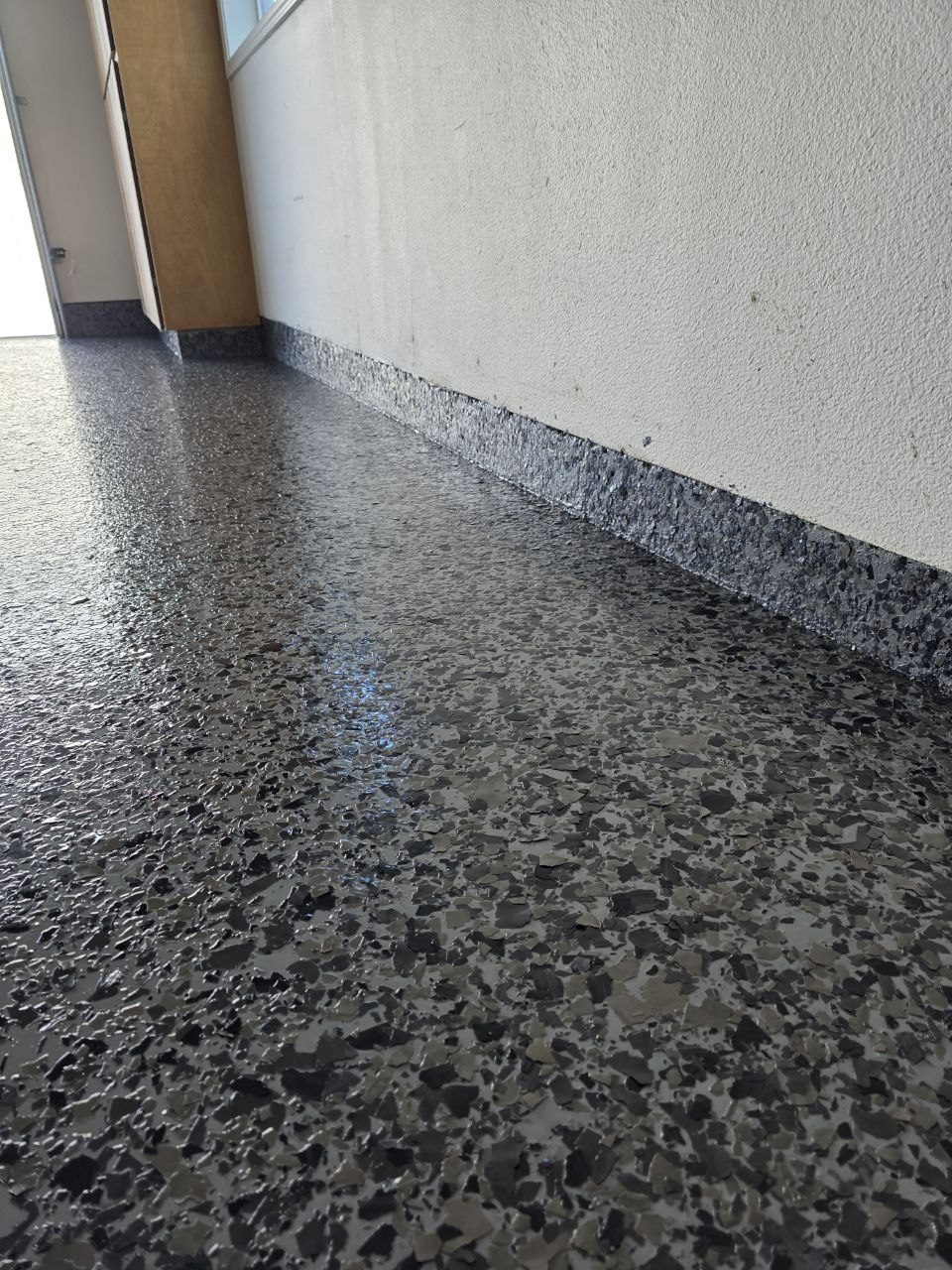
A full flake broadcast gives the surface texture, which helps underfoot compared with a smooth, solid-color coating. Like any hard, glossy floor, it is still more slippery wet than dry. In winter, the practical answers are the same habits that keep the floor clean: squeegee standing water, keep a mat at the house door and where you step out of the car, and wipe up spills. Soap residue and wax both make a floor slicker, which is another reason to use a little soap and never wax. If slip resistance is a priority in your garage, bring it up at your estimate so we can talk through it for your space.
Why the Install Matters as Much as the Cleaning
Good cleaning habits keep a floor looking good. They cannot save a coating that was never bonded to the concrete in the first place. Many of the winter problems people see on garage floors, such as peeling at the door, lifting under the tires and flaking along the walls, trace back to the slab never being properly prepared.
We prepare every slab mechanically, by diamond grinding or shot blasting, and choose the method for each space. Shot blasting fires small steel shot at the concrete to strip the weak top layer, thin old coatings and contaminants, and vacuums the shot and dust back up as it goes. It suits larger, open slabs. Diamond grinding handles edges, tight spots and high spots and grinds repairs flush. Both leave an open, textured surface so the 100% solids epoxy base coat bonds into the concrete rather than sitting on top of it. We never acid etch. You can read more about that in our guide to why garage floor coatings peel.
After preparation and crack repair, the system goes down in layers: the epoxy base coat with flake broadcast until no more will stick, a Flake Lock coat, and a polyaspartic topcoat as the clear wear layer. That topcoat is the part your winter cleaning routine is protecting. See our epoxy flake floors page for the full system.
Sun, Color and the Topcoat
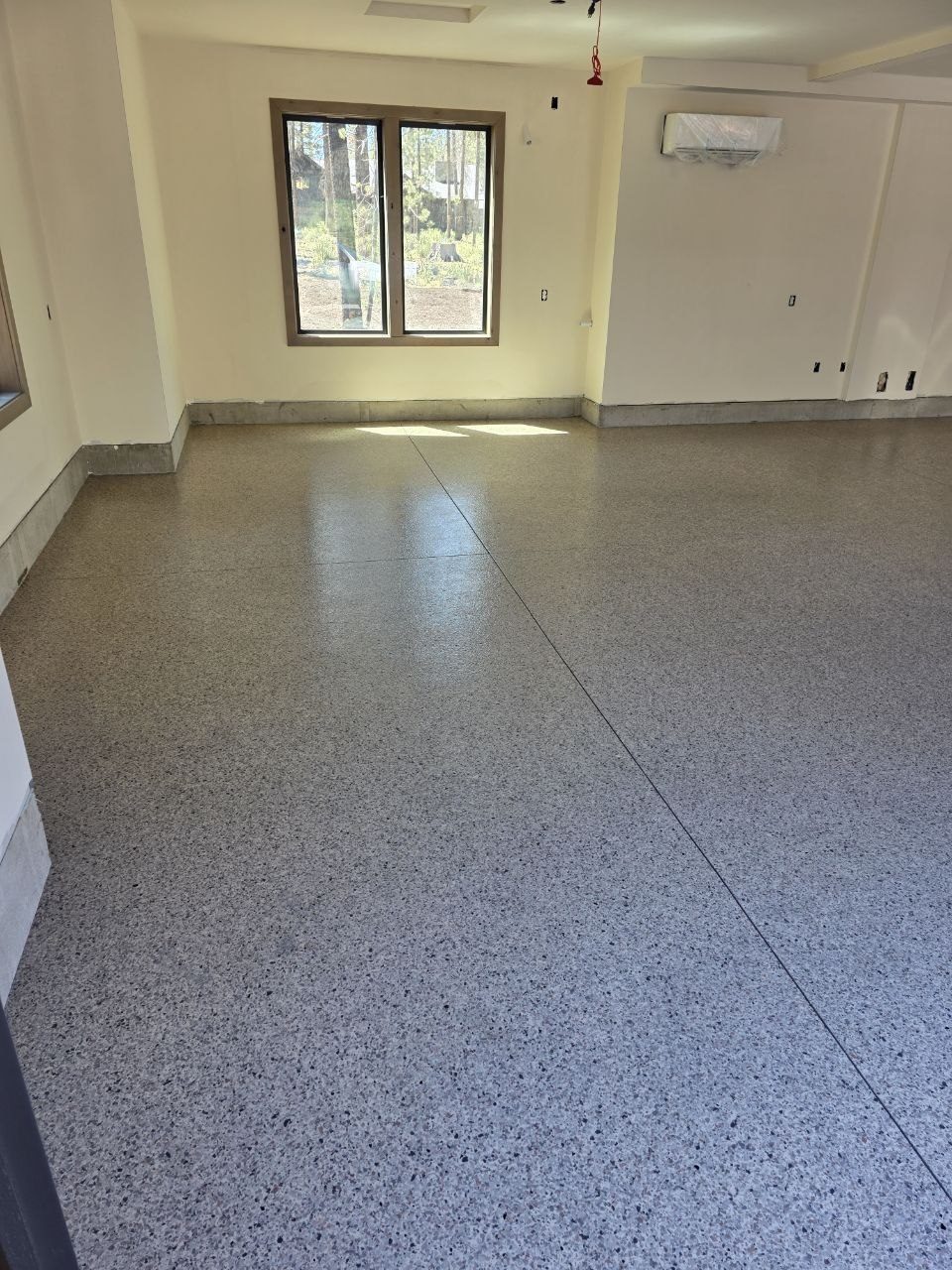
Winter in the Northwest is not known for sun, but garages with doors that stay open on bright afternoons do see UV exposure through the year. We use polyaspartic as the topcoat partly because it holds its color in sunlight much better than a standard epoxy topcoat. No coating is completely unaffected by years of sun, so the same simple care applies: keep it clean, keep grit off it, and avoid harsh chemicals. Our article on polyaspartic vs. epoxy explains the differences between the two materials.
A Simple Winter Checklist
- Once or twice a week: sweep or dust-mop, focusing on the door and walking paths.
- After heavy rain or snow: squeegee standing water out the door.
- When you see haze or road film: wash with warm water and a mild soap, rinse and squeegee.
- As spills happen: wipe up oil and fluids, and keep a drip pan under a leaking car.
- Every few weeks: lift mats, clean and dry underneath them.
- End of winter: give the floor a full wash and rinse once the roads stop being treated.
Warranty
Garage, basement, shop, metallic and flake floors we install come with a lifetime warranty from 360 Surfaces. It covers peeling, lifting or flaking caused by our work or materials for as long as you own the home. It does not cover impacts or chemical damage, moisture coming up through the slab, or new cracks in the slab, and it is not transferable. Normal cleaning with warm water and a mild soap is exactly what the floor is made for. Read the details in our lifetime warranty guide.
Thinking About a New Floor This Winter?
A lot of homeowners decide to coat their garage after a winter of muddy concrete, dusty slab and stains that never wash out. Our article on the best time to coat a garage floor in Vancouver explains how we work through the colder, wetter months. Most garages take about 3 days on site, and you can browse blends on our colors page.
Frequently Asked Questions
What is the best way to clean an epoxy garage floor?
Sweep or dust-mop first, then wash with warm water and a mild soap using a soft-bristle broom or a microfiber mop, and squeegee the water out the door. Avoid harsh solvents and abrasive pads, and never wax the floor.
Will road de-icer damage an epoxy flake floor?
De-icer and road film mostly leave a white or grey haze on a sound polyaspartic topcoat. Rinse it off with warm water and a mild soap when you see it rather than letting it build up through the season, and give the floor a full wash at the end of winter.
Can I use a pressure washer or harsh cleaners?
Routine cleaning does not need either. Warm water, a mild soap, a soft brush or microfiber mop and a squeegee handle almost everything. Harsh solvents and strong acids should not be used for cleaning, and chemical damage is excluded from our warranty.
Is an epoxy flake floor slippery when wet?
The flake gives the surface texture, but like any glossy, hard floor it is more slippery wet than dry. Squeegee standing water, use mats at the house door and where you step out of the car, and avoid wax and heavy soap residue.
Do I ever need to wax the floor?
No wax is ever needed. The polyaspartic topcoat is the wear layer, and keeping grit off it and cleaning it with mild soap and water is the best way to protect it.
Get Your Garage Floor Price
We install epoxy flake and polyaspartic garage floors across Vancouver and Clark County. See your price online in about 90 seconds with our quote tool, and your final price is confirmed after photos or a quick visit. You can also request an estimate online or email info@360surfaces.com.
360 Surfaces
Published November 17, 2026
Where We Do This Work
Epoxy flake garage floors across Clark County and the Portland metro:
Vancouver, WA · Camas, WA · Battle Ground, WA · Ridgefield, WA · Salmon Creek, WA · Washougal, WA · Brush Prairie, WA · Hazel Dell, WA · La Center, WA · Longview, WA · Portland, OR · Lake Oswego, OR · Beaverton, OR · Happy Valley, OR · West Linn, OR · Hillsboro, OR · Tigard, OR · Gresham, OR