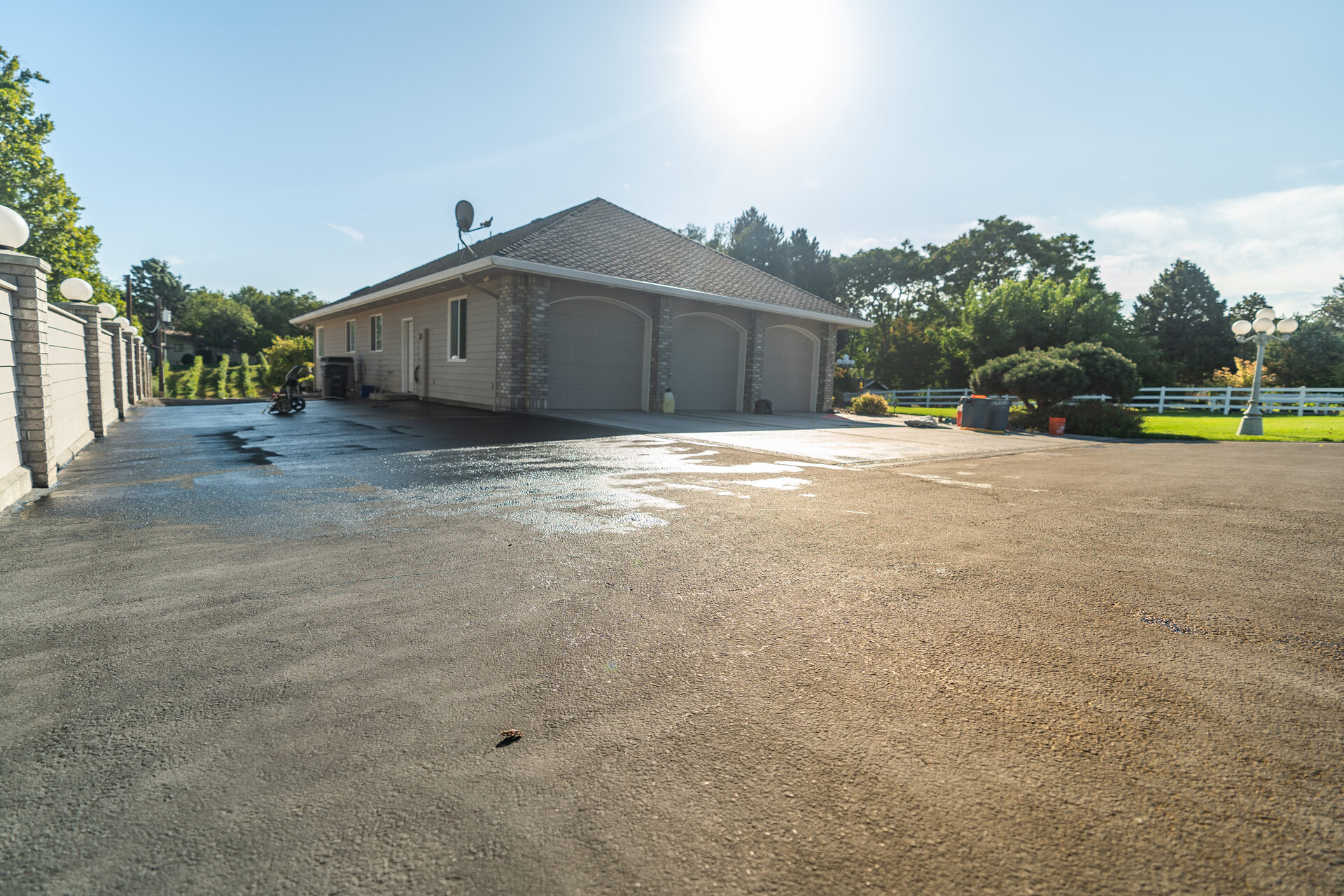
Is it worth coating a concrete driveway in a town where half the lanes are gravel? For the concrete part, yes. On acreage out toward Toutle and Silver Lake, the gravel lane usually stops where a poured pad meets the shop or barn door, and that apron takes a beating. Every truck tire carries rock onto it. Frost lifts the surface paste. Spilled diesel and deicer soak in.
In town the picture changes. Older homes in Downtown Castle Rock often have short concrete drives that are tired, stained and starting to scale on top. A coating can fix the look and slow the wear on both kinds of slab. It cannot fix concrete that is heaving or breaking apart, and we will tell you that at the estimate rather than after.
Two Ways We Coat a Driveway, and How We Pick
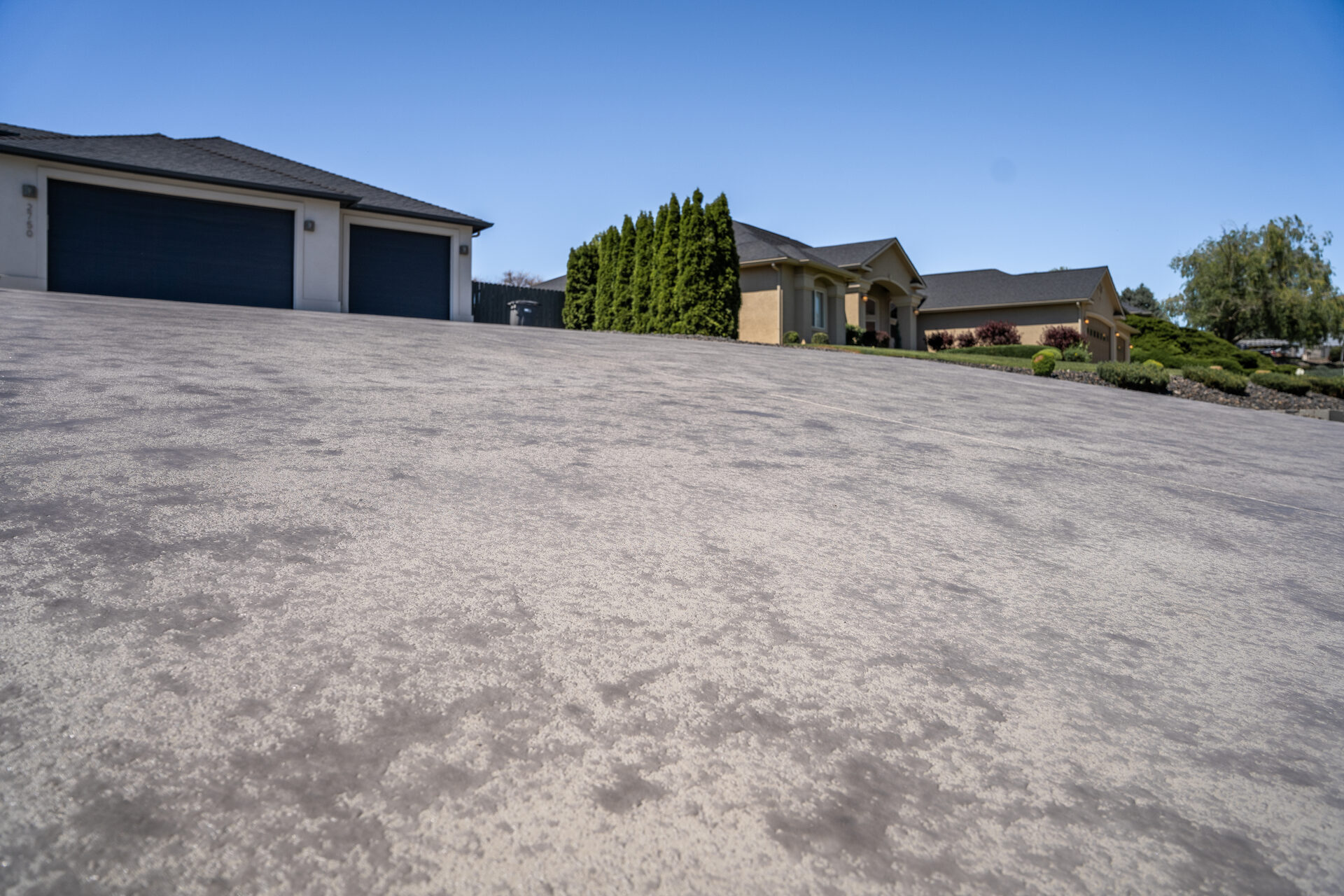
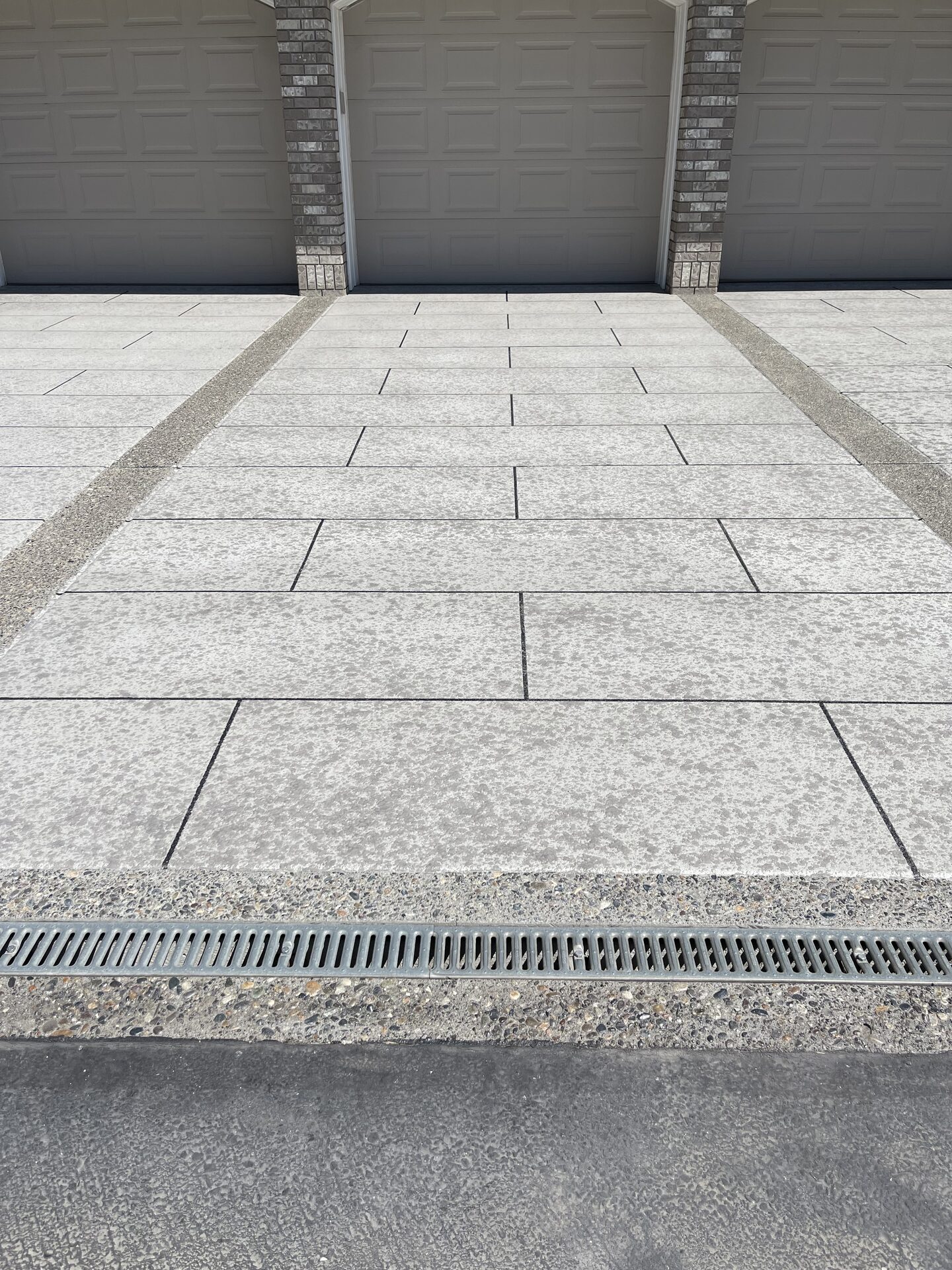
If the slab is sound and you mostly want it protected, we use a penetrating densifier and a salt-resistant acrylic sealer. If the surface is scaled, stained or patchy, the fix is a 40-to-100-mil overlay of polymer-modified cement with light aggregate tossed in for grip. Both resist salt and deicer. Feet are fine on it after one or two days; cars go back on after about a week. lifetime warranty.
Cracks get a straight answer. Hairline cracks are filled and mostly disappear. A structural crack that moves with the seasons will eventually show back through any coating, overlay included. On a rural apron where loaded trucks and tractors turn, we look hard at those cracks before quoting, because no topping changes what the ground underneath is doing.
Our Driveway Coatings System
Materials: Polymer overlay or densifier + acrylic sealer
Thickness: 40-100 mils
Install time: 1-2 days
Walk on it: 1-2 days after
Drive on it: about a week after
Warranty: Lifetime
Salt and deicer resistant.