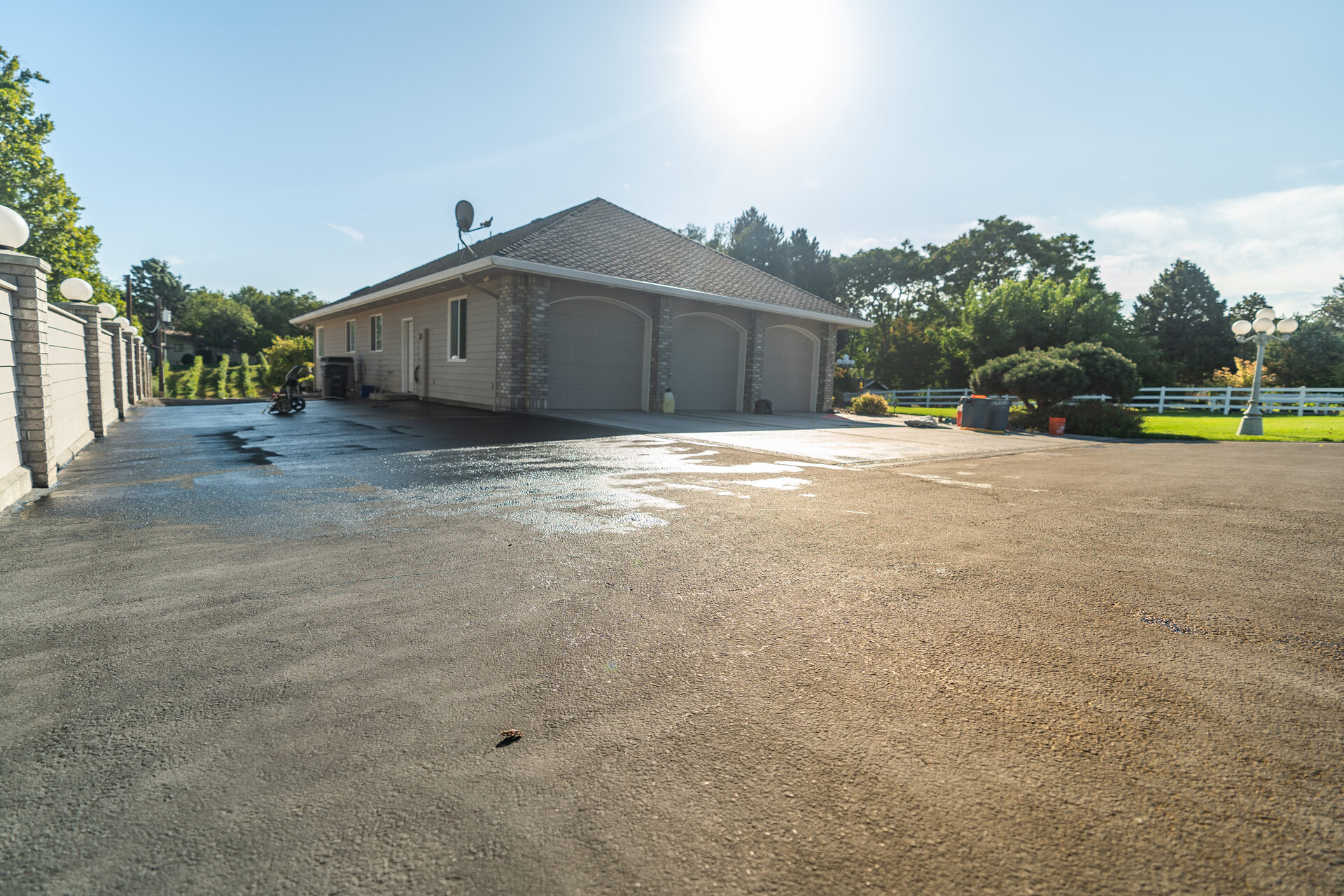
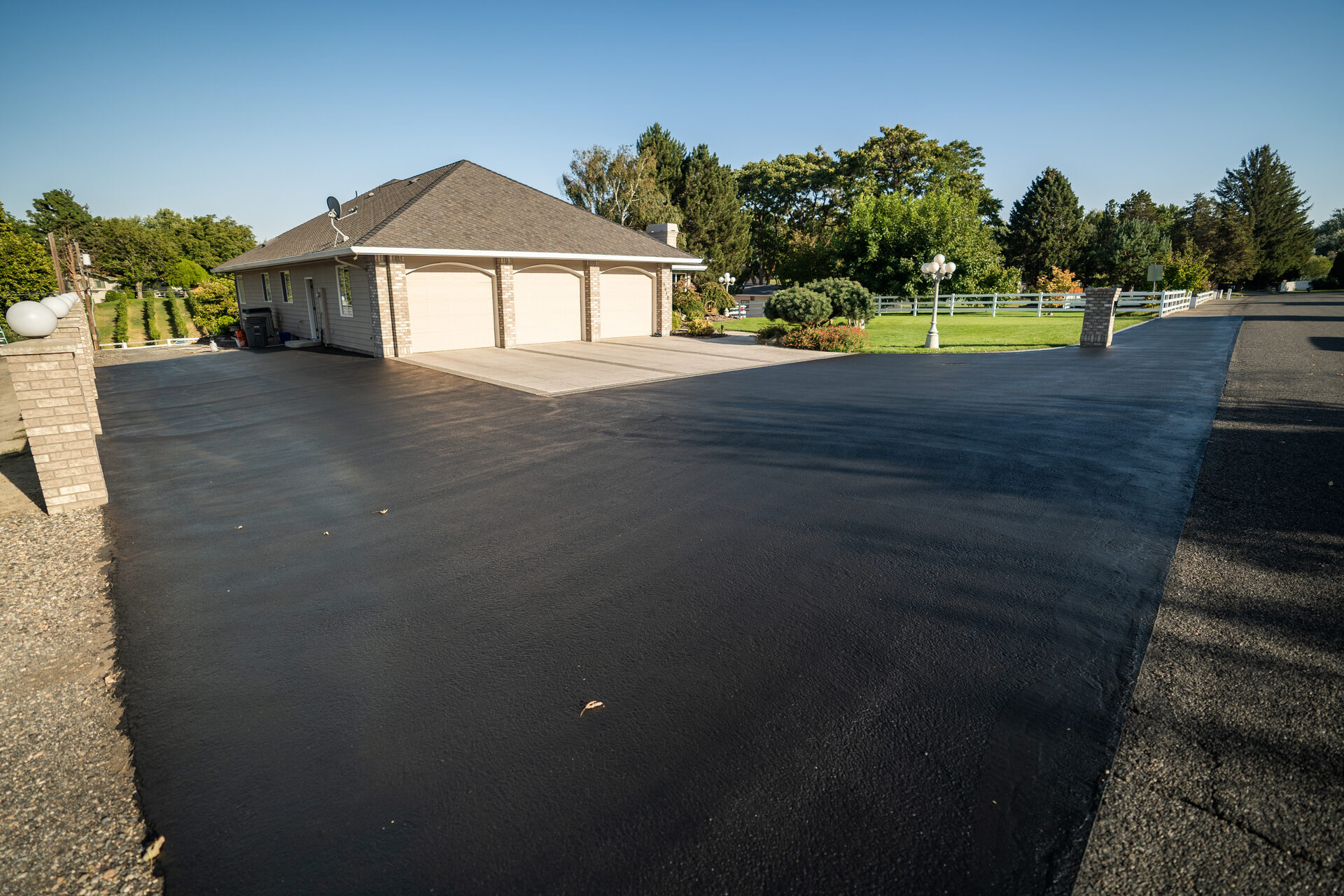
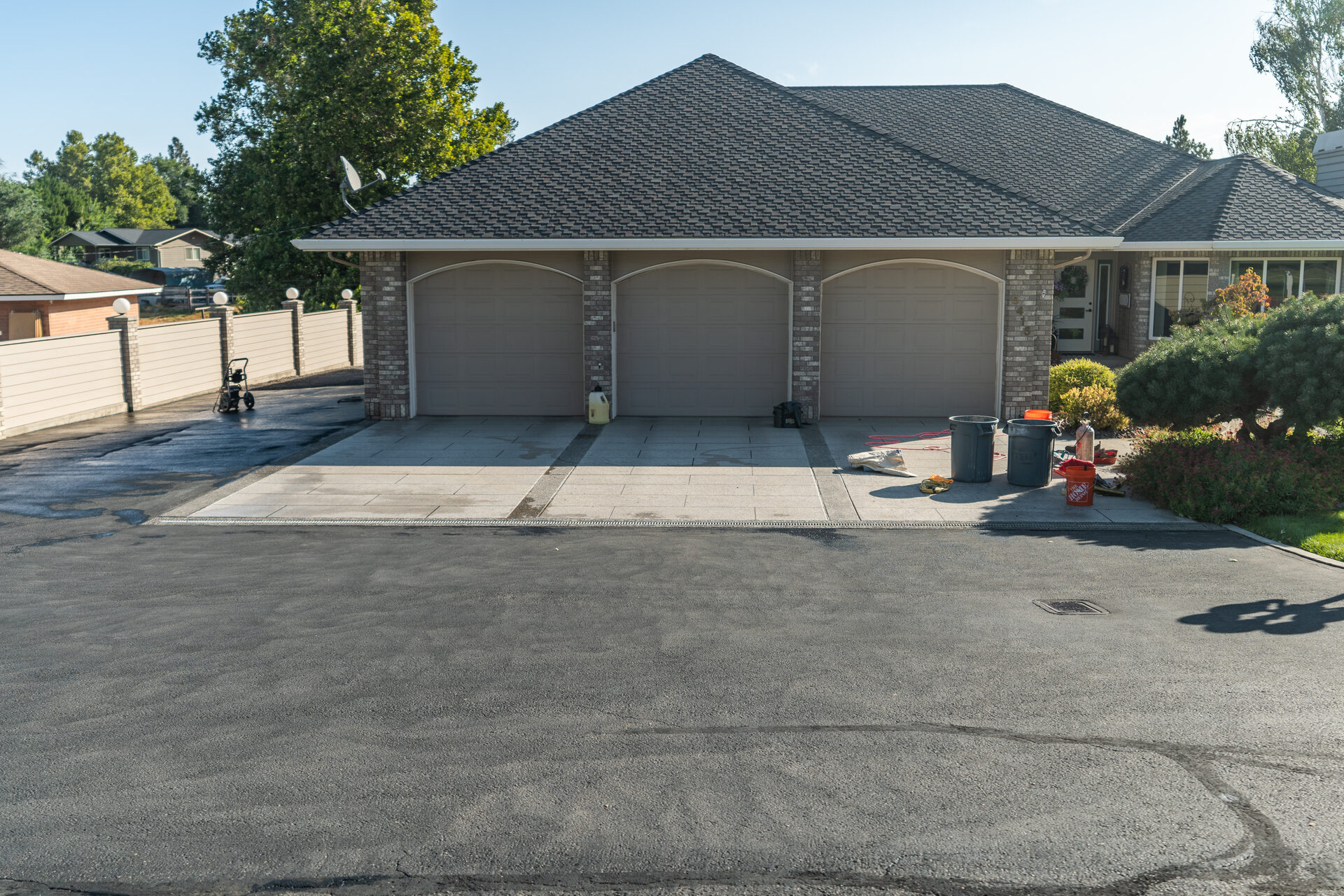
What does a driveway on a Kalama hillside actually need? Grip first. A steep drive above First Street turns slick when it is wet, and it is wet for months. Then protection from water getting into the surface and freezing on the colder nights this town gets. Then something that holds up to trailer tongues, boat tires and the sand they haul up from the Kalama River.
We answer that two ways, and we decide which one after looking at the slab. Sound concrete with some surface wear gets hardened from within by a penetrating densifier, then topped with acrylic sealer. Scaled, stained or patchy concrete gets a polymer-modified overlay built up anywhere from 40 to 100 mils, with light aggregate tossed in for traction. Both are a lot cheaper than tearing out and repouring.
Overlay or Sealer: How We Pick for a Kalama Drive
A densifier soaks into the concrete and hardens it from the inside, and the sealer on top keeps rain, oil and deicer from getting in. It does not change the look much. It is the right call for a newer drive on the bluffs that is still in decent shape and just needs to stay that way.
The overlay is for drives that have already taken damage. It bonds to the old surface and gives you a fresh, even finish with grit in it. It resists salt and deicer, which matters on the hill roads on icy mornings. One honest warning: hairline cracks get filled and disappear, but a crack that is still moving will come back through any coating eventually. And if the driveway is heaving or crumbling, it needs replacing, not coating. Driveway work carries a lifetime warranty.
Our Driveway Coatings System
Materials: Polymer overlay or densifier + acrylic sealer
Thickness: 40-100 mils
Install time: 1-2 days
Walk on it: 1-2 days after
Drive on it: about a week after
Warranty: Lifetime
Salt and deicer resistant.