
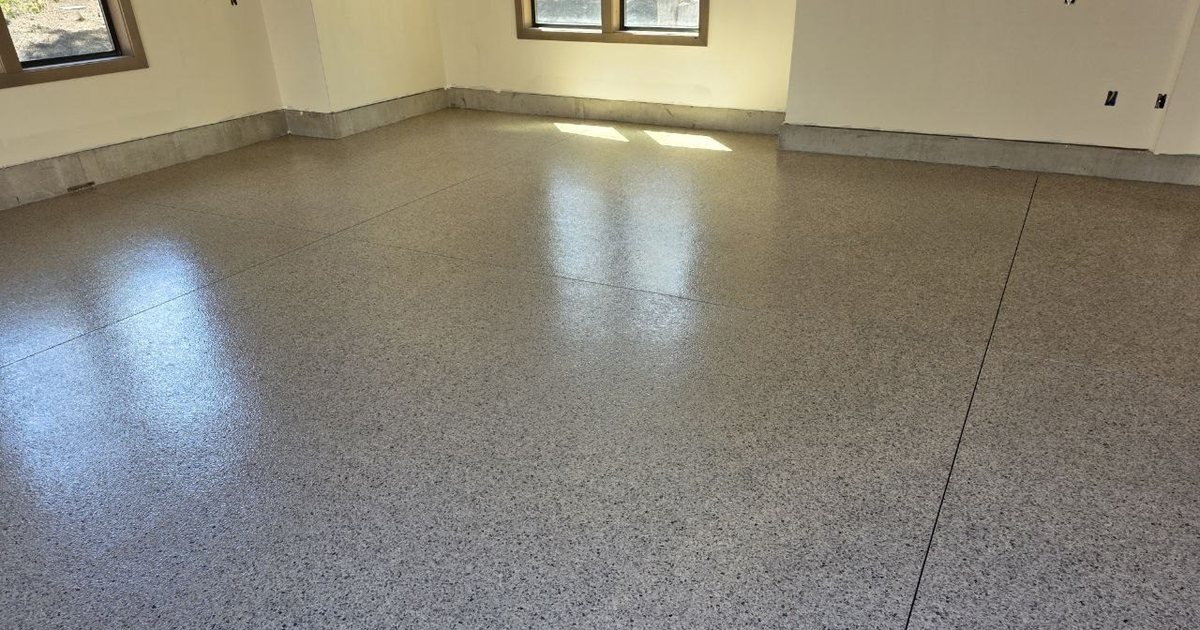
Picking a flake color is the fun part of a new garage floor, and it is also the decision people second-guess the most. A blend that looks perfect on a four-inch chip can read lighter, darker or busier once it covers a whole two-car garage. The color itself matters, but so do the room, the light, how the space is used and the size of the chip. This guide walks through how we help homeowners narrow it down, so the floor you picture is the floor you get.
Everything here comes from installing flake floors in garages, shops and basements around Vancouver and Clark County. The blends we install come from our partner Leggari, and between the two flake lines we carry there are more than 40 to choose from. That is a lot of options, so the goal of this guide is to cut the list down to two or three real contenders before you ever hold a sample board.
The Short Answer
If you only read one section, read this one. These are the patterns we see when homeowners choose a flake color and are still happy with it years later:
- For a working garage that sees wet tires and dust, a mid-tone, multi-color blend is the easiest to live with. It hides grit, tire marks and water spots better than very light or very dark floors.
- For a brighter, more open room, a light gray flake reflects more light and makes a garage feel bigger. A blend with a few darker chips mixed in still hides everyday dust well.
- For a bold, showroom look, a dark blend or a high-contrast blend looks rich under a gloss topcoat, but it shows light-colored dust and dried water spots sooner.
- Chip size changes the whole look. The standard 1/4-inch chip is a fine, even speckle. The 1-inch chip reads bold, closer to terrazzo.
- Always judge the final pick in your own garage light, not on a phone screen. That is why we bring real sample boards to the estimate.
Start With How the Space Is Used
Before looking at a single color, think about what actually happens on the floor. Two garages with the same square footage can need very different blends.
The everyday parking garage
In our area a garage floor spends a good part of the year taking in rainwater, road grit and the occasional leaf stuck to a tire. A floor that hides that between cleanings is a floor you will like more. Mid-tone grays and earth-tone blends with three or more colors in them break up the surface, so a little dirt disappears into the pattern instead of sitting on top of it. If you want the floor to look clean without sweeping it every weekend, start here.
The shop or home gym
If the garage is a workspace, think about what you drop. Small screws, washers and bolts are easier to find on a lighter floor, and a lighter floor bounces more light onto the bench. A light gray flake with darker chips in it is a common choice for shops for exactly that reason. For a home gym, mid-tones hide scuffs from equipment and shoes well.
The showpiece garage
Some garages are kept spotless and used to show off a car, a bike collection or a finished living space. These are the floors where a dark or high-contrast blend really shines. Dark floors look deep and rich under the polyaspartic topcoat, and a 1-inch chip adds a custom, almost stone-like feel. Just know going in that dark floors show light dust, dried drips and footprints sooner, so they reward regular cleaning.
Light, Mid-Tone and Dark Blends Side by Side
Most flake blends fall into a few broad families. The table below shows how each family tends to behave in a real garage. Names in the right column are examples from the blends we install; you can see all of them on our colors page.
| Blend family | How it looks | What it hides | What it shows | Good fit for | Examples |
|---|---|---|---|---|---|
| Light gray | Bright, clean, makes the room feel bigger | Everyday dust, especially with darker chips mixed in | Dark tire marks and muddy footprints sooner than mid-tones | Shops, bright garages, people who drop small parts | Mountain Fog, Moon Rock |
| Mid-tone gray | Balanced and neutral, the classic garage floor | Grit, tire marks and water spots | Very little; the most forgiving family | Daily parking, busy family garages | Gravel, Winter Ash |
| Warm and earth tones | Tans, browns and creams that feel softer | Brown dirt and leaf debris blend in well | Gray road dust a little more than gray blends | Homes with wood cabinets, brick or warm exterior colors | Desert Storm, Saddle Tan |
| Dark | Deep and dramatic under a gloss topcoat | Dark stains and tire marks | Light dust, dried water spots and footprints | Showpiece garages kept tidy | Stealth, Midnight |
| Large 1-inch chip | Bold, terrazzo-style, custom feel | Small surface imperfections in the pattern | Depends on the blend's overall tone | Owners who want something less common | Graphite, Quartzite |
None of these are rules. Plenty of people pick a dark floor for a daily parking garage and love it. The table is about knowing what you are signing up for, so nothing surprises you after the first rainy month.
Chip Size: 1/4 Inch or 1 Inch
Chip size changes the look of a floor as much as the color does, and it is the part people most often overlook.
- Standard 1/4-inch chip: a fine, even speckle. This is the classic garage floor look. From standing height the colors blend together into one overall tone, which is why it is so forgiving with dust and small marks.
- 1-inch brindle chip: large, layered flakes that read like stone or terrazzo. Each chip is visible on its own, so the floor has more movement and a more custom look. It reads dramatically different in person than in a small photo.
Both sizes are broadcast to full coverage, so the floor is covered wall to wall either way. If you are torn, ask to see both sizes in similar tones side by side at the estimate. The difference is obvious in about two seconds once the boards are on your slab.
Match the Colors Already in the Space
A garage floor does not sit alone. It sits next to walls, cabinets, trim, a water heater, maybe a workbench, and it shows through the open door next to your driveway and siding. A floor that fits those colors looks intentional.
- Gray, white or black finishes: cool grays and charcoal blends look clean next to them.
- Wood cabinets, brick or tan siding: warm blends with tan, brown and cream tie the room together.
- Bright painted walls or colored cabinets: a neutral mid-tone gray usually lets the color on the walls stand out instead of competing with it.
A simple trick: take a photo of your garage walls and cabinets and keep it on your phone while you look at blends. It makes it much easier to rule colors out.
Lighting Changes Everything
This is the most important section in the guide. The same flake blend can look like three different floors depending on the light.
- Daylight through an open door or windows shows the truest color and makes gloss reflections more visible, like the window light across the gray flake floor in the photo at the top of this page.
- Cool white LED shop lights push a floor toward gray and blue. Warm tones can look a little flatter.
- Warm bulbs push a floor toward yellow and tan. Light grays can look beige.
Phone screens add another layer, because every screen shows color differently. That is why we bring real sample boards for every flake color we offer to your estimate. You can set them on your own slab, under your own lights, with the door open and closed, and see what the floor will actually look like before anything is ordered.
Gloss, Texture and How the Finish Affects Color
Every flake floor we install is built the same way, and the top layers affect how the color reads. After the full flake broadcast, loose flake is swept up and the floor is scraped. A Flake Lock coat then locks the flake in place, and the final coat is a clear polyaspartic topcoat.
That clear gloss layer deepens colors a little, a lot like how a river rock looks richer when it is wet. Dark blends look darker and more saturated under it, and light blends gain shine and reflect more light around the room. When you look at sample boards, you are seeing the color under a clear coat, so it is a fair preview of the finished floor.
The flake also adds texture underfoot. A full broadcast floor is not glass-smooth, which helps with footing compared with a solid-color coating.
Control Joints and Cracks Are Part of the Look
Most garage slabs have saw-cut control joints, and many have a few cracks. Both affect how the finished floor looks, so they are worth deciding on with the color.
- Control joints: we can fill them flush for a smooth, seamless look, or keep them cut in for a traditional look, as on the floor in the cover photo. Either way they are cleaned out and treated before coating. Kept joints show as clean lines across the floor, which looks crisp on light and mid-tone blends.
- Cracks: cracks and spalls are filled with a polyurea repair compound and ground flush before the base coat. Busy multi-color blends and larger chips help repaired areas blend into the pattern. Our guide to crack repair before coating explains the process.
Color Does Not Change the System
Whatever color you choose, the floor underneath is built the same way. Color is a design choice; the prep and the layers are what make the floor last.
- Surface preparation: we prepare the concrete by diamond grinding or dustless shot blasting, chosen for each space. Shot blasting fires small steel shot at the slab and vacuums it back up, leaving an open, textured surface; it suits larger, open slabs and removing thin old coatings. Diamond grinding handles edges, tight spots and high spots. We never acid etch.
- Crack and spall repair with a polyurea compound, ground flush.
- A 100% solids epoxy base coat with a full flake broadcast in the color you picked.
- Scrape and Flake Lock to lock the flake and knock off sharp edges.
- A polyaspartic topcoat as the clear wear layer.
Our diamond grinding vs. shot blasting guide goes deeper on prep. Every garage, basement, shop, metallic and flake floor we install comes with our lifetime warranty against peeling, lifting or flaking caused by our work or materials, for as long as you own the home. It does not cover impacts or chemical damage, moisture coming up through the slab or new cracks in the slab, and it is not transferable. You can read the details in what our lifetime warranty covers.
A Simple Way to Narrow It Down
When homeowners feel stuck between too many options, this is the process we walk through with them:
- Pick a family first. Light, mid-tone, warm or dark. Use the table above and how you use the garage to choose one or two families.
- Pick a chip size. Fine 1/4-inch speckle or bold 1-inch chip. This usually settles itself in a minute.
- Shortlist three blends on our colors page. Tap through to see each one on a real installed floor.
- Note your favorites on the estimate form so we bring those boards front and center.
- Decide on site, with the boards on your slab, in your light, next to your walls and cabinets.
Seen a floor online that you love? Send us a picture. We will find the closest blend from our lines or source it.
Common Mistakes When Choosing a Flake Color
- Choosing from a screen alone. Screens shift color. Always confirm with a physical sample.
- Judging a full floor from a small chip. A small sample shows the colors; a full floor shows the overall tone. Look at photos of installed floors too.
- Going very dark in a dusty, high-traffic garage without expecting more frequent cleaning.
- Forgetting the lights. If you plan to change your garage lighting, choose under the new lights or under daylight.
- Choosing color before deciding on control joints. Filled or kept joints change the look, so decide both together.
For keeping any color looking its best once it is down, see our guide to caring for an epoxy garage floor through a Northwest winter. If you are considering a metallic floor instead of flake, read how to pick a metallic epoxy floor color.
Frequently Asked Questions
What flake color hides dirt best on a garage floor?
Mid-tone, multi-color blends hide dirt best. They break up the surface so grit, tire marks and water spots blend into the pattern. Very light and very dark floors show dirt sooner.
Should I choose a 1/4-inch or 1-inch flake chip?
The 1/4-inch chip gives a fine, even speckle and the classic garage floor look. The 1-inch chip gives a bold, terrazzo-style look with each chip visible. Both are broadcast to full coverage, so the choice is about style.
Do dark flake floors show more dust?
Yes. Dark blends look rich under a gloss topcoat, but light-colored dust, dried water spots and footprints show up sooner, so they suit garages that are cleaned regularly.
Can I see flake samples before choosing?
Yes. We bring real sample boards for every flake color we offer to your estimate, so you can see them on your own slab, in your own light, before choosing.
Can you match a garage floor I saw online?
Often, yes. We carry more than 40 flake blends across two lines. Send us a picture of the floor you like, and we will find the closest blend or source it.
See the Colors in Your Own Garage
We install epoxy flake floors in garages, shops and basements. Serving Vancouver, WA and surrounding communities. Request an estimate online or email info@360surfaces.com, note the blends you like, and we will bring the sample boards so you can choose in your own space.
360 Surfaces
Published November 25, 2026
Where We Do This Work
Epoxy flake garage floors. Serving Vancouver, WA and surrounding communities:
Vancouver, WA · Camas, WA · Battle Ground, WA · Ridgefield, WA · Salmon Creek, WA · Washougal, WA · Brush Prairie, WA · Hazel Dell, WA · Orchards, WA · La Center, WA · Kalama, WA · Kelso, WA · Longview, WA · Castle Rock, WA